

2003-2006 Hyundai Accent Radiator Support: Rust, Damage, and Tricky 2006 Fitment
This guide covers common failures from rust and collision, complex compatibility issues for the 2006 model year, and how to inspect a used radiator support for your Accent.
- The biggest non-collision issue is severe rust, especially for cars in Salt Belt states.
- The 2006 model year is a split generation; you must verify if you have the old (LC) or new (MC) chassis before buying this part.
- This part is critical for front-end structural integrity, not just for holding the radiator.
- When buying used, inspect carefully for hidden rust, cracks, and bends, as a straight OEM part is often better than a new, cheap aftermarket one.
Symptoms of a Failing Radiator Support
A damaged or corroded radiator support can cause a variety of issues, some of which can be mistaken for other problems. Pay attention to these specific signs.
- Visible Rust or Corrosion: This is the most common non-collision failure. The support is made of steel and is prone to rusting, especially on vehicles driven in areas where road salt is used. Check the lower portions and welded seams, as this is where moisture collects.
- Poor Panel Alignment: If your hood is difficult to close, the gap between your fenders and hood is uneven, or your headlights seem crooked, it's a strong sign the support has been bent or has shifted. This is a common result of even minor front-end impacts.
- Unusual Noises: A loose, cracked, or rusted-out support can cause rattling, clunking, or creaking sounds from the front of the vehicle, particularly when driving over bumps. This is the sound of the radiator and other components moving around in their mounts.
- Engine Overheating: In severe cases, a bent support can push the radiator into the cooling fan, damaging the fan or the radiator core itself. It can also cause the radiator to shift, stressing hoses and leading to coolant leaks, which will cause the engine to overheat.
- Vibrations: A failing support can no longer effectively absorb vibrations, leading to excess shaking felt from the engine bay at idle or during acceleration.
Known Issues, TSBs, and Recalls
Widespread Corrosion in Salt Belt States
While there are no recalls or Technical Service Bulletins (TSBs) specifically for the radiator support on the 2003-2006 Accent, Hyundai issued numerous recalls for severe rust on other structural parts of vehicles from this era. Recalls like NHTSA Campaign 09V124000 and 09V125000 targeted dangerous corrosion on the front subframes and lower control arms of contemporary Sonata, Elantra, and Tiburon models. These vehicles were primarily sold or registered in "Salt Belt" states, where winter road salt accelerates rust.
This history of corrosion on critical front-end components strongly suggests that the radiator support on the Accent is susceptible to the same type of failure. A visual inspection for rust is absolutely essential for any owner of these vehicles, especially if you live in a northern climate.
Compatibility Warning: The 2006 Model Year is a Trap!
The 2006 model year was a transition period for the Hyundai Accent. This creates a very common and expensive parts-ordering mistake. Before buying, you MUST know which generation of Accent you own.
- 2003-2005 Accent: These models use the second-generation (LC chassis) radiator support, part number 64100-25351.
- 2006 Accent: This is the tricky year. The older second-generation hatchback was sold alongside the brand new third-generation (MC chassis) sedan. If you have a 2006 Accent, this part (64100-25351) likely only fits if you have the older body style hatchback, which was carried over in some markets like Canada. The new 2006 sedan uses a completely different part (64101-1E000). Always verify your vehicle's specific body style and production date before ordering.
Buying a Used Radiator Support: What to Inspect
For a part like this, a straight, rust-free used OEM support is often a better choice than a cheap, new aftermarket part. Aftermarket supports can suffer from poor fitment, using thinner gauge steel that doesn't offer the same structural rigidity. Here’s what to look for when inspecting a used part:
- Check for Bends and Cracks: Lay the support on a flat floor. It should sit level without any wobble. Look for any signs of it being bent or twisted. Pay close attention to the upper and lower crossbars. Even a slight bend from a past collision will make it impossible to align your hood and headlights correctly.
- Inspect All Welds: Check every factory weld point for stress cracks or signs of rust bleeding through. A crack at a weld indicates the part was compromised in an accident.
- Verify All Mounting Points: Carefully check every tab, bracket, and threaded hole. Ensure the mounting points for the headlights, radiator, A/C condenser, and hood latch are all present and free of cracks or damage. These are often the first things to break in a minor impact.
- Look for Hidden Rust: Surface rust can be treated, but deep, flaky, or perforated rust is a deal-breaker. Tap any suspicious areas with a screwdriver handle. If it sounds soft or makes a crunching noise, the metal is compromised from the inside out. Pay special attention to the bottom rail where water and salt collect.
- Avoid Repaired Parts: Look for signs of previous repairs, like non-factory welds, body filler (Bondo), or fresh paint trying to hide damage. A repaired support will never have the same structural integrity as an original one.
Replacement Overview & Difficulty
Replacing the radiator support on a 2003-2006 Accent is a bolt-on procedure, but it is labor-intensive as the entire front of the car must be disassembled.
- Difficulty Rating: 3 out of 5 (Moderate)
- Estimated Time: 3-5 hours
- DIY Feasible: Yes, for an experienced DIY mechanic with a good set of tools.
General Steps:
- Disconnect the battery.
- Remove the front bumper cover and the foam absorber behind it. 🎬 See how to remove the front bumper cover
- Remove both headlight assemblies.
- Unbolt the hood latch mechanism and move it aside.
- Carefully unbolt the A/C condenser from the front of the radiator and secure it out of the way without disconnecting the refrigerant lines.
- Unbolt the radiator from the support and allow it to rest in place. You may not need to drain the coolant if you can support the radiator without stressing the hoses. 🎬 Watch: How to remove and replace the radiator
- Unbolt the radiator support from the vehicle's frame rails on both sides and at the top.
- Transfer any necessary brackets or components to the new support before installation.
Pro Tip: Before fully tightening the bolts on the new support, loosely reinstall the headlights and hood. Check the panel gaps to ensure everything is aligned. Adjust the support as needed, then tighten all bolts to their final torque specifications.
Cost Comparison
The cost to replace a radiator support can vary significantly based on the part source and labor rates.
| Part Type | Estimated Cost |
|---|---|
| New OEM (Dealer) | $300 - $470 |
| New Aftermarket | $65 - $130 |
| Used OEM (Recycled) | $75 - $150 |
| Shop Labor | $270 - $450 |
Frequently Asked Questions (FAQ)
Is a rusty radiator support dangerous?
Yes, it can be. A severely rusted support loses its structural strength. In a collision, it will not absorb impact as designed, and in a worst-case scenario, it could fail and allow the radiator to detach, leading to a loss of steering control if it interferes with other components.
Do I need to paint a new or used radiator support?
Yes. Most new aftermarket and used supports come with only a thin layer of black primer (e-coat). This is not sufficient to prevent rust. You should scuff the surface and apply a quality chassis paint or undercoating to all surfaces before installation, especially if you live in a wet or snowy climate.
Can I just repair my bent or rusty radiator support?
It is not recommended. Bending a support back into shape weakens the metal, and it will never be perfectly straight, leading to alignment issues with panels and headlights. Welding patches over rust is a temporary fix that hides the problem and creates new weak points. Replacement is the only safe and correct repair.
Why is the fitment for the 2006 Accent so confusing?
The 2006 model year marked the change from the second generation (LC) to the third generation (MC) Accent. However, Hyundai continued to sell the older generation hatchback in some markets while introducing the new generation sedan. This means two completely different cars were sold as a "2006 Accent," and they use different radiator supports.
Helpful Videos
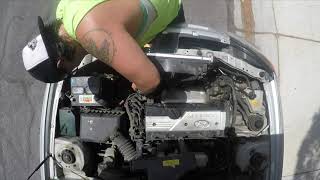
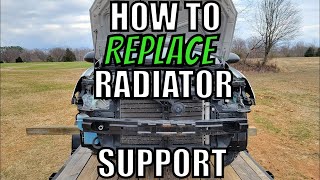
Technical Specifications
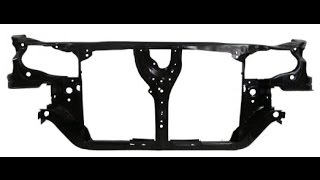
OEM Part Numbers: 64100-25351 64100-25350 6410025351 6410025350
Material: Steel. Type: Bolt-on assembly.
We Have This Part in Stock


The information in this article is provided for general reference and educational purposes only. Vehicle specifications, procedures, and part compatibility can vary by production date, trim level, and region. Always consult your vehicle's factory service manual and verify part numbers before purchasing or performing repairs. Safety-critical components such as airbags, seat belts, and braking systems should be installed by a qualified professional.
- Hyundai Accent: