

2013-2022 Honda Accord Radiator Support: Damage, Part Numbers & Replacement
This guide covers the two distinct radiator supports used in 2013-2022 Honda Accords, focusing on collision damage, part variations, and how to inspect a used unit.
- The 2013-2017 (9th Gen) and 2018-2022 (10th Gen) Accords use completely different, non-interchangeable radiator supports.
- Damage is almost always caused by a collision; symptoms are primarily visual, like misaligned body panels and visible cracks or bends.
- A used OEM support is often superior to a new aftermarket one due to better fitment and material quality, but must be inspected carefully for hidden damage.
- Replacement is a complex, labor-intensive job not recommended for novice mechanics.
Key Differences: 9th Gen (2013-2017) vs. 10th Gen (2018-2022)

The 2013-2022 Honda Accord spans two different generations, and they do not use the same radiator support. It is critical to identify your vehicle's generation before purchasing a replacement.
- 2013-2017 (9th Generation): The primary OEM part number is 60400-T2F-A00ZZ. This support is designed for the specific front-end structure of these model years.
- 2018-2022 (10th Generation): The primary OEM part number is 60400-TVA-A00ZZ. This support was redesigned for the newer chassis and body style.
Warning: These parts are not interchangeable. Using the wrong generation of radiator support will result in misaligned body panels, improper mounting of cooling components, and an unsafe repair.
Symptoms of a Damaged Radiator Support

Unlike mechanical parts, a radiator support doesn't 'fail' from wear and tear. Damage is almost always the result of a front-end collision or significant impact from road debris or curbs. Here are the common signs of a compromised radiator support:
- Misaligned Body Panels: The most obvious symptom is an improper fit of the hood, fenders, or front bumper. You might see uneven gaps between these panels, or the hood may be difficult to latch or unlatch.
- Visible Cracks or Bends: A visual inspection will often reveal bent metal, cracked plastic, or broken welds on the support structure itself.
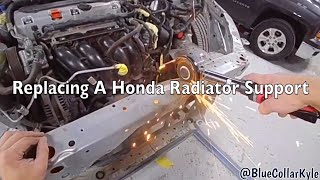
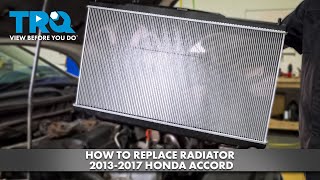
- Engine Overheating: If the support is bent, it can push the radiator out of position, restricting airflow or causing 🎬 See how to replace the radiator on 9th Gen models. the cooling fan to bind. In severe cases, the impact that damaged the support may have also punctured the radiator, leading to coolant leaks.
- Rattling or Clunking Noises: A loose or broken support can cause the radiator and other attached components to vibrate and make noise, especially when driving on bumpy roads.
- Headlight Aim is Off: Since the headlights often mount to the radiator support, a bent frame can cause the headlights to point in the wrong direction, creating a safety hazard at night.
Buying a Used Radiator Support: What to Check

A used OEM radiator support is often a better choice than a new aftermarket part. Original Honda parts are made with higher quality materials and are guaranteed to fit correctly, whereas aftermarket parts can have issues with alignment and durability. When inspecting a used part, look for the following:
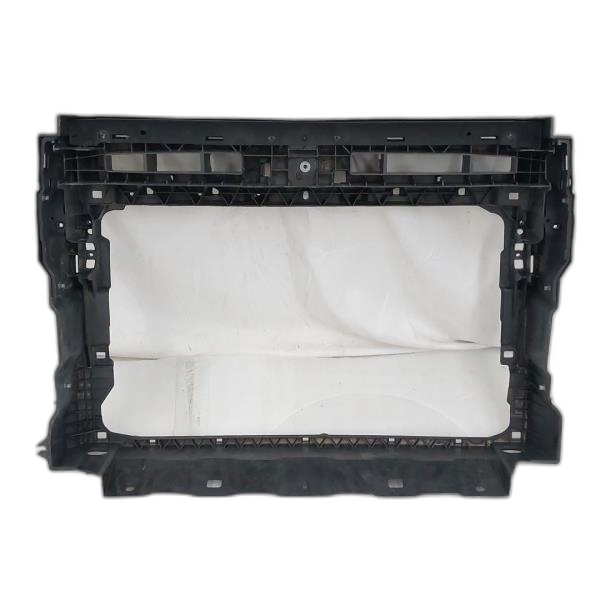
- Check for Bends and Warping: Lay the support on a flat surface. It should sit flush without rocking. Look down all the main structural beams to ensure they are perfectly straight. Even a slight bend can cause major alignment issues.
- Inspect All Mounting Points: Carefully check every tab, bracket, and screw hole. These are common weak points that can crack or break off during a collision or careless removal. Ensure all plastic tabs are intact and not brittle.
- Look for Signs of Previous Repair: Watch out for body filler (Bondo), fresh paint in one specific area, or any signs of welding that don't look factory. A repaired support may have hidden structural weaknesses.
- Verify Part Numbers and Compatibility: Double-check that the part number matches your vehicle's generation (T2F for 2013-2017, TVA for 2018-2022). Also, confirm it matches your vehicle's specific options.
Compatibility Warnings
Honda uses different radiator supports depending on the vehicle's features. The standard supports (60400-T2F-A00ZZ and 60400-TVA-A00ZZ) are for non-hybrid models. Versions for models with Adaptive Cruise Control (ACC) or Pre-Crash systems may have different mounting brackets for sensors. For example, part number 60400T2FA50ZZ is listed for 2013-2017 models with ACC. Always verify the part is correct for your specific trim and options package.
Replacement Overview and Difficulty

Replacing a radiator support is a complex job that requires significant disassembly of the vehicle's front end. It is a weld-in or bolt-in procedure depending on the specific model and damage.
- Difficulty Rating: 4 out of 5 (Difficult)
- DIY Feasible: Not recommended for beginners. This job is best left to experienced DIYers or a professional body shop.
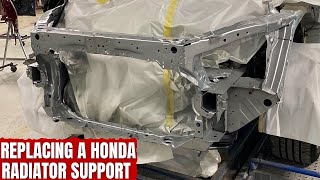
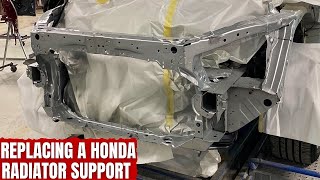
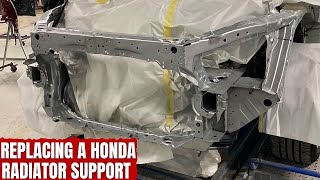
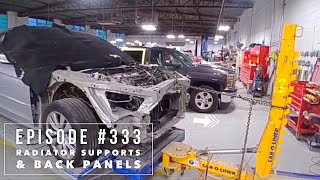
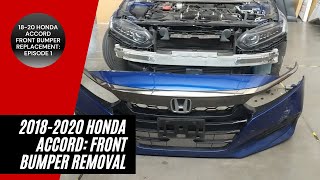
- General Steps: The process typically involves removing the front bumper cover, 🎬 Follow this guide to safely remove the 10th Gen bumper. headlights, and impact bar. The cooling system must be drained to disconnect the radiator and A/C condenser. All components attached to the support are then unbolted. The old support is then drilled out (if spot-welded) 🎬 Watch this professional walkthrough of a Honda radiator support replacement. or unbolted and the new one is installed.
Pro Tip: Before beginning the repair, it's wise to have the vehicle's frame alignment checked by a body shop. The impact that damaged the radiator support may have also bent the underlying frame rails, which a new support will not fix.
Known Issues, TSBs, and Recalls
There are no known recalls or Technical Service Bulletins (TSBs) from Honda or the NHTSA specifically for the radiator support on 2013-2022 Accords. All issues with this part are related to external factors like collisions. However, there have been other recalls for this generation of Accord, such as for corroding driveshafts in salt-belt states on some 2013 models, but these are unrelated to the radiator support structure.
Cost Comparison
Prices can vary by supplier and location. The following is an estimate of what you can expect to pay for the part and labor.
| Part Type | Estimated Cost |
|---|---|
| New OEM | $600 - $990 |
| New Aftermarket | $120 - $400 |
| Used OEM | $150 - $500+ (Varies by condition and availability) |
| Shop Labor | $500 - $1,500+ (Varies widely based on shop rates and extent of damage) |
Frequently Asked Questions
Can I drive with a damaged radiator support?
It is not recommended. A bent support can compromise the safety of the vehicle in another collision. It can also cause the radiator or cooling fan to fail, leading to engine overheating and severe damage.
Is a cheap aftermarket radiator support a good idea?
While less expensive, aftermarket supports often use thinner gauge steel or lower-quality plastic, making them less durable. Fitment can also be poor, leading to alignment issues with the hood, fenders, and bumper, which can increase labor costs during installation. A straight, undamaged used OEM part is often a better value.
Does the radiator support need to be painted?
Yes. Most radiator supports, whether new or used, come with a basic black e-coat (electrophoretic coating) for corrosion protection during shipping. This should be scuffed and painted with automotive-grade paint to properly protect it from rust and match the rest of the engine bay.
What other parts should I inspect or replace at the same time?
If the radiator support is damaged, you should carefully inspect the radiator, A/C condenser, cooling fans, all coolant hoses, headlight mounting tabs, and the hood latch mechanism. It's common for these related parts to sustain damage in a front-end impact.
Helpful Videos


Technical Specifications
OEM Part Numbers: 60400-T2F-A00ZZ 60400T2FA00ZZ 60400-TVA-A00ZZ 60400TVAA00ZZ 60400T2FA50ZZ
Material: Steel and/or composite plastic construction.
We Have This Part in Stock





The information in this article is provided for general reference and educational purposes only. Vehicle specifications, procedures, and part compatibility can vary by production date, trim level, and region. Always consult your vehicle's factory service manual and verify part numbers before purchasing or performing repairs. Safety-critical components such as airbags, seat belts, and braking systems should be installed by a qualified professional.
- Honda Accord:
- 🎬 Helpful Videos
- 🛍️ Shop This Part
- Key Differences: 9th Gen (2013-2017) vs. 10th Gen (2018-2022)
- Symptoms of a Damaged Radiator Support
- Buying a Used Radiator Support: What to Check
- Compatibility Warnings
- Replacement Overview and Difficulty
- Known Issues, TSBs, and Recalls
- Cost Comparison
- Frequently Asked Questions
- 🎟️ Get 5% Off