

Ford Mustang Radiator Support (2015-2025): Decoding the Critical 2018+ Redesign
This guide clarifies the crucial differences between 2015-2017 and 2018+ Mustang radiator supports and explains how to buy the right used part.
- The radiator support for 2015-2017 Mustangs is NOT interchangeable with 2018-2025 models due to a major front-end redesign.
- This is a multi-part assembly; verify if you need the upper tie bar, lower crossmember, or side rails before buying.
- Replacement is a structural, professional-level job that requires drilling spot welds and welding the new part on. It is not a simple bolt-on task.
- When buying used, inspect carefully for hidden cracks or previous repairs and confirm the part number for your exact year range.
Understanding the 2015-2025 Mustang Radiator Support


When looking for a radiator support for a 2015-2025 Ford Mustang, the single most important thing to know is that it is not one-size-fits-all. Ford performed a major front-end facelift for the 2018 model year, which changed the headlights, bumper, and grille. Consequently, the radiator support assembly was completely redesigned.
Warning: A radiator support from a 2015-2017 Mustang will NOT fit a 2018-2025 Mustang, and vice versa. The mounting points for the headlights and front fascia are entirely different. You must purchase the correct part for your specific year range.
Component Breakdown: It's More Than One Part
The term "radiator support" can be confusing because it's an assembly of several pieces that are often sold individually, especially in the used/recycled market. Be sure you know which piece you need:
- Upper Radiator Support (Tie Bar): This is the largest and most commonly replaced piece. It's a large, often composite plastic and steel structure at the top that the hood latch and headlights mount to. This is the primary part that differs between year ranges.
- Lower Radiator Support (Crossmember): This is a metal bar that runs along the bottom, providing lower structure and a mounting point for the bottom of the radiator.
- Side Support Rails/Aprons: These are the vertical structures that connect the upper and lower supports to the vehicle's frame rails.
Symptoms of a Damaged Radiator Support

Failure of a radiator support is almost always caused by a front-end collision or impact, such as hitting a tall curb or road debris. The symptoms are usually visible and related to the structural misalignment it causes.
- Poor Body Panel Alignment: The most common symptom is a hood that won't close properly or has uneven gaps with the fenders. You may also see misalignment of the front bumper or fenders.
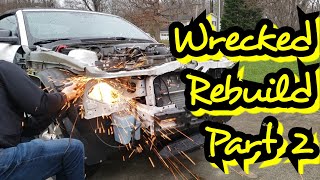
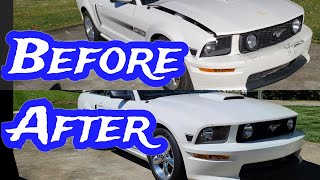
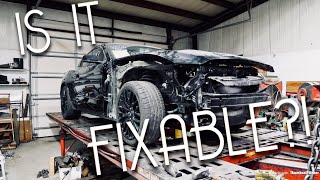
- Visible Cracks or Bending: A visual inspection will often reveal obvious cracks in the plastic, or bent and wrinkled metal components. 🎬 Watch: Assessing front-end collision damage on a Mustang This is a clear sign the part is compromised.
- Headlights Aimed Incorrectly: Since the headlights mount to the support, damage can cause them to point too high, too low, or to the side.
- Engine Overheating: In severe cases, a bent support can push the radiator out of position, restricting airflow or damaging the radiator itself, leading to coolant leaks and overheating.
- Rattling or Clunking Noises: A loose or broken support can cause the radiator and other mounted components to vibrate or move, creating noise from the front of the car.
Buying a Used 2015-2025 Mustang Radiator Support
Buying a used OEM radiator support is an excellent way to save money, as long as you inspect the part carefully. An OEM used part will provide better fitment than a cheap aftermarket alternative, which can cause issues with panel alignment.
Pro Tip: Always get the Vehicle Identification Number (VIN) of the donor car. This allows you to confirm the exact model year and trim to ensure you are buying the correct part for your Mustang.
Inspection Checklist:
- Verify the Year Range: First and foremost, confirm if the part is from a 2015-2017 or a 2018+ model. They are not interchangeable.
- Check for Cracks: Carefully inspect all plastic areas for cracks, especially around the headlight mounting points and hood latch area. Even small cracks can compromise the part's strength.
- Look for Signs of Repair: Avoid any parts that show signs of previous repair, such as plastic welding, body filler (Bondo), or fresh paint that could be hiding damage. A repaired structural component is a major red flag.
- Inspect All Mounting Tabs: Check every tab, clip, and mounting hole. These are often broken during removal or in the original accident. A missing tab can prevent a headlight or grille from sitting securely.
- Check for Straightness: Lay the support on a flat floor to check for any twisting or warping. A bent support will make aligning the front end impossible.
- Confirm Part Numbers: Match the OEM part number on the used part to the one you need. The key upper tie bar numbers are FR3Z-8A284-A for 2015-2017 models and JR3Z-8A284-A for 2018+ models (excluding Shelby).
Cost Comparison for Mustang Radiator Support (Upper Tie Bar)
| Part Type | Part Cost (2015-2017) | Part Cost (2018+) |
|---|---|---|
| New OEM | $360 - $410 | $530 - $600 |
| New Aftermarket | $140 - $180 | N/A (Less common) |
| Used OEM | $150 - $300 | $250 - $450 |
Note: Labor costs for installation are separate and can be significant. Prices are estimates and will vary by supplier and condition.
Replacement Overview & Difficulty

Replacing a Mustang's radiator support is a complex and labor-intensive job that is not recommended for beginners. It is considered a structural repair.
- Difficulty Rating: 5 out of 5
- DIY Feasible: No. This job requires specialized tools and knowledge, including drilling out numerous factory spot welds and welding the new support in place to maintain structural integrity.
- Professional Installation Recommended: Yes. A professional body shop is required to ensure the vehicle's frame and body panels are correctly aligned after installation.
The process involves removing the front bumper cover, headlights, hood latch, airbox, and draining and removing the radiator and A/C condenser. The old support must then be carefully cut and drilled away 🎬 See this walkthrough on removing the upper radiator support from the frame rails before the new one can be positioned and welded on.
🎬 Watch: How to install a new radiator supportKnown Issues, TSBs, and Recalls
There are no known recalls or Technical Service Bulletins (TSBs) from Ford or the NHTSA specifically related to the structural failure of the 2015-2025 Mustang radiator support. Issues with this part are almost exclusively the result of collision damage.
Technical Specifications & Part Numbers
The following part numbers refer to the main upper radiator support tie bar.
| Year Range | Model | OEM Part Number | Notes |
|---|---|---|---|
| 2015-2017 | V6, EcoBoost, GT | FR3Z-8A284-A | This is the standard support. |
| 2018-2023 | EcoBoost, GT, Mach 1 | JR3Z-8A284-A | For the facelifted models. |
| 2015-2020 | Shelby GT350/GT350R | FR3Z-8A284-E | Shelby models use a unique, more expensive support. |
Frequently Asked Questions
Can I use a 2018 radiator support on my 2016 Mustang?
No. The parts are not interchangeable due to the complete redesign of the front fascia, headlights, and their mounting points between the 2015-2017 and 2018+ generations.
Does the radiator support fit both EcoBoost and GT models?
Yes, for the standard models, the radiator support is the same for the V6 (where applicable), EcoBoost, and GT trims within their respective year ranges (15-17 or 18+). However, Shelby GT350 and GT500 models use a different, specific part number.
Is the radiator support a critical structural part?
Yes, absolutely. It ties the front frame rails together and provides mounting for key safety and structural components. Driving with a damaged radiator support can compromise front-end rigidity and crash performance. It is not safe to drive a vehicle with significant damage to this part.
Do I need to paint a replacement radiator support?
Most new or used OEM radiator supports come in a black finish (often a protective e-coat) and do not require painting. However, if you are installing a support that has exposed bare metal from drilling out spot welds, it's crucial to apply primer and paint to those areas to prevent rust.
Helpful Videos
Technical Specifications
OEM Part Numbers: FR3Z-8A284-A FR3Z8A284A JR3Z-8A284-A JR3Z8A284A FR3Z-8A284-E FO1225227
Material: Composite (Plastic with Steel Reinforcement). The primary component is the upper tie bar, which differs by year range. 2015-2017 uses part FR3Z-8A284-A. 2018+ uses part JR3Z-8A284-A. Shelby models use different parts.
We Have This Part in Stock



The information in this article is provided for general reference and educational purposes only. Vehicle specifications, procedures, and part compatibility can vary by production date, trim level, and region. Always consult your vehicle's factory service manual and verify part numbers before purchasing or performing repairs. Safety-critical components such as airbags, seat belts, and braking systems should be installed by a qualified professional.
- Ford Mustang:
- 🎬 Helpful Videos
- 🛍️ Shop This Part
- Understanding the 2015-2025 Mustang Radiator Support
- Component Breakdown: It's More Than One Part
- Symptoms of a Damaged Radiator Support
- Buying a Used 2015-2025 Mustang Radiator Support
- Inspection Checklist:
- Cost Comparison for Mustang Radiator Support (Upper Tie Bar)
- Replacement Overview & Difficulty
- Known Issues, TSBs, and Recalls
- Technical Specifications & Part Numbers
- Frequently Asked Questions
- 🎟️ Get 5% Off