

2007-2021 Nissan Altima Radiator: Leaks, Overheating, and Replacement Guide
This guide covers common radiator failures, compatibility across three Altima generations, and how to choose the right replacement part.
- Radiators are NOT interchangeable across the 2007-2021 Altima range; you must match the part to the generation, engine, and transmission (CVT vs. Manual).
- The most common failure is cracking of the plastic side tanks, leading to coolant leaks and overheating.
- For CVT models, an internal radiator failure can mix coolant and transmission fluid, a catastrophic event that requires immediate attention to avoid destroying the transmission.
- After replacement, the cooling system must be properly bled to remove trapped air, which can cause overheating even with a new radiator. Using a vacuum-lift tool is the recommended method.
Generational Differences and Compatibility (2007-2021)

The 2007-2021 Nissan Altima spans three distinct generations, and the radiators are not interchangeable between them. It is critical to match the radiator to your specific year, engine, and transmission type.
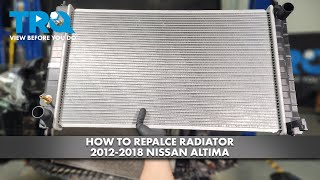
- 4th Generation (2007-2012): Models came with 2.5L 4-cylinder or 3.5L V6 engines, with either a CVT automatic or a manual transmission. Radiators for CVT models include an integrated transmission fluid cooler, while manual transmission radiators do not. A known weak point on this generation is the plastic radiator filler neck, which can become brittle and crack. 🎬 Watch: Step-by-step radiator replacement for 2007-2012 Altima models.
- 5th Generation (2013-2018): These models primarily used the 2.5L 4-cylinder engine with a CVT. The radiator design is specific to this generation and includes the necessary transmission cooler for the CVT.
- 6th Generation (2019-2021): These Altimas feature a redesigned 2.5L engine or the new 2.0L VC-Turbo engine. The radiators are specific to the engine type and are not backward compatible with older generations.
Warning: The most common compatibility mistake is mixing up radiators for automatic (CVT) and manual transmissions. A radiator for a manual transmission car will not have the required ports to cool the transmission fluid on a CVT-equipped Altima. Using the wrong part will lead to rapid transmission failure.
Symptoms of a Failing Radiator

Radiator failure can manifest in several ways, from slow leaks to sudden overheating.
1. Engine Overheating
The most obvious sign is the temperature gauge on your dashboard climbing into the red zone. This indicates the cooling system can no longer remove enough heat from the engine. Driving with an overheating engine can cause severe damage, including a warped cylinder head.
2. Coolant Leaks
Puddles of bright green, pink, or blue fluid under the front of your car are a sure sign of a coolant leak. On the Altima, leaks commonly originate from hairline cracks in the plastic side tanks of the radiator, which become brittle over time. Leaks can also come from hose connections or punctures in the radiator's aluminum core from road debris.
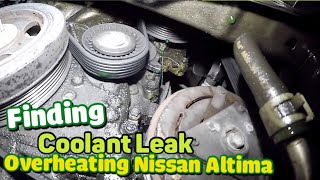
🎬 See how to diagnose and find hidden coolant leaks.3. Sweet Smell or Steam from Engine Bay
If you smell a sweet, syrupy odor while driving or see steam coming from under the hood, it means coolant is leaking onto hot engine components and burning off.
4. Low Coolant Level
If you have to add coolant to the overflow reservoir frequently, you have a leak somewhere in the system. Even if you don't see a puddle, a slow leak can allow coolant to evaporate before it hits the ground.
5. Transmission Shifting Problems (CVT Models)
This is a critical symptom. If the internal transmission cooler inside the radiator fails, coolant can mix with the transmission fluid. This creates a contaminated, pink, milky substance often called the "strawberry milkshake of death." This will quickly destroy the transmission, causing slipping gears, rough shifting, and overheating warnings. If you see this, do not drive the vehicle.
6. Discolored or Sludgy Coolant
The coolant in your reservoir should be a clean, bright color. If it appears rusty, brown, or has a thick, oily sludge in it, this indicates internal corrosion in the radiator or contamination from other fluids.
Known Issues, Recalls, and Technical Service Bulletins (TSBs)

While there are no widespread recalls specifically for the radiator on the 2007-2021 Altima, there are related issues to be aware of:
- Cracked Plastic Components: The most common failure mode across all generations is the cracking of the plastic end tanks or, on 4th generation models, the plastic filler neck. This is typically due to age and heat cycles.
- Active Grille Shutter Warranty Extension: Some 2019 models experienced issues with the active grille shutter, which controls airflow to the radiator. Nissan extended the warranty for this specific part. A malfunctioning shutter can contribute to overheating in certain conditions.
- Engine Bearing Recall (2019-2020 2.0L VC-Turbo): A serious recall was issued for potential engine bearing failure on Altimas with the 2.0L VC-Turbo engine. While not a direct radiator fault, an overheating event could be an early symptom or contributing factor to engine problems.
Buying a Used Radiator: What to Look For
A used OEM radiator can be a cost-effective alternative to expensive new parts, but careful inspection is key. Here’s what to check:
- Inspect the Plastic End Tanks: This is the most critical step. Look for any hairline cracks, especially around the hose connections and seams where the plastic meets the aluminum core. Check for chalky or discolored plastic, which indicates heat fatigue and brittleness.
- Check for Leaks: Look for any white, green, or pink crusty residue. This is dried coolant and a clear sign of a past leak. Pay close attention to the seams and around the drain plug.
- Examine the Fins: A few bent fins are normal and can be carefully straightened with a small screwdriver. However, avoid radiators with large areas of flattened or crumbling fins, as this will reduce cooling efficiency.
- Verify Transmission Type: If you have a CVT, ensure the radiator has two threaded fittings for the transmission cooler lines. A radiator from a manual transmission car will be missing these.
- Check All Connections: Make sure the upper and lower hose necks are not cracked or broken. Ensure all mounting tabs and brackets are intact.
Pro Tip: When buying used, mileage is less of a concern than physical condition. A 5-year-old radiator from a high-mileage highway car may be in better shape than a 10-year-old radiator from a low-mileage city car that has endured more heat cycles.
Cost of Replacement
The cost to replace a Nissan Altima radiator varies by generation and whether you choose new or used parts.
| Part Type | Estimated Cost |
|---|---|
| New OEM | $375 - $950 |
| New Aftermarket | $120 - $250 |
| Used OEM | $80 - $150 |
| Shop Labor | $320 - $485 |
Replacement Procedure Overview

Replacing the radiator is a moderately difficult job that can be done by a DIY mechanic with the right tools. The estimated time is 2.5 to 4 hours.
- Drain the Coolant: With the engine cold, open the drain plug (petcock) at the bottom of the radiator and remove the radiator cap to let it drain completely into a pan.
- Remove Obstructions: You may need to remove the front bumper cover and the upper radiator support cover to gain access.
- Disconnect Hoses and Lines: Disconnect the upper and lower radiator hoses. For CVT models, disconnect the two transmission cooler lines. Be prepared for some transmission fluid to spill.
- Remove Cooling Fans: The electric cooling fan assembly is mounted to the back of the radiator. Unplug its electrical connectors and unbolt the assembly to lift it out.
- Unbolt A/C Condenser: The A/C condenser sits in front of the radiator. Unbolt it and carefully move it aside without disconnecting the A/C lines.
- Remove Radiator: Unbolt the radiator mounting brackets and lift the old radiator out of the vehicle.
- Install New Radiator: Transfer any necessary rubber mounts from the old radiator to the new one and reverse the removal steps.
Special Procedure: Bleeding the Cooling System: Nissan cooling systems are known for trapping air. Failure to properly bleed the system after replacement will cause air pockets that lead to overheating, even with a new radiator. The professional method uses a vacuum-lift tool to fill the system without air. A DIY alternative is to fill the system, then run the engine with the radiator cap off and the heater on high, repeatedly squeezing the upper radiator hose to force air out. This process can be time-consuming and must be done until no more bubbles appear.
🎬 Watch: How to use a vacuum-lift tool to bleed air.Frequently Asked Questions (FAQ)
Why is my Altima still overheating after replacing the radiator?
If you've replaced the radiator and the car still overheats, the most likely cause is trapped air in the cooling system that needs to be bled out. Other potential causes include a faulty thermostat that isn't opening, a failing water pump, or malfunctioning cooling fans.
Can I use a universal stop-leak product for my radiator?
Stop-leak products should only be considered a temporary, emergency fix. They work by circulating particles that plug small holes, but these same particles can also clog the narrow passages in the radiator, heater core, and engine, leading to worse overheating problems down the road. Replacement is the only correct long-term solution.
Do I need to replace the radiator cap and hoses with the radiator?
It is highly recommended. The radiator cap is a pressure-regulating valve that is critical for system performance. Hoses become brittle and weak over time, and replacing them with the radiator is cheap insurance against a future failure. It's much easier to do while the system is already drained.
What type of coolant should I use in my Nissan Altima?
Always use a blue-colored, long-life Asian vehicle antifreeze/coolant. It must be a phosphate-based, silicate-free formula (P-OAT). Using the wrong type of coolant (like a traditional green or orange/red universal coolant) can cause corrosion and damage to the cooling system components.
Helpful Videos
Technical Specifications
OEM Part Numbers: 21410-JA00A 21410-ZN50A 21410-ZN50B 21460-6CA0A 21460-6CA0C 21460-9HE0A
Core Material: Aluminum, Tank Material: Plastic. Most models require a radiator with an integrated transmission oil cooler (TOC) for the CVT.
We Have This Part in Stock



The information in this article is provided for general reference and educational purposes only. Vehicle specifications, procedures, and part compatibility can vary by production date, trim level, and region. Always consult your vehicle's factory service manual and verify part numbers before purchasing or performing repairs. Safety-critical components such as airbags, seat belts, and braking systems should be installed by a qualified professional.
- Nissan Altima:
- 🎬 Helpful Videos
- 🛍️ Shop This Part
- Generational Differences and Compatibility (2007-2021)
- Symptoms of a Failing Radiator
- 1. Engine Overheating
- 2. Coolant Leaks
- 3. Sweet Smell or Steam from Engine Bay
- 4. Low Coolant Level
- 5. Transmission Shifting Problems (CVT Models)
- 6. Discolored or Sludgy Coolant
- Known Issues, Recalls, and Technical Service Bulletins (TSBs)
- Buying a Used Radiator: What to Look For
- Cost of Replacement
- Replacement Procedure Overview
- Frequently Asked Questions (FAQ)
- 🎟️ Get 5% Off