

1999 Honda CR-V Radiator Core Support: More Than a Bracket, It's a Body Shop Job
This guide explains why replacing the welded-in front bulkhead on a 1999 CR-V is a major structural repair, not a simple DIY task.
- This is a welded structural part; replacement is a major body shop repair, not a DIY job.
- For a 1999 CR-V, you must use a support from a 1999-2001 model for a correct fit due to a mid-generation facelift.
- When buying used, the most critical inspection is for severe rust in the lower channel and any signs of previous collision damage.
- A damaged support is a safety issue that affects panel alignment, hood latching, and front-end crash integrity.
Understanding the 1999 CR-V Radiator Support


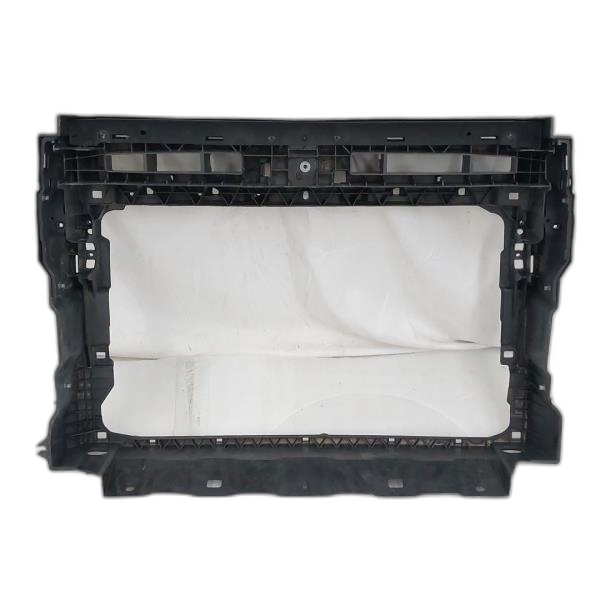
The most important thing to understand about the radiator core support on a 1999 Honda CR-V is that it is not a simple bolt-on part. It is a structural component that is spot-welded to the vehicle's frame at the factory. This means replacement is a major repair that involves cutting out the old support and welding in a new one, a job best left to a professional body shop. Damage to this part usually comes from a front-end collision or, on older vehicles, severe rust.
Symptoms of a Damaged Radiator Support

Because this part is structural, the symptoms of failure are often obvious and affect the alignment of the entire front end.
- Poor Panel Alignment: The most common sign is that the front body panels no longer line up correctly. You may notice uneven or wide gaps between the hood and fenders, or the front bumper cover may appear crooked or saggy.
- Hood Latch and Hinge Problems: If the support is bent, the hood may be difficult to open or close. The hood might not latch securely, or it may pop open unexpectedly. This is a serious safety concern.
- Visible Collision Damage: After any front-end accident, the radiator support should be inspected for bends, cracks, or crushed sections. Even a minor impact can shift its position.
- Headlight Aim Issues: The headlights are mounted to the core support. If it's bent, your headlights may point too high, too low, or off to the side, creating a hazard for night driving.
- Overheating or Cooling System Leaks: A bent support can push the radiator or A/C condenser into the cooling fan or engine pulleys, causing physical damage and leaks. It can also cause the radiator itself to vibrate excessively, leading to stress cracks and leaks over time.
- Severe Rust and Corrosion: On a vehicle of this age, rust is a major enemy. The lower channel of the support can trap water and road salt, leading to corrosion that can weaken the structure and cause mounting points to fail.
Warning: A damaged or severely rusted radiator support compromises the vehicle's structural integrity and can affect how it performs in a future collision. If the hood does not latch securely, the vehicle is not safe to drive.
Buying a Used 1999 CR-V Radiator Support
Given the high cost of a new OEM part, a used OEM support from a recycled vehicle is an excellent value. However, careful inspection is critical.
1. Verify Compatibility
The first-generation Honda CR-V received a facelift in 1999. You must use a radiator support from a 1999-2001 model for a direct fit on your 1999 CR-V. A support from a 1997-1998 model will not have the correct mounting points for the updated grille and bumper. The correct OEM part number for the 1999-2001 assembly is 60400-S10-A03ZZ, which supersedes several earlier numbers.
2. Physical Inspection Checklist
- Check for Hidden Bends: Look for any signs of previous collision damage. Sight down the top and front surfaces to ensure they are perfectly straight. Look for ripples, kinks, or cracked paint, which can indicate bent metal.
- Inspect All Welds: Check the factory spot welds. If you see any messy, non-uniform welds, it may be a sign of a previous, low-quality repair.
- Examine Mounting Points: Carefully check all mounting holes and tabs for the radiator, headlights, and hood latch. Ensure they are not cracked, stripped, or broken off.
- THE RUST CHECK: This is the most important inspection point. Pay close attention to the bottom horizontal channel of the support. Surface rust can be treated, but you must reject any part with flaking, bubbling, or holes (rust-through). Poke any suspect areas with a screwdriver to test the metal's integrity.
3. Why Used OEM is a Smart Choice
For a structural part like this, a used OEM support from an undamaged vehicle is often superior to a new aftermarket part. Aftermarket supports can be made from thinner gauge steel with fewer or lower-quality welds. They are notorious for having misaligned mounting holes, which can turn a difficult job into an impossible one for a body shop, increasing labor costs and resulting in poor panel fitment.
Replacement Overview and Difficulty
Replacing the radiator core support on a 1999 CR-V is a major undertaking that requires specialized tools and skills, including cutting, grinding, and MIG welding.
- Difficulty: 5 out of 5 (Professional Body Shop Only)
- Process: The entire front end of the vehicle must be disassembled (bumper, grille, headlights, radiator, condenser). The old support is then removed by drilling out dozens of factory spot welds that attach it to the frame rails and inner fenders. The new support must be precisely positioned, clamped, and welded into place to ensure correct vehicle dimensions and panel alignment.
- DIY Feasibility: Not recommended for DIY mechanics. Improper installation can compromise vehicle safety and alignment.
Pro Tip: When the core support is removed, it provides excellent access to the front of the engine. This is an ideal time to inspect or replace items like the timing belt, water pump, or front engine mount, which can save significant labor costs later.
Cost Comparison
The labor cost is the most significant part of this repair due to its complexity.
| Part/Service | Estimated Cost | Notes |
|---|---|---|
| New OEM Part | $480 - $550 | Genuine Honda part (60400-S10-A03ZZ). |
| New Aftermarket Part | $80 - $150 | Fit and quality can be inconsistent. |
| Used OEM Part | $75 - $200 | Best value, but requires careful inspection. |
| Shop Labor | $1,000 - $1,800+ | Based on 10-15 hours of body shop labor. Price varies by shop rate. |
Known Issues, Recalls, and TSBs
There are no specific recalls or Technical Service Bulletins (TSBs) from Honda for radiator core support failure on the 1999 CR-V. Any issues, such as rust or collision damage, are addressed on a case-by-case basis as a standard body repair. The vehicle was subject to recalls for other issues like the ignition switch and Takata airbags, which should be addressed if they haven't been already.
Frequently Asked Questions (FAQ)
Is the 1999 CR-V radiator support a bolt-on part?
No, it is not. It is a structural component that is spot-welded to the vehicle's unibody frame. Replacement requires cutting and welding and should be performed by a professional body shop.
Can I use a radiator support from a 1998 CR-V on my 1999 CR-V?
No, this is not recommended. The 1999 model year was a facelift for the CR-V, with a different grille and front bumper. You need a support specifically from a 1999-2001 CR-V for all the mounting points to line up correctly. The correct part number is 60400-S10-A03ZZ.
My support is rusty. Does it need to be replaced?
It depends on the severity. Light surface rust can often be sanded away, treated with a rust converter, and painted. However, if the rust is causing the metal to flake, bubble, or has created holes, the structural integrity is compromised, and the support must be replaced for safety.
Why is the labor cost so high to replace a radiator support?
The high cost is because it is a labor-intensive structural repair. The job involves disassembling the entire front of the car, precisely cutting out the old welded panel, and then carefully welding the new one into place while ensuring the vehicle's frame dimensions remain correct. A forum post estimated the job at around 12 hours of labor.
Technical Specifications
OEM Part Numbers: 60400-S10-A03ZZ 60400-S10-330ZZ 60400-S10-900ZZ 60400-S10-A10ZZ 60400-S10-G03ZZ 60400-S10-G10ZZ
Welded steel front bulkhead assembly. Compatible with 1999-2001 Honda CR-V models.
We Have This Part in Stock

The information in this article is provided for general reference and educational purposes only. Vehicle specifications, procedures, and part compatibility can vary by production date, trim level, and region. Always consult your vehicle's factory service manual and verify part numbers before purchasing or performing repairs. Safety-critical components such as airbags, seat belts, and braking systems should be installed by a qualified professional.
- Honda CR-V:
- 🛍️ Shop This Part
- Understanding the 1999 CR-V Radiator Support
- Symptoms of a Damaged Radiator Support
- Buying a Used 1999 CR-V Radiator Support
- 1. Verify Compatibility
- 2. Physical Inspection Checklist
- 3. Why Used OEM is a Smart Choice
- Replacement Overview and Difficulty
- Cost Comparison
- Known Issues, Recalls, and TSBs
- Frequently Asked Questions (FAQ)
- 🎟️ Get 5% Off