

2012-2014 Acura TL Radiator Support: Decoding the 3.5L vs. 3.7L Difference
This guide clarifies the critical differences between the radiator core supports for FWD and SH-AWD models, a common point of confusion for buyers.
- There are two different radiator supports for the 2012-2014 TL that are NOT interchangeable.
- Part 60400-TK4-A10ZZ is for 3.5L FWD models; 60400-TK5-A10ZZ is for 3.7L SH-AWD models.
- Replacement is a major structural repair that requires professional welding and is not a DIY job.
- Symptoms of damage are primarily visual, such as poor hood/fender alignment and crooked headlights, usually resulting from a front-end collision.
Key Differences: 3.5L FWD vs. 3.7L SH-AWD Models

The most critical factor when replacing the radiator core support on a 2012-2014 Acura TL is the engine size, which determines the drivetrain. The two versions are not interchangeable, and using the wrong one will result in significant fitment issues.
- 3.5L V6 (Front-Wheel Drive Models): These models use part number 60400-TK4-A10ZZ. This support is designed for the specific layout of the FWD TL. Aftermarket cross-reference for this part is often listed as Partslink number AC1225130.
- 3.7L V6 (SH-AWD Models): These models require part number 60400-TK5-A10ZZ. This version accommodates differences in the SH-AWD system's cooling needs and component placement. Forum discussions indicate the lower crossmember is different, and there may be additional mounting holes for components specific to the all-wheel-drive system.
Warning: Many aftermarket suppliers incorrectly list their parts as fitting all models or only cross-reference the 3.5L FWD part number. Always verify the OEM part number for your specific vehicle (3.5L FWD or 3.7L SH-AWD) before purchasing. An owner on a popular forum reported that an incorrect aftermarket part was three inches too narrow across the top.
Symptoms of a Damaged Radiator Core Support


Since the core support is a structural component, failure is almost always caused by a front-end impact. The symptoms are typically visual and related to alignment rather than mechanical performance.
- Poor Hood and Fender Alignment: The most common sign is an uneven gap between the hood, fenders, and bumper cover. You may also find the hood is difficult to latch or unlatch.
- Misaligned Headlights: Headlights that point in the wrong direction or have inconsistent gaps around them can indicate a bent or shifted core support.
- Visible Cracks or Bends: A visual inspection after removing the front bumper cover and splash shields may reveal obvious cracks, bends, or broken welds on the support itself. This is a definitive sign that it needs replacement.
- Cooling Issues After an Accident: If the engine begins to overheat after a minor front-end collision, the impact may have pushed the support into the radiator or condenser, damaging them or restricting airflow.
- Rattling or Clunking Noises: A loose or broken support can cause the radiator and other mounted components to vibrate and make noise, especially over bumps.
Pro Tip: After a front-end collision, even a minor one, check the alignment of your hood and headlights. If the gaps are uneven, have a body shop inspect the core support. A bent support can put stress on the radiator and A/C condenser, leading to future leaks.
Buying a Used Radiator Core Support
For a structural part like this, a high-quality, used OEM component from an undamaged vehicle is often a better choice than a cheap, new aftermarket part, which may have fitment issues. Here’s what to look for:
- Verify the Part Number: This is the most important step. Ensure the used part is 60400-TK4-A10ZZ for a 3.5L FWD or 60400-TK5-A10ZZ for a 3.7L SH-AWD. Do not trust a seller who says it fits all models.
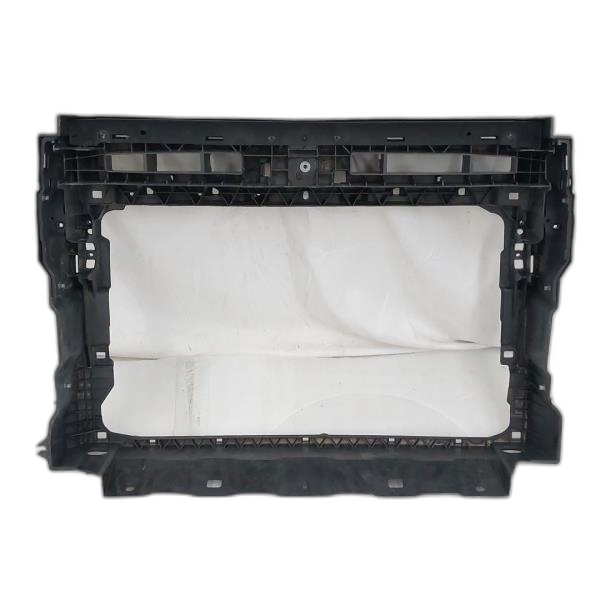
- Inspect for Hidden Damage: Look at the part from all angles in good light. Check for small cracks, especially around weld points and mounting tabs. A part that looks straight from the front might have a subtle bend only visible from the top or side.
- Check All Mounting Points: Carefully examine every tab, bracket, and hole where the radiator, condenser, fans, and hood latch attach. Ensure none are cracked, bent, or broken off. Repairing these can be difficult and compromise the final installation.
- Look for Corrosion: While less common on modern cars, check for any signs of heavy rust or corrosion that could weaken the structure.
- Source from a Reputable Recycler: Buy from a supplier that guarantees the part came from a non-front-end collision vehicle. They should be able to provide the VIN of the donor car, allowing you to check its history.
Known Issues, TSBs, and Recalls
There are no specific recalls or Technical Service Bulletins (TSBs) issued by Acura for the radiator core support itself on the 2012-2014 TL. Most issues are related to collision damage. However, several recalls were issued for this generation TL, primarily concerning Takata airbag inflators, which are unrelated to the core support but important for owners to be aware of.
Cost & Installation
Replacing a radiator core support is a major job that requires specialized tools and skills, including welding. It is not recommended for most DIY mechanics.
| Part/Service | Estimated Cost |
|---|---|
| New OEM (Acura) | $420 - $635 |
| New Aftermarket | $315 - $400 |
| Used OEM | $200 - $350 |
| Shop Labor (Body Shop) | $800 - $1500+ |
The installation process involves disconnecting the battery, draining the coolant, recovering the A/C refrigerant, and removing the front bumper, headlights, radiator, condenser, and cooling fans. The damaged support must then be cut from the vehicle's frame rails, and the new one must be precisely positioned and welded into place. This requires body frame equipment to ensure everything is aligned correctly before welding. Due to the complexity and need for welding, this job is rated as a 5 out of 5 for difficulty.
Frequently Asked Questions
Can I use a 3.7L SH-AWD support on my 3.5L FWD car, or vice-versa?
No. The parts are not interchangeable. They have different dimensions and mounting points to accommodate the different drivetrains and associated components. Using the wrong one will lead to major installation problems.
Does this part require welding to install?
Yes. The radiator core support is a structural component of the unibody frame. It must be professionally welded to the front frame rails for safety and structural integrity. This is not a simple bolt-on part.
Why are used OEM supports often better than new aftermarket ones?
Used OEM (Original Equipment Manufacturer) parts are guaranteed to fit correctly, as they were made by Acura for the vehicle. Aftermarket structural parts can have variations in manufacturing that lead to poor fit, causing issues with panel gaps and alignment. For a part that sets the position of the entire front end, OEM fit is critical.
Will a damaged radiator support cause my car to overheat?
Indirectly, yes. While the support itself doesn't perform a cooling function, if it is bent or broken, it can push the radiator into the engine fan, damage the radiator's cooling fins, or cause the radiator itself to crack and leak coolant, which will lead to overheating.
Technical Specifications
OEM Part Numbers: 60400-TK4-A10ZZ 60400TK4A10ZZ 60400-TK5-A10ZZ 60400TK5A10ZZ
Material: Steel. Installation Method: Weld-in.
We Have This Part in Stock


The information in this article is provided for general reference and educational purposes only. Vehicle specifications, procedures, and part compatibility can vary by production date, trim level, and region. Always consult your vehicle's factory service manual and verify part numbers before purchasing or performing repairs. Safety-critical components such as airbags, seat belts, and braking systems should be installed by a qualified professional.
- Acura TL: