

Corvette C8 Radiator Guide: Navigating the Complex Multi-Radiator System (2020-2026)
The C8 Corvette uses up to three separate front radiators; this guide explains which one your car needs, common failure points, and replacement costs.
- The C8 Corvette has a complex cooling system with two standard side radiators and an optional third center radiator for Z51 models. Part compatibility is critical.
- The most common cause of failure is damage from road debris due to the large, open front grilles. Inspecting for physical damage is key.
- When buying a used radiator, verifying the part number for your specific model (Z51 vs. non-Z51) and position (left/right) is more important than mileage.
- Replacement requires removing the front bumper and a meticulous coolant bleeding procedure, preferably with a vacuum-fill tool, to avoid air pockets and subsequent overheating.
Understanding the C8 Corvette's Unique Cooling System

The most important thing to understand about the C8 Corvette's radiator system is that it's not a single part. Due to the mid-engine layout, Chevrolet engineered a sophisticated cooling network with long coolant lines running from the engine in the middle of the car to the radiators at the very front. This complexity means that identifying the correct radiator for your specific vehicle is crucial. Fitment depends on the radiator's position (left or right) and whether your car has the Z51 Performance Package.
Variant Differences: Which Radiator Do You Have?
The specific radiators your Corvette uses depends on its factory options. Here is a breakdown:
- Stingray (Non-Z51): These models are equipped with two primary radiators: a left (driver side) and a right (passenger side) unit located in the front fascia.
- Stingray with Z51 Performance Package: 🎬 Watch: A full breakdown of the Z51 package features In addition to the two side radiators, Z51 models include a third, center-mounted front radiator to provide extra cooling for the engine and transmission, a feature designed for sustained high-performance driving. The side radiators on Z51 models may also be thicker for increased capacity.
- Z06 and E-Ray Models: These higher-performance models feature even more specialized cooling systems, often with unique part numbers and additional heat exchangers for various components. While the basic layout is similar, part compatibility should be verified with extreme care.
Warning: Fitment is extremely specific. Always verify the exact part number for your vehicle's VIN, package (Z51 or not), and the radiator's mounting position (left, right, or center) before ordering a replacement.
Symptoms of a Failing Radiator

Radiator issues on the C8 Corvette will present with fairly traditional symptoms, though the location of the leak can help pinpoint which unit has failed.
- Visible Coolant Leaks: Puddles of pink or orange DEX-COOL antifreeze under the front corners of the car are a clear sign of a leak. A leak near the driver-side front tire points to the left radiator, while a leak near the passenger-side front tire indicates a problem with the right radiator.
- Sweet Smell: The smell of hot antifreeze is a common indicator of a coolant leak, even a small one that may not be visibly dripping. You might notice this smell inside the cabin or around the front of the car after driving.
- Engine Overheating: A dashboard warning for high engine temperature or a "let the car idle" message can signal a cooling system problem. This can be caused by a significant leak, an air pocket in the system, or a malfunctioning fan.
- Low Coolant Warning: The driver information center may display a low coolant message if the level in the reservoir drops due to a leak.
- Visible Damage: The C8's radiators are located behind large, open front grilles, making them vulnerable to damage from rocks and road debris. A visual inspection may reveal bent fins, or a puncture, which is a common cause of leaks.
- Fan Noises: While not a radiator failure itself, a clicking, grinding, or unusually loud noise from the front of the car when it's hot can indicate a failing radiator fan motor. Since the fan is part of the radiator assembly, it's often replaced at the same time.
Known Issues, Recalls, and Technical Service Bulletins (TSBs)

While the C8's cooling system is generally robust, a few issues have been noted:
- Road Debris Damage: The most common issue reported by owners is radiator damage from rocks and other debris passing through the front grille openings. Many owners proactively install aftermarket mesh grille screens 🎬 See how to easily protect your radiators from debris to protect the radiator fins.
- Improper Coolant Fill from Factory: Some early models were reported to have left the factory with low coolant levels or air pockets in the system, leading to overheating issues shortly after delivery.
- TSB #20-NA-236: This service bulletin addresses a condition on some 2020 models where the water pump outlet pipe could become disconnected, causing a sudden coolant leak at the rear of the vehicle and potential overheating.
- Hose Clamp Leaks: Some minor leaks have been traced to improperly seated or loose hose clamps from the factory, which is often a simple fix.
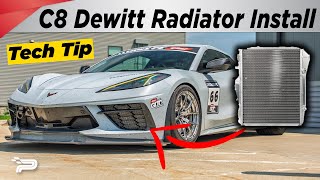
Pro Tip: When replacing a C8 radiator, the coolant bleed procedure is critical. The long plumbing lines make the system prone to air pockets, which can cause overheating even with a new radiator. A vacuum-fill tool is strongly recommended 🎬 Watch: Pro tips for a successful C8 radiator installation to properly bleed the system.
Buying a Used C8 Corvette Radiator

A used OEM radiator can be a smart, cost-effective choice, especially given the high price of new units. However, careful inspection is key.
- Verify Compatibility: This is the most critical step. Double-check that the part number matches what your car needs. Is it for the left or right side? Is it for a Z51 or a non-Z51 car? A part from a Z51 might physically fit a non-Z51 car but may have different hose connections or thickness. Use the VIN to confirm the exact configuration of the vehicle.
- Physical Inspection: Carefully examine the entire radiator. Look for bent or crushed cooling fins. While a few bent fins are cosmetic, large areas of damage can impede airflow. Check the plastic end tanks for any cracks, especially around the hose connections and mounting points. Look for any white or colored crusty residue, which indicates a past slow leak.
- Source of the Part: Ask about the history of the donor vehicle. A radiator from a low-mileage front-end collision vehicle is often a good candidate, provided the radiator itself was not impacted. Be wary of parts from flood-damaged vehicles, as they may have hidden corrosion or electrical issues with the fan motor.
- Mileage vs. Condition: For a modern radiator, physical condition is far more important than mileage. A 5,000-mile radiator that was punctured by a rock is useless. A 50,000-mile radiator that is clean, undamaged, and shows no signs of leaks is a perfectly good part.
- Why Used OEM is a Good Choice: A used OEM radiator guarantees perfect fitment of mounting brackets, fan shrouds, and hose connections, which can be a problem with aftermarket parts. The core design is specifically engineered by GM for the C8's thermal demands.
Cost Breakdown for Replacement
Replacing a radiator on a C8 Corvette can be expensive due to the parts cost and the labor involved in removing the front fascia.
| Part/Service | Estimated Cost |
|---|---|
| New OEM Radiator (Side) | $250 - $400 |
| New Aftermarket Radiator (Performance) | $700 - $1,000+ |
| Used OEM Radiator (Side) | $150 - $300 |
| Shop Labor Cost | $300 - $500 |
| Total Estimated Cost (Used OEM) | $450 - $800 |
| Total Estimated Cost (New OEM) | $550 - $900 |
Note: Prices are estimates and can vary based on location, vehicle configuration, and the specific radiator being replaced. The total job cost can approach or exceed $1,500 at a dealership.
Frequently Asked Questions (FAQ)
Why does the C8 Corvette have multiple radiators?
The mid-engine design places the engine far from the front of the car. Using multiple smaller radiators in the front corners allows for efficient use of space and airflow from the large side vents, providing the necessary cooling without a traditional large, central radiator. This design is essential for managing the high heat output of the V8 engine.
Can I add the Z51 center radiator to my base Stingray?
While technically possible, it is a complex and expensive modification. It involves not only the radiator itself but also additional hoses, brackets, and potentially different front bumper components. For most street driving, the standard two-radiator system is perfectly adequate. This upgrade is generally only considered by owners who will be tracking their car extensively.
How do I know if I need a left, right, or center radiator?
First, determine if your car has the Z51 package (which includes the center radiator). Then, locate the source of the leak or damage. A leak dripping in front of the driver's side tire indicates a failed left radiator. A leak in front of the passenger side tire points to the right radiator. The part numbers are different for each position.
What is the correct coolant for a 2020-2026 Corvette?
The C8 Corvette uses ACDelco DEX-COOL Antifreeze/Coolant (typically orange or pink in color). It's important to use the specified coolant and not mix it with other types, as this can lead to corrosion and damage to the cooling system. The system should be filled with a 50/50 or 60/40 mixture of coolant and distilled water, depending on climate.
Is it normal for the cooling fans to run loudly or for a long time?
Yes, this is often normal. The C8's cooling fans are powerful and will run aggressively to pull air through the radiators, especially in slow-moving traffic or after a hard drive. It is not uncommon to hear them running for a period after the car has been shut off. However, if you hear a mechanical grinding or clicking noise from the fans, it could be a sign of a failing fan motor.
Helpful Videos


Technical Specifications
OEM Part Numbers: 23429486 84739202 84739203 84910712 84910713 87828587 23429489 84608771 84739204 84739205 85559346 85559347 85559348 85559349
System uses DEX-COOL (orange/pink) antifreeze. Base models use two side-mounted radiators. Z51 models add a third, center-mounted radiator. Replacement requires a vacuum-bleeding procedure to prevent air pockets in the long coolant lines.
We Have This Part in Stock



The information in this article is provided for general reference and educational purposes only. Vehicle specifications, procedures, and part compatibility can vary by production date, trim level, and region. Always consult your vehicle's factory service manual and verify part numbers before purchasing or performing repairs. Safety-critical components such as airbags, seat belts, and braking systems should be installed by a qualified professional.
- Chevrolet Corvette:
- 🎬 Helpful Videos
- 🛍️ Shop This Part
- Understanding the C8 Corvette's Unique Cooling System
- Variant Differences: Which Radiator Do You Have?
- Symptoms of a Failing Radiator
- Known Issues, Recalls, and Technical Service Bulletins (TSBs)
- Buying a Used C8 Corvette Radiator
- Cost Breakdown for Replacement
- Frequently Asked Questions (FAQ)
- 🎟️ Get 5% Off