

2013-2019 Toyota Camry Radar Sensors: Front Pre-Collision vs. Rear Blind Spot
Learn to identify the correct radar sensor for your Camry, diagnose common failures, and understand the critical calibration process required for safety systems.
- Camrys have two distinct radar systems: one front sensor for pre-collision/cruise control and two rear sensors for blind spots. They are not interchangeable.
- Professional ADAS calibration is mandatory after replacing any radar sensor; skipping this step is a serious safety risk.
- Before buying a used part, you must verify the exact OEM part number from your original sensor, as compatibility is specific to year and trim.
- Rear BSM sensor failure is often caused by minor bumper impacts that damage the plastic mounting bracket, not the sensor itself.
Front vs. Rear: Identifying Your Camry's Radar Sensor

Before diagnosing or buying a replacement, it's critical to know which radar sensor you're dealing with. The 2013-2019 Toyota Camry has two completely different systems that are not interchangeable.
- Front Millimeter Wave Radar Sensor: There is only ONE of these, located in the center of the front grille, behind the large Toyota emblem. This sensor controls the Pre-Collision System (automatic emergency braking) and Dynamic Radar Cruise Control. Failure of this part will disable these specific front-facing safety features.
- Rear Blind Spot Monitor (BSM) Sensors: There are TWO of these, a left and a right, mounted inside the rear bumper cover at the corners. These control the Blind Spot Monitor (the warning light in your side mirrors) and the Rear Cross-Traffic Alert (which beeps when you're backing up and a car is approaching). These sensors work as a pair.
Warning: The vehicle's model year range spans two different Camry generations: the XV50 (2013-2017) and the XV70 (2018-2019). Part numbers and system designs are different between these generations. Always verify your part number before ordering.
Symptoms of a Failing Radar Sensor

Failure symptoms are specific to which sensor has a problem. Your car will display a clear message on the instrument panel.
Front Radar Sensor Failure
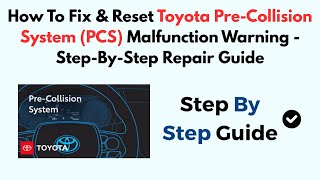
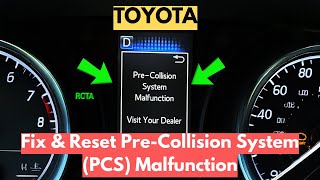
- "Pre-Collision System Malfunction" or "Check PCS System" Message: 🎬 Watch: How to fix and reset a PCS malfunction warning This is the most common indicator.
- Dynamic Radar Cruise Control Unavailable: The system will not be able to maintain distance from the car ahead.
- Warning Light on Dash: A yellow/amber warning indicator will illuminate.
- Diagnostic Trouble Codes (DTCs): A common code stored in the system is C1A1100, indicating a sensor misalignment.
Rear Blind Spot Monitor (BSM) Failure
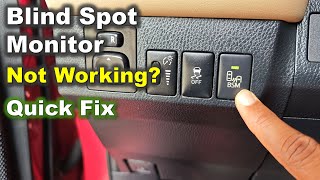
- "BSM Not Available" Message: The multi-information display will show this message when you try to activate the system.
- BSM Button Light Flashing: The light on the BSM activation button may flash instead of staying solid.
- Mirror Indicators Inoperative: The amber warning lights in the side mirrors will not light up when a car is in your blind spot.
- No Rear Cross-Traffic Alert: The system will not beep to warn of approaching vehicles when in reverse.
Known Issues, Recalls, and Technical Service Bulletins (TSBs)

While there are no widespread recalls specifically for the 2013-2019 Camry's radar sensors, related information points to potential weaknesses.
- Front Sensor Water Intrusion: Toyota issued a Special Service Campaign (SSC K0B) for 2018-2019 Tacoma and Tundra trucks, which use a similar front radar sensor. The campaign addressed water entering the sensor, which could cause the PCS to deactivate or, in rare cases, trigger unexpected braking. The fix involved applying a special sealer and updating software. While not specific to the Camry, this suggests the sensor design may be susceptible to moisture damage over time.
- Rear BSM Bracket Damage: The most common failure for rear BSM sensors is not the sensor itself, but the plastic mounting bracket it sits on. Minor rear bumper impacts from parking mishaps can easily bend or break the bracket, throwing off the sensor's angle and triggering a "BSM Not Available" error.
- Calibration TSBs: Toyota has issued several TSBs, such as T-SB-0088-21 for the 2018 Camry, emphasizing that proper calibration of the front millimeter wave radar sensor requires the vehicle and the target to be on a perfectly level surface. This highlights the precision required for the job.
Pro Tip: Before assuming a rear BSM sensor is bad, thoroughly clean the rear bumper corners. Heavy mud, snow, or road grime can temporarily block the radar signal and cause a "BSM Not Available" message.
Buying a Used Radar Sensor: What to Check

Due to the high cost of new OEM sensors, a used part is an excellent value. However, these are sensitive electronics, so careful inspection is key.
- Verify the Part Number First: This is the most important step. Part numbers are specific to generation (2013-2017 vs. 2018-2019) and function (front vs. rear). Pull your original sensor and match the number exactly. For example, front sensor 88210-33090 is for 2015-2017 models, while 88210-06010 fits 2018-2019 models.
- Inspect the Housing for Damage: Check the plastic casing for any cracks, especially around the seams and connector port. A cracked housing allows water inside, which is a primary cause of failure.
- Check the Mounting Tabs: Ensure all mounting tabs and bracket points are intact. A sensor with broken tabs will never align correctly, making calibration impossible. This is especially critical for rear BSM sensors that clip into delicate bumper brackets.
- Examine the Electrical Connector: Look inside the connector port for any signs of corrosion (green or white powder) on the pins. Corroded pins indicate water damage and the sensor should be rejected.
- Budget for Calibration: A used sensor is not plug-and-play. You MUST factor in the cost of professional calibration. A shop with the correct ADAS equipment will need to perform this service, which can cost several hundred dollars.
Replacement Difficulty & Calibration Requirements

Physically swapping the sensor is relatively straightforward, but the mandatory calibration makes this a job for a professional shop.
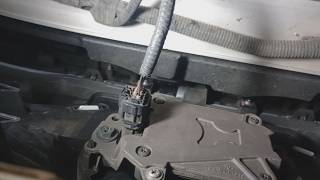
- Installation: The front sensor requires removing the front grille or bumper cover. 🎬 See how to disconnect the front radar sensor connector The rear sensors require removing the rear bumper cover. This is a 1-2 hour job for a mechanic.
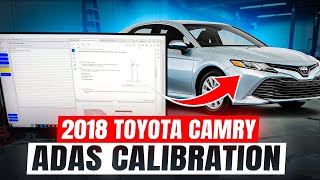
- Calibration: This is the critical and difficult part. The vehicle must be on a perfectly level surface, and a technician uses special targets (like a corner reflector) placed at a precise distance and height from the sensor. They then use a diagnostic tool like Toyota's Techstream software to command the sensor to learn its new position. 🎬 Watch a professional ADAS radar calibration on a 2018 Camry
Warning: DO NOT skip calibration. An uncalibrated or poorly calibrated radar sensor is a major safety hazard. It can cause the Pre-Collision System to brake unexpectedly for a 'ghost' object or, worse, fail to see a real obstacle in front of you. For BSM sensors, it can fail to warn you of a car in your blind spot.
Cost Comparison for Camry Radar Sensors
Prices vary significantly between the front and rear sensors, with used OEM parts offering substantial savings.
| Part | New OEM | Used OEM | Shop Labor (Install) | Shop Labor (Calibration) |
|---|---|---|---|---|
| Front Radar Sensor | $250 - $450 | $150 - $250 | $100 - $200 | $250 - $500+ |
| Rear BSM Sensor (Each) | $750 - $1,100+ | $150 - $350 | $150 - $250 | $200 - $400 |
Note: Prices are estimates and can vary based on location, supplier, and vehicle condition. Aftermarket options are generally not available or recommended for this safety-critical component.
Frequently Asked Questions (FAQ)
Can I replace a radar sensor myself?
While you can physically install the part, you cannot complete the job at home. The mandatory ADAS calibration requires expensive, specialized equipment and software that only professional auto repair shops or dealerships have. Skipping this step is extremely dangerous.
Why did my radar sensor fail after a minor accident?
These sensors and their mounting brackets are very sensitive to impact. A minor bumper nudge that leaves little visible damage can be enough to knock the sensor out of its precise alignment or crack the internal electronics, triggering a malfunction warning.
Can I drive my Camry with a malfunctioning radar sensor?
Yes, but with limitations. The vehicle will drive normally, but the associated safety systems (Pre-Collision, Dynamic Cruise Control, Blind Spot Monitor) will be completely disabled. You will have to rely solely on your own awareness, as the car's safety net will not function.
What is the difference between a front and rear radar sensor?
They are completely different parts with different functions, part numbers, and locations. The single front sensor manages forward-looking systems like automatic braking and adaptive cruise control. The two rear sensors manage side-and-rear-looking systems like blind spot warnings. They cannot be used in place of one another.
Part Numbers & Technical Specifications
Always confirm the part number on your specific vehicle before ordering a replacement. The following list is for reference and is not exhaustive.
| Sensor Type | Years | Part Numbers |
|---|---|---|
| Front Radar (PCS/DRCC) | 2015-2017 | 88210-33090, 88210-06010 |
| Front Radar (PCS/DRCC) | 2018-2019 | 88210-06010, 88210-06090, 88210-06120 |
| Rear BSM (Left/Right) | 2013-2014 | 88162-06031, 88162-06030 |
| Rear BSM (Left/Right) | 2018-2019 | 88162-06050 |
Helpful Videos

Technical Specifications
OEM Part Numbers: 88210-06010 88210-06090 88210-33090 88210-06120 88162-06031 88162-06030 88162-06050 A2C740034 A2C757123
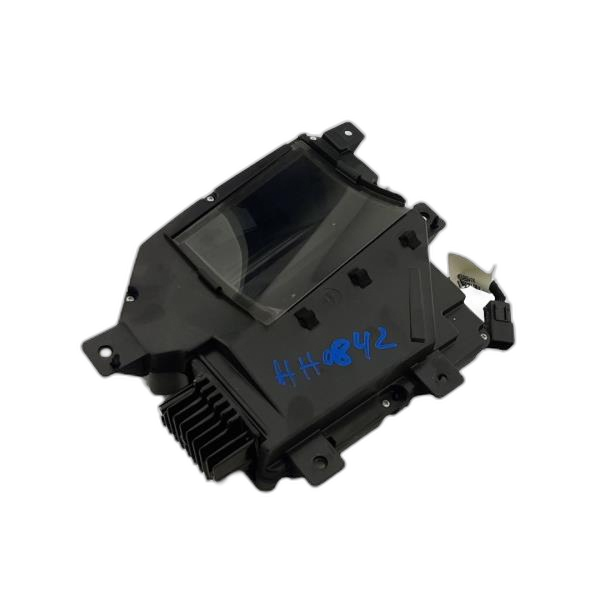
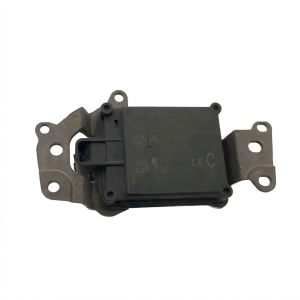
The front sensor is a millimeter-wave radar unit located behind the front grille emblem. The rear sensors are blind spot radar modules located in the left and right corners of the rear bumper.
We Have This Part in Stock


The information in this article is provided for general reference and educational purposes only. Vehicle specifications, procedures, and part compatibility can vary by production date, trim level, and region. Always consult your vehicle's factory service manual and verify part numbers before purchasing or performing repairs. Safety-critical components such as airbags, seat belts, and braking systems should be installed by a qualified professional.
- Toyota Camry:
- 🎬 Helpful Videos
- 🛍️ Shop This Part
- Front vs. Rear: Identifying Your Camry's Radar Sensor
- Symptoms of a Failing Radar Sensor
- Front Radar Sensor Failure
- Rear Blind Spot Monitor (BSM) Failure
- Known Issues, Recalls, and Technical Service Bulletins (TSBs)
- Buying a Used Radar Sensor: What to Check
- Replacement Difficulty & Calibration Requirements
- Cost Comparison for Camry Radar Sensors
- Frequently Asked Questions (FAQ)
- Part Numbers & Technical Specifications
- 🎟️ Get 5% Off