

2017-2025 Honda CR-V Radar Sensor: Failure Symptoms, Part Numbers, and Calibration Explained
This guide covers the common failures, complex part number variations, and mandatory calibration requirements for the front and rear radar sensors on your Honda CR-V.
- After replacement, the radar sensor MUST be professionally calibrated by a dealer or qualified shop with special equipment; this is not a DIY task.
- Exact part number matching is critical. There are many variations based on year, trim, and FWD/AWD. Verify the number on your original part before buying a used one.
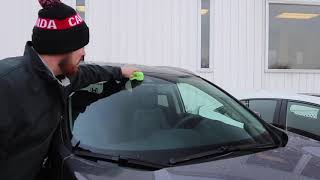
- A 'Radar Obstructed' warning is often caused by snow, ice, or dirt on the front emblem. Always clean the sensor first before assuming it has failed.
- Total replacement costs at a dealership can be extremely high, from $1,500 to over $4,000, making a verified used OEM part a financially smart choice.
Symptoms of a Failing Radar Sensor

When a radar sensor on a Honda CR-V fails, is obstructed, or loses its calibration, the vehicle will typically disable the associated safety systems and display a series of warnings on the dashboard. You will not lose the ability to drive the car, but the driver-assistance features will be inoperative.
Common Warning Messages and Symptoms:
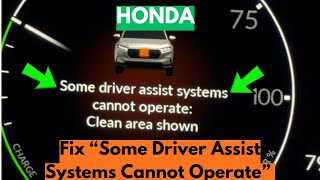
- "Some driver assist systems cannot operate" or "RADAR OBSTRUCTED" Message: This is the most common alert. 🎬 Watch this guide to resolve the Driver Assist warning It often appears in bad weather like heavy rain, snow, or fog, or if the sensor face is blocked by ice, mud, or even a large bug splatter. While often temporary and fixable by cleaning the sensor, a persistent message in clear conditions suggests a deeper problem.
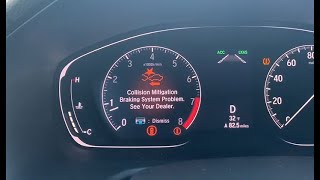
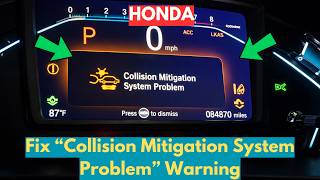
- Dashboard Lights for Multiple Systems: A single faulty radar sensor can cause a cascade of warning lights, including "Brake System Problem," "Adaptive Cruise Control (ACC) Problem," and "Collision Mitigation System Problem." This happens because these systems are interconnected and rely on the radar's data.
- Adaptive Cruise Control (ACC) Malfunction: The ACC may not engage at all, or it might behave erratically. Owners have reported jerky braking, rapid acceleration, or the system failing to maintain a consistent speed.
- False Collision Warnings: The Collision Mitigation Braking System (CMBS™) might give false alerts or even apply the brakes unnecessarily if the sensor is misaligned or malfunctioning.
- Diagnostic Trouble Code (DTC) P2583-76: This specific code indicates a misalignment of the millimeter wave radar and is often triggered by snow or ice buildup, but can also point to a permanent fault.
Known Issues, TSBs, and Recalls

While there are no widespread recalls specifically for radar sensor failure, Honda has issued Technical Service Bulletins (TSBs) related to the system's software and performance.
- TSB A17-064 / A21-068: These bulletins address issues on 2017-2019 CR-V models (among other Hondas) where various driver-assist warnings appear, including a false "Radar Obstructed" message or speed fluctuations with ACC. The issue is often caused by snow or ice buildup triggering a misalignment code (P2583-76). The recommended fix is a software update for the millimeter wave radar unit, which a dealer can perform.
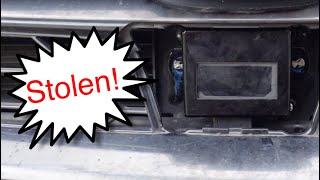
- Theft: The front radar sensor, located behind the prominent Honda emblem, has become a target for theft. Thieves can remove the unit in under a minute, leading to a very expensive repair. 🎬 See how to install a radar sensor protector cover
- Battery Changes: Disconnecting or replacing the vehicle's battery can cause the ADAS systems to lose their calibration memory. This often results in multiple warning lights upon restart. The issue can sometimes be resolved by performing a specific 'initialization drive cycle' (driving steadily on a straight, flat road above 25 mph for several minutes), but may require professional recalibration.
CRITICAL: Calibration is Not Optional
After replacing any radar sensor, the system must be professionally calibrated. This is not a DIY procedure. 🎬 Watch a live demonstration of Honda ADAS radar calibration It requires specialized equipment, targets, and software to aim the sensor precisely. Skipping calibration will cause the system to not work and can make the vehicle unsafe by providing inaccurate data to the safety systems. Expect to pay a dealer or qualified independent shop several hundred dollars for this service alone.
Buying a Used Radar Sensor: What to Check

A used OEM radar sensor can be a cost-effective alternative to a new unit, which can be extremely expensive. However, you must be diligent to ensure you get a good, compatible part.
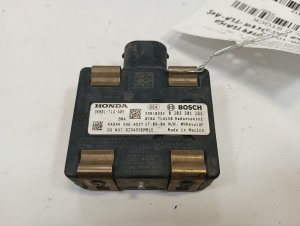
- Verify the Part Number: This is the most critical step. There are numerous part numbers for different years, trims, and sensor locations (front vs. rear). The only way to guarantee compatibility is to match the part number from your original sensor exactly. Do not rely on visual similarity. For example, part number 36803-TLB-A06 is a common front radar for 2017-2019 FWD EX/EX-L models, and it supersedes several older versions.
- Physical Inspection: Carefully inspect the used sensor. Look for:
- Cracks or Damage: The face of the sensor must be free of cracks or deep gouges. Scratches can distort the radar signal.
- Mounting Tabs: Ensure all mounting brackets and tabs are intact and not bent or broken. A bent bracket will make proper aiming impossible.
- Connector Pins: Check the electrical connector for any signs of corrosion, moisture, or bent pins.
- Seals: The unit is environmentally sealed. Do not buy a sensor that shows any signs of being opened or tampered with.
- Ask About the Donor Vehicle: If possible, find out why the donor vehicle was salvaged. A part from a vehicle with a minor rear-end collision is a much safer bet than one from a major front-end impact, which could have subjected the sensor to a severe shock.
- Why Used OEM is a Smart Choice: For a safety-critical electronic component like this, a verified used OEM part is often superior to a new, unproven aftermarket part. The OEM unit was designed and tested by Honda for your specific vehicle, ensuring proper integration with the complex Honda Sensing system.
Replacement Overview and Cost

Physically replacing the front radar sensor typically involves removing the front bumper cover to access its mounting location. The rear blind spot sensors are located in the rear bumper corners. While the physical swap might be manageable for an experienced DIYer, the mandatory calibration makes this a job that will ultimately require professional service.
| Item | Estimated Cost |
|---|---|
| New OEM Sensor (Part Only) | $550 - $1,200+ |
| Used OEM Sensor (Part Only) | $150 - $500 |
| New Aftermarket Sensor | $300 - $500 (Compatibility and quality can be questionable) |
| Shop Labor (Installation) | $200 - $400 (1.5-3 hours) |
| Shop Labor (Calibration) | $300 - $550 |
| Total Dealer Replacement Cost | $1,500 - $4,300+ |
Frequently Asked Questions (FAQ)
Can I drive my CR-V with a bad radar sensor?
Yes, the vehicle is safe to drive. However, all driver-assistance features that rely on that sensor, such as Adaptive Cruise Control, Collision Mitigation Braking, and Blind Spot Information, will be disabled. You will have to operate the vehicle without these safety aids.
Why did my radar sensor suddenly stop working in the snow?
This is a very common occurrence. The radar sensor is located in the front grille, an area prone to buildup of snow, ice, and road slush. When the sensor's face is blocked, it cannot get a clear reading and shuts down as a precaution, triggering a "Radar Obstructed" warning. In most cases, safely pulling over and cleaning the Honda emblem will restore function.
Do I have to go to a Honda dealer for calibration?
Not necessarily, but it's often the safest bet. Some high-end independent auto body or repair shops have invested in the specialized ADAS calibration equipment required for this job. However, you must confirm they have the specific targets and software for your 2017-2025 CR-V. An improper calibration is as bad as no calibration at all.
What's the difference between the front and rear radar sensors?
The front radar is a single, forward-facing "millimeter wave" unit used for long-range detection for ACC and CMBS. The rear sensors are typically a pair of smaller units, one in each corner of the rear bumper, used for the short-range Blind Spot Information (BSI) system. They have different part numbers and are not interchangeable.
Helpful Videos

Technical Specifications
OEM Part Numbers: 36801-TLA-A01 36801TLAA05 36801TNYA03 36803-TLB-A00 36803-TLB-A01 36803-TLB-A02 36803-TLB-A03 36803-TLB-A04 36803-TLB-A05 36803-TLB-A06 36803TLA-A06 36803TLAA00 36803TLAA01 36803TLAA02 36803TLAA03 36930-TLA-A21 8S411-3A0-A21 8S411-3A0-A13
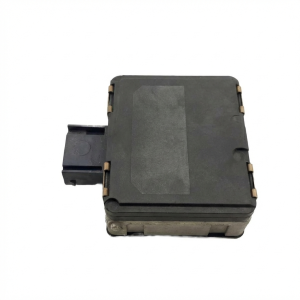
The front radar is a millimeter wave radar unit located in the front grille, often behind the Honda emblem. It works in conjunction with a windshield-mounted camera as part of the Honda Sensing® system. Rear corner radars are used for the Blind Spot Information (BSI) system.
We Have This Part in Stock





The information in this article is provided for general reference and educational purposes only. Vehicle specifications, procedures, and part compatibility can vary by production date, trim level, and region. Always consult your vehicle's factory service manual and verify part numbers before purchasing or performing repairs. Safety-critical components such as airbags, seat belts, and braking systems should be installed by a qualified professional.
- Honda CR-V: