

2016-2020 Cadillac CT6 Radar Sensor: Solving 'Service Driver Assist' Warnings
This guide explains the common failures of the CT6's radar sensors, why calibration is critical, and what to look for when buying a used replacement.
- Replacing a radar sensor is not a complete DIY job; professional calibration with special equipment is mandatory for it to function.
- The most common symptom of failure is a "Service Driver Assist System" message on the dash, which disables features like blind spot monitoring and adaptive cruise control.
- Common causes of failure include internal faults, corrosion of the wiring connector behind the bumper, or misalignment from a minor impact.
- Before replacing the sensor, have a professional check for software updates (per TSB N162043200) and wiring issues, as these can be cheaper fixes.
Symptoms of a Failing Radar Sensor
When a radar sensor on a Cadillac CT6 fails or loses alignment, it typically disables the associated safety features and triggers a warning message on the dashboard. You won't necessarily notice a physical symptom, but the car's electronic safety net will be compromised.
- "Service Driver Assist System" Message: This is the most common indicator. It's a general fault message telling you that one of the ADAS components, such as a radar sensor or camera, has a problem.
- Disabled Safety Features: Adaptive Cruise Control, Blind Spot Monitoring, and Rear Cross-Traffic Alert will become unavailable. The indicator lights in the side mirrors for the blind spot system may not work or may even glow dimly all the time.
- Adaptive Cruise Control Unavailable: The ACC may fail to engage or may shut off unexpectedly. Sometimes, the system will revert to standard cruise control without the ability to maintain distance from the car ahead.
- Diagnostic Trouble Codes (DTCs): A professional scan tool may reveal specific codes related to the radar sensors. A common code is U0269 (Lost Communication With Side Object Detection Module), which points directly to a failure in the rear bumper's blind spot sensors or their wiring.
Known Issues, TSBs, and Recalls
While there are no specific recalls for the radar sensors themselves, several Technical Service Bulletins (TSBs) address issues with the driver-assist systems they support.
- TSB N162043200: For 2016-2017 CT6 models, GM issued a service update to reprogram the short-range radar sensor modules. In highly reflective environments (like tunnels or next to large trucks), the sensor's data throughput could be exceeded, causing a "Service Driver Assist" message. The fix is a software update performed by a dealer.
- TSB PIT5441C: This bulletin warns technicians that a faulty diagnostic tool (MDI) or cable can sometimes cause false communication codes like U0269. This means the issue could be with the diagnostic equipment, not the vehicle itself.
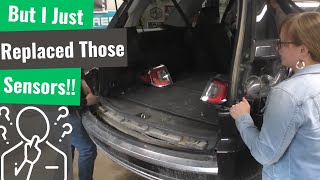
- Wiring and Connector Corrosion: The rear short-range radar sensors are located inside the bumper cover, an area exposed to moisture and road salt. Corrosion on the electrical connector pins or damage to the wiring harness is a common cause of failure for these modules. 🎬 Watch: Diagnosing a blind spot sensor communication fault
As of mid-2024, no NHTSA recalls directly target the radar sensors on the 2016-2020 Cadillac CT6. However, a recall for the 2019 model (NHTSA 19V889000) addressed a software error in the Electronic Brake Control Module that could disable stability control and ABS without warning. This highlights the interconnected nature of the vehicle's safety systems.
Warning: The most critical step after replacing a radar sensor is calibration. Failure to calibrate the sensor will result in the safety systems not working correctly, potentially causing them to react too late, too early, or not at all.
Buying a Used CT6 Radar Sensor: What to Check
A used OEM radar sensor can be a cost-effective solution, as they are often more reliable than new aftermarket alternatives. However, these are sensitive electronic components, and careful inspection is key.
- Verify the Part Number: Match the part number on the replacement sensor to your original part exactly. The primary part numbers for the rear short-range sensors are 84408351 and 84408352. Other associated numbers include 84252162 and 84871049. Using the wrong part can lead to incompatibility and calibration failure.
- Inspect the Housing: Look for any cracks, chips, or signs of physical damage on the black plastic housing. A compromised housing can allow moisture to enter and destroy the internal electronics.
- Check the Connector: The electrical connector pins should be clean, straight, and free of any green or white corrosion. Corroded pins are a major red flag and a common cause of failure.
- Ask About the Donor Vehicle: If possible, find out the history of the vehicle the part came from. A part from a low-mileage, front-end collision vehicle is a much better bet than one from a car that suffered flood damage or a severe rear impact.
Replacement and Calibration
Physically replacing a radar sensor is moderately difficult, but completing the job requires professional tools.
- Installation Difficulty: 2/5 (for the sensor itself), 4/5 (including bumper removal and calibration).
- Location: The short-range sensors are bolted to brackets on the left and right corners of the vehicle, behind the rear bumper cover. The long-range sensor is located behind the front grille.
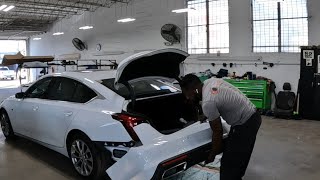
- Process: To replace a rear sensor, the rear bumper cover must be removed. 🎬 See: How to remove a Cadillac rear bumper cover The sensor itself is typically held on by a few bolts. After installing the new sensor and reconnecting the wiring, the bumper is reinstalled.
The Critical Calibration Step
A radar sensor cannot function correctly until it is calibrated. This process tells the sensor exactly where it is aimed relative to the vehicle's centerline and thrust angle. This is not a DIY procedure.
- Static vs. Dynamic Calibration: Some sensors require static calibration in a workshop using special targets and a scan tool. Others, like the long-range radar, may require a dynamic calibration, which involves driving the vehicle at a specific speed on a road with clear lane markings for a set period of time.
- Required Tools: Calibration requires a high-end diagnostic scan tool with ADAS capabilities and, for static calibration, a set of OEM-specified radar reflectors and a perfectly level floor.
- Who Can Do It: This service is performed by Cadillac dealerships and some independent auto repair or collision shops that have invested in expensive ADAS calibration equipment.
Pro Tip: Before paying for a replacement, have a professional diagnose the system. The problem could be a simple software issue fixed by a dealer reprogram or a wiring fault, which would be cheaper to fix than replacing the module itself.
| Item | Estimated Cost |
|---|---|
| New OEM Sensor | $450 - $700 |
| New Aftermarket Sensor | $200 - $400 (Compatibility and quality can be a risk) |
| Used OEM Sensor | $100 - $250 |
| Shop Labor (Installation) | $150 - $250 (approx. 1.5-2 hours for bumper R&R) |
| Shop Labor (Calibration) | $250 - $500 per sensor |
Frequently Asked Questions (FAQ)
Can I replace a CT6 radar sensor myself?
You can physically swap the part if you are comfortable removing the bumper cover. However, you cannot complete the job. The vehicle will be drivable, but the safety system will remain inactive and display a warning until the new sensor is professionally calibrated by a dealer or a qualified ADAS shop.
Why did my driver-assist features stop working after a minor bumper tap?
Even a small impact can knock a radar sensor out of alignment. The system performs self-checks, and if it detects that a sensor's angle is incorrect, it will shut down the related features and post a "Service Driver Assist" warning as a safety precaution.
Does a used radar sensor need to be programmed or calibrated?
It must be calibrated. While some modules in a car need 'programming' to learn the vehicle's VIN, radar sensors require 'calibration' to learn their precise physical orientation. This aiming process is mandatory for both new and used sensors.
Is it safe to drive with a faulty radar sensor?
Yes, the vehicle is mechanically safe to drive. However, critical safety features like Blind Spot Monitoring, Rear Cross-Traffic Alert, and Adaptive Cruise Control will be disabled, increasing the risk of a collision. You must rely solely on your own awareness, as the car's electronic safety net is offline.
Helpful Videos

Technical Specifications
OEM Part Numbers: 84408351 84408352 84252162 84871049 13395934
The part numbers listed primarily refer to the short-range radar sensors located in the rear bumper corners for Side Blind Zone Alert and Rear Cross-Traffic Alert. The CT6 also uses a separate long-range radar sensor in the front grille for Adaptive Cruise Control.
We Have This Part in Stock



The information in this article is provided for general reference and educational purposes only. Vehicle specifications, procedures, and part compatibility can vary by production date, trim level, and region. Always consult your vehicle's factory service manual and verify part numbers before purchasing or performing repairs. Safety-critical components such as airbags, seat belts, and braking systems should be installed by a qualified professional.
- Cadillac CT6: