

Audi 'ACC Unavailable' Warning: Your Guide to Radar Sensor Issues (2017-2024 A4, Q5, Q7 & More)
Diagnosing the common 'ACC and Audi pre sense not available' warning and understanding the critical calibration required for radar sensor 4M09075665.
- A replacement radar sensor MUST be professionally calibrated with special equipment; it is not a plug-and-play part.
- The most common symptom of failure is the "ACC and Audi pre sense: currently unavailable" warning, often caused by a minor front-end impact that knocks the sensor out of alignment.
- Before buying a replacement, always clean the sensor surface first to rule out simple obstruction from dirt, snow, or ice.
- When buying a used sensor, inspect the electrical connector pins for any green or white corrosion, which indicates fatal water damage.
Symptoms of a Failing Radar Sensor

When the front radar sensor fails or loses its alignment, your Audi will immediately alert you with clear messages on the instrument cluster. The car's systems are designed to shut down the features that rely on the sensor to prevent unsafe behavior.
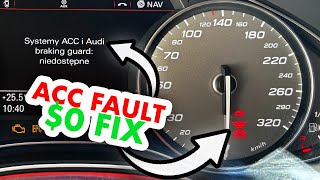
- "ACC and Audi pre sense: currently unavailable" Warning: This is the most common symptom. It indicates that both the adaptive cruise control and the forward collision warning systems are offline.
- "Adaptive cruise control unavailable" Message: A similar warning that specifically calls out the ACC system. Standard cruise control may also be disabled.
- ACC System Disengages While Driving: The cruise control might suddenly turn off without you touching the brakes or cancel button, often accompanied by one of the warnings above.
- Phantom Braking: In rare instances, a malfunctioning sensor might falsely detect an obstacle, causing the vehicle to apply the brakes unexpectedly.
- Diagnostic Trouble Codes (DTCs): A scan with a proper diagnostic tool (like VCDS or OBDeleven) is the only way to confirm the root cause. The most definitive code is C110300 (or C1103), which means "Adaptive Cruise Control Sensor Misadjusted" or "Incorrectly Positioned". This code specifically points to a problem with the radar sensor's alignment or an internal fault. 🎬 Watch: DIY radar alignment and calibration for code C1103
Known Issues and Causes of Failure

These sensors can fail for several reasons, ranging from simple obstructions to physical damage.
- Sensor Obstruction: The most common and easily fixed issue is something blocking the sensor's view. Heavy snow, ice, mud, or even thick road grime can trigger a temporary fault. Always start by thoroughly cleaning the sensor area on the front bumper/grille.
- Misalignment from Minor Impacts: The sensor's calibration is extremely precise. A minor front-end impact, like tapping a parking block, hitting a curb, or a low-speed bump from another car, can easily knock it out of alignment and trigger the C110300 fault code.
- Water Intrusion & Corrosion: The sensor is exposed to the elements. Over time, seals can degrade, allowing moisture to enter the unit or its electrical connector. This leads to corrosion on the pins and internal circuit board failure.
- TSB for Calibration Issues: Audi issued Technical Service Bulletin (TSB) 96 21 74 for some models (including the A6 and A7) that store fault code C12BFF0 ("Radar sensor automatic calibration not possible"). The TSB notes this can be caused by loose sensors or damage to the bumper and brackets where the sensor mounts.
Diagnosing the Problem

- Clean the Sensor: Before anything else, wash the front of your vehicle, paying special attention to the plastic domes or flat panels in the lower grille where the radar units are housed. If the error appeared during bad weather, this might be all that's needed. 🎬 Watch: How to fix Audi ACC and brake guard faults
- Inspect for Damage: Look closely at the front bumper and grille. Is there any sign of impact, even minor scuffs? Check that the sensor itself is securely mounted and not loose.
- Scan for Fault Codes: Use an Audi-compatible diagnostic tool to read codes from the Adaptive Cruise Control module (Address 13 or 8B). A persistent C110300 code after cleaning the sensor almost always confirms a misalignment or internal sensor failure.
Warning: A fault code for misalignment (C110300) does not automatically mean the sensor needs to be replaced. It may only need to be recalibrated. However, if the sensor has suffered an internal hardware failure or water damage, calibration will not work and replacement is necessary.
Buying a Used Radar Sensor: What to Check

Given the high cost of a new OEM sensor, a used unit from a reputable recycler is a smart financial choice. However, this is a sensitive electronic part, and you must be a careful buyer.
1. Verify the Part Number
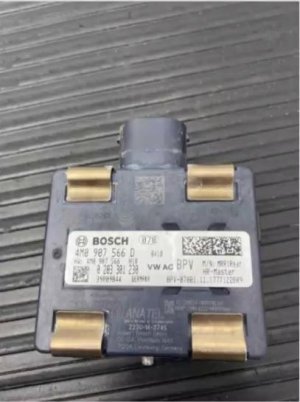
The OEM part number for this sensor is 4M09075665. There may be other letter revisions, but it is critical to match the primary part number to ensure compatibility with your vehicle's systems. Do not install a sensor with a different part number.
2. Physical Inspection is Key
Before purchasing, or immediately upon receiving a used sensor, inspect it carefully:
- Check the Connector Pins: Look inside the electrical connector. The pins should be clean, straight, and shiny. Any signs of green or white powder indicate corrosion from water damage. Reject any sensor with corroded pins.
- Inspect the Housing: Check the black plastic casing for any cracks, especially around the seams or mounting points. A cracked housing is a sign of impact and means the sensor is likely damaged or will soon fail from moisture.
- Examine the Lens: The front face of the sensor should be free of deep scratches, cloudiness, or damage.
3. Buy From a Reputable Source
Purchase from an established auto recycler that offers a warranty. This protects you in case the sensor has an internal fault that isn't visible externally. Avoid 'as-is' sales from private sellers unless you can test the part before paying.
Replacement and Calibration Guide
Replacing the radar sensor is a two-stage process: physical installation and electronic calibration. While a skilled DIY mechanic can perform the installation, the calibration is not a DIY job and requires a professional shop.
Installation Difficulty: 3/5 (Requires bumper removal)
Estimated Time: 2-3 hours for physical replacement
Step 1: Physical Replacement (DIY Possible)
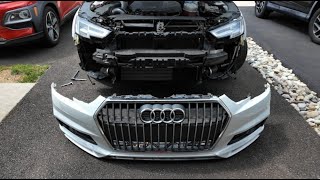
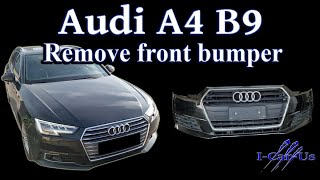
The sensor is located behind the front bumper cover. To replace it, you will need to remove the bumper. 🎬 See this step-by-step Audi A4 front bumper removal tutorial The exact procedure varies slightly between models like the A4, Q5, and Q7, but generally involves removing screws in the wheel wells, under the engine, and clips near the grille before carefully pulling the cover off. Once the bumper is off, the sensor is typically held by a few bolts on a bracket. Disconnect the electrical plug, unbolt the old sensor, and bolt the new one in its place.
Step 2: Calibration (Professional Shop Required)
CRITICAL: The vehicle will not work correctly until the sensor is calibrated. This step is mandatory. Driving without calibration is unsafe as the ADAS systems will either remain off or could behave erratically.
After the new sensor is installed, the car must be taken to an Audi dealership or an independent specialist with the correct ADAS calibration equipment. This process involves:
- Connecting the vehicle to a diagnostic tool with Audi's ODIS software.
- Placing a special, highly precise target board or reflector rig at a specific distance and angle in front of the vehicle.
- Running the calibration routine in the software, which tells the sensor how to 'see' straight ahead relative to the car's alignment.
- Removing 'Component Protection,' an anti-theft feature that may prevent a used part from functioning until it is registered to the vehicle's VIN online by an authorized shop.
Failure to perform this calibration will result in the same "ACC unavailable" warnings, and the new part will not function.
Cost to Replace an Audi Radar Sensor
The mandatory calibration is a significant part of the total cost. However, a DIYer can save substantially on labor by installing the part themselves before taking it for calibration.
| Part or Service | Estimated Cost |
|---|---|
| New OEM Sensor (Dealer) | $1,000 - $1,500 |
| Used OEM Sensor | $150 - $400 |
| Shop Labor (Installation) | $300 - $500 |
| Shop Labor (Calibration Only) | $250 - $800+ |
| Total DIY Install + Pro Calibration | $400 - $1,200 |
| Total Shop Install + Calibration | $700 - $2,300+ |
Frequently Asked Questions (FAQ)
Can I drive my Audi with a faulty radar sensor?
Yes, the car is mechanically safe to drive. However, your Adaptive Cruise Control and Audi Pre Sense forward collision warning/braking systems will be completely disabled. You must rely on manual driving and maintain a safe following distance without the aid of these safety features.
Do I really have to calibrate the sensor after replacing it?
Yes, absolutely. There is no way around it. The sensor needs to be precisely aimed to function safely and accurately. Without calibration, the part is useless, and the warning lights will remain on the dash.
Why did my radar sensor fail after a wheel alignment?
Changes to your vehicle's suspension or wheel alignment can alter its ride height and the angle at which it sits (known as thrust angle). Because the radar's calibration is tied to the car's centerline, a new wheel alignment can sometimes be enough to make the sensor's stored calibration invalid, triggering a fault. Reputable alignment shops with ADAS expertise will check for and recommend recalibration if needed.
Can I perform the calibration myself with VCDS or OBDeleven?
For minor misalignments on an existing sensor, some advanced users have had limited success performing a software reset or basic calibration routine. However, this does not replace a proper static calibration with the required physical targets, especially after installing a new sensor. It is not the correct or guaranteed procedure and is not recommended for a replacement part.
Helpful Videos
Technical Specifications
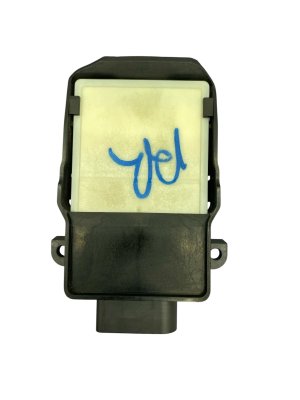
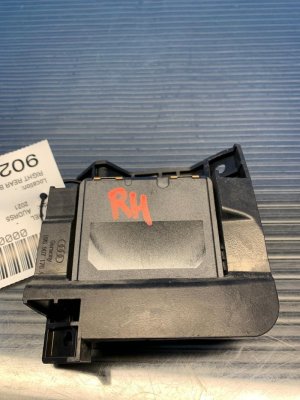
OEM Part Numbers: 4M09075665
Front-mounted radar sensor for Adaptive Cruise Control (ACC) and Audi Pre Sense systems.
We Have This Part in Stock




The information in this article is provided for general reference and educational purposes only. Vehicle specifications, procedures, and part compatibility can vary by production date, trim level, and region. Always consult your vehicle's factory service manual and verify part numbers before purchasing or performing repairs. Safety-critical components such as airbags, seat belts, and braking systems should be installed by a qualified professional.
- Audi A4:
- Audi Q7:
- Audi RS5:
- Audi S4:
- Audi A5:
- Audi S5:
- Audi Q5:
- Audi SQ5:
- Audi A6:
- Audi A7:
- Audi A8:
- Audi Q8:
- Audi S6:
- Audi S7:
- Audi S8:
- Audi SQ7:
- Audi SQ8:
- Audi RS Q8:
- Audi RS6:
- Audi RS7:
- 🎬 Helpful Videos
- 🛍️ Shop This Part
- Symptoms of a Failing Radar Sensor
- Known Issues and Causes of Failure
- Diagnosing the Problem
- Buying a Used Radar Sensor: What to Check
- 1. Verify the Part Number
- 2. Physical Inspection is Key
- 3. Buy From a Reputable Source
- Replacement and Calibration Guide
- Step 1: Physical Replacement (DIY Possible)
- Step 2: Calibration (Professional Shop Required)
- Cost to Replace an Audi Radar Sensor
- Frequently Asked Questions (FAQ)
- 🎟️ Get 5% Off