

2000-2002 Kia Rio Fan Motor: A/T vs. M/T and Overheating Fixes
This guide clarifies the critical differences between automatic and manual transmission fan assemblies to help you fix overheating and A/C problems.
- The most critical factor is transmission type: 2000-2002 Kia Rios use different fan assemblies for automatic and manual transmissions.
- Primary symptoms of failure are engine overheating in traffic and A/C blowing warm air at idle.
- Before replacing the motor, always check the fan fuse and relay first, as these are common and inexpensive failure points.
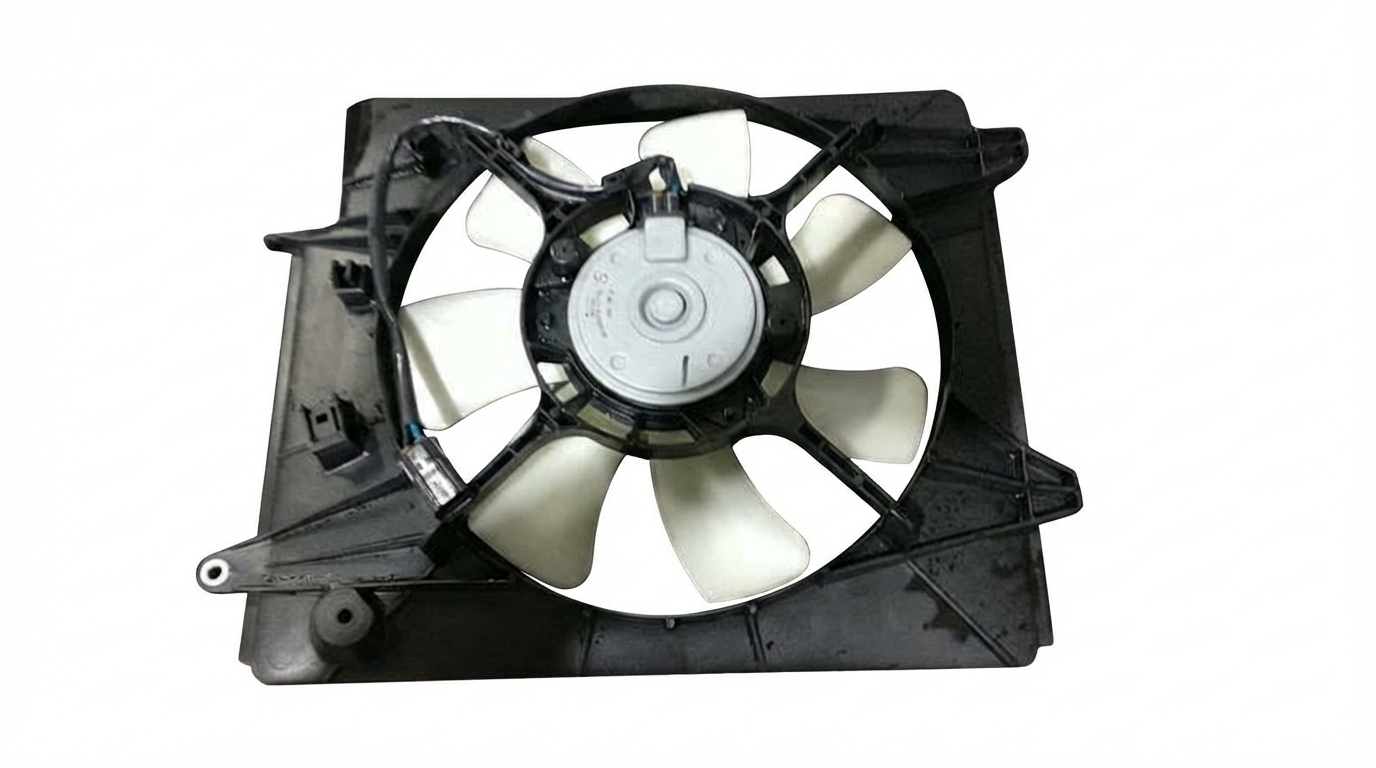
- When buying a used part, physically inspect the shroud for cracks, the blades for damage, and confirm the electrical plug matches your old unit.
A Critical Choice: Automatic vs. Manual Transmission Fans

For the 2000-2002 Kia Rio, the single most important factor when replacing the radiator fan is the vehicle's transmission type. Automatic and manual transmission models use different fan assemblies, and they are not interchangeable. The initial data provided contained several conflicting warnings, which arise because different parts are required for different vehicle configurations. All 2000-2002 North American models came with a 1.5L engine, so the primary difference is the transmission.
Warning: Ordering the wrong part is the most common mistake. Before purchasing, you must confirm if your Rio has an automatic or manual transmission. Visually compare the replacement part's plug and mounting points to your original unit.
Parts are available as complete assemblies (motor, fan blade, and shroud) or as individual components. Here is a breakdown of the key OEM part numbers:
| Part Type | Automatic Transmission | Manual Transmission | Notes |
|---|---|---|---|
| Complete Fan Assembly | 0K30B-15025C | 0K30C-15025D | Includes motor, blade, and shroud for a direct swap. |
| Fan Motor Only | 25386-FD010 | (Not commonly sold separately) | Fits the automatic transmission assembly. |
| Fan Blade Only | 0K30B-15140 | 0K30C-15140 | Blades may differ between transmission types. |
Symptoms of a Failing Fan Motor

A bad fan motor will cause problems that are most noticeable when the car is not moving. Watch for these specific signs:
- Engine Overheats in Traffic: The temperature gauge will climb towards hot when you are stopped at a light or in slow-moving traffic. As you start driving at higher speeds, the temperature may return to normal as airflow through the radiator increases.
- A/C Blows Warm Air at Idle: The A/C works by shedding heat at the condenser. If the fan isn't pulling air through it, the system can't cool properly, and the air from your vents will get warm. It may get cold again once you start moving.
- Fan Doesn't Spin: With the engine fully warmed up or the A/C turned on, the fan should be running. If you look under the hood and the fan blades are still, the motor has likely failed.
- Grinding or Buzzing Noises: A worn-out bearing in the motor can create a loud grinding or buzzing sound when the fan is supposed to be running.
- Warning Lights: A severe overheating event will trigger the engine temperature warning light on your dashboard.
Easy Diagnosis Steps

Before spending money on a new motor, perform these simple checks. The problem is often a less expensive component.
- Check the Fuse: The most common reason for a fan not working is a blown fuse. Consult your owner's manual for the location of the radiator fan fuse in the under-hood fuse box and check if it's blown.
- Check the Relay: The fan is controlled by a relay. You can often test it by swapping it with an identical relay from a non-critical system (like the horn) to see if the fan starts working.
- Visual Inspection: Look for any obstructions that might be jamming the fan blades. Check the electrical connector at the motor for corrosion or loose wires.
- Direct Power Test: If the fuse and relay are good, a mechanic can perform a direct test. This involves disconnecting the fan's electrical connector and carefully applying 12-volt power directly from the battery to the motor's terminals. If the fan spins, the motor is good, and the problem lies elsewhere in the circuit (like a coolant temperature sensor or wiring). If it doesn't spin, the motor is confirmed to be bad.
Buying a Used 2000-2002 Rio Fan Motor: What to Check

A used OEM fan assembly is often a reliable and cost-effective alternative to a new aftermarket part. OEM parts guarantee perfect fitment, which can be an issue with cheaper copies. When inspecting a used part, here's what to look for:
- Confirm Transmission Type: This is the most important step. Get the part number from the seller or clear photos to match against the table above. Double-check that it came from a vehicle with the same transmission as yours.
- Inspect the Shroud: Check the plastic shroud for any cracks or broken mounting tabs. A damaged shroud can fail to properly direct airflow and may not mount securely.
- Examine the Fan Blades: Look for any cracks, chips, or signs of melting. A damaged blade can be unbalanced, leading to noise and premature failure of the new motor.
- Check the Electrical Connector: The connector pins should be clean and free of green or white corrosion. The plastic housing should not be cracked or brittle.
- Spin the Blade by Hand: The fan blade should spin smoothly with minimal resistance and no grinding or gritty feeling. Any roughness indicates a worn motor bearing.
Cost Comparison
Prices can vary based on supplier and location, but this provides a general estimate of what to expect.
| Part Type | Estimated Cost |
|---|---|
| New OEM Assembly | $200 - $250 |
| New Aftermarket Assembly | $50 - $100 |
| Used OEM Assembly | $75 - $150 |
| Shop Labor for Installation | $100 - $225 |
Replacement Overview
Replacing the fan assembly is a straightforward job that a DIYer with basic tools can typically complete in about an hour.
- Difficulty: 2 out of 5
- Estimated Time: 1 - 1.5 hours
- Tools Needed: Socket set, screwdrivers, pliers.
General Steps:
- Disconnect the negative battery terminal.
- Locate the fan assembly behind the radiator.
- Disconnect the main electrical connector going to the fan motor.
- Remove any upper radiator hoses or brackets that may be in the way. Be prepared to catch any spilled coolant if a hose is removed.
- Unbolt the fan shroud from the radiator (typically two bolts at the top and clips at the bottom).
- Carefully lift the entire fan assembly out of the engine bay.
- Installation is the reverse of removal. Reconnect the battery and test the fan by starting the engine and turning on the A/C.
Known Issues, Recalls, and TSBs
There are no recalls or widespread Technical Service Bulletins (TSBs) from Kia specifically for radiator fan motor failure on the 2000-2002 Rio. While TSBs exist for fan issues on later generations, they do not apply to this model.
An unrelated safety recall (NHTSA ID: 04V179000) was issued for potential fuel line cracks on 2001-2004 models, which could lead to a fire risk. It is worth checking if this recall was performed on your vehicle.
Frequently Asked Questions (FAQ)
Can I drive my Kia Rio with a bad radiator fan?
It is not recommended for city driving. While you might be fine on the highway where high-speed airflow cools the engine, you are at high risk of overheating and causing serious engine damage in stop-and-go traffic or while idling.
Is the radiator fan and the A/C fan the same part on a 2000-2002 Rio?
Yes. The 2000-2002 Kia Rio uses a single fan assembly that serves both the engine's radiator and the air conditioning condenser, which are mounted together.
Do I need to replace the whole assembly or can I just replace the motor?
You can replace just the motor if you can find the correct one (e.g., part #25386-FD010 for automatic models). However, it is often easier and more reliable to replace the entire assembly. The plastic fan blade and shroud can become brittle with age, and a complete assembly ensures all components are new or in good working condition.
Why does my fan run after I turn the car off?
This is normal behavior on some vehicles, designed to cool the engine down after a hot shutdown to prevent heat soak. However, if the fan runs continuously and drains your battery, it may indicate a stuck fan relay or a faulty coolant temperature sensor.
Verified OEM Part Numbers
This list is compiled from dealer catalogs and parts supplier data. Always verify with a VIN if possible.
- Fan Assembly (Auto Trans): 0K30B-15025C
- Fan Assembly (Manual Trans): 0K30C-15025D
- Fan Motor (Auto Trans): 25386-FD010, 25386FD010
- Fan Blade (Auto Trans): 0K30B-15140
- Fan Blade (Manual Trans): 0K30C-15140
- Other Superseded/Related Numbers: 0K30A61710D, 0K30A61710E, 25380FD000, 25386-FD100, 25386-FD110, 25386FD100, 25386FD110, 25386FD150
Technical Specifications
OEM Part Numbers: 0K30B-15025C 0K30C-15025D 25386-FD010 0K30B-15140 0K30C-15140 0K30A61710D 0K30A61710E 25386FD010 25386FD100 25386FD110
Fits 1.5L L4 engine. Part configuration is dependent on transmission type (Automatic vs. Manual).
We Have This Part in Stock

The information in this article is provided for general reference and educational purposes only. Vehicle specifications, procedures, and part compatibility can vary by production date, trim level, and region. Always consult your vehicle's factory service manual and verify part numbers before purchasing or performing repairs. Safety-critical components such as airbags, seat belts, and braking systems should be installed by a qualified professional.
- Kia Rio:
- 🛍️ Shop This Part
- A Critical Choice: Automatic vs. Manual Transmission Fans
- Symptoms of a Failing Fan Motor
- Easy Diagnosis Steps
- Buying a Used 2000-2002 Rio Fan Motor: What to Check
- Cost Comparison
- Replacement Overview
- Known Issues, Recalls, and TSBs
- Frequently Asked Questions (FAQ)
- Verified OEM Part Numbers
- 🎟️ Get 5% Off