

1991-1999 Dodge Stealth & Mitsubishi 3000GT Rack and Pinion: FWD vs. AWD and Leak Diagnosis
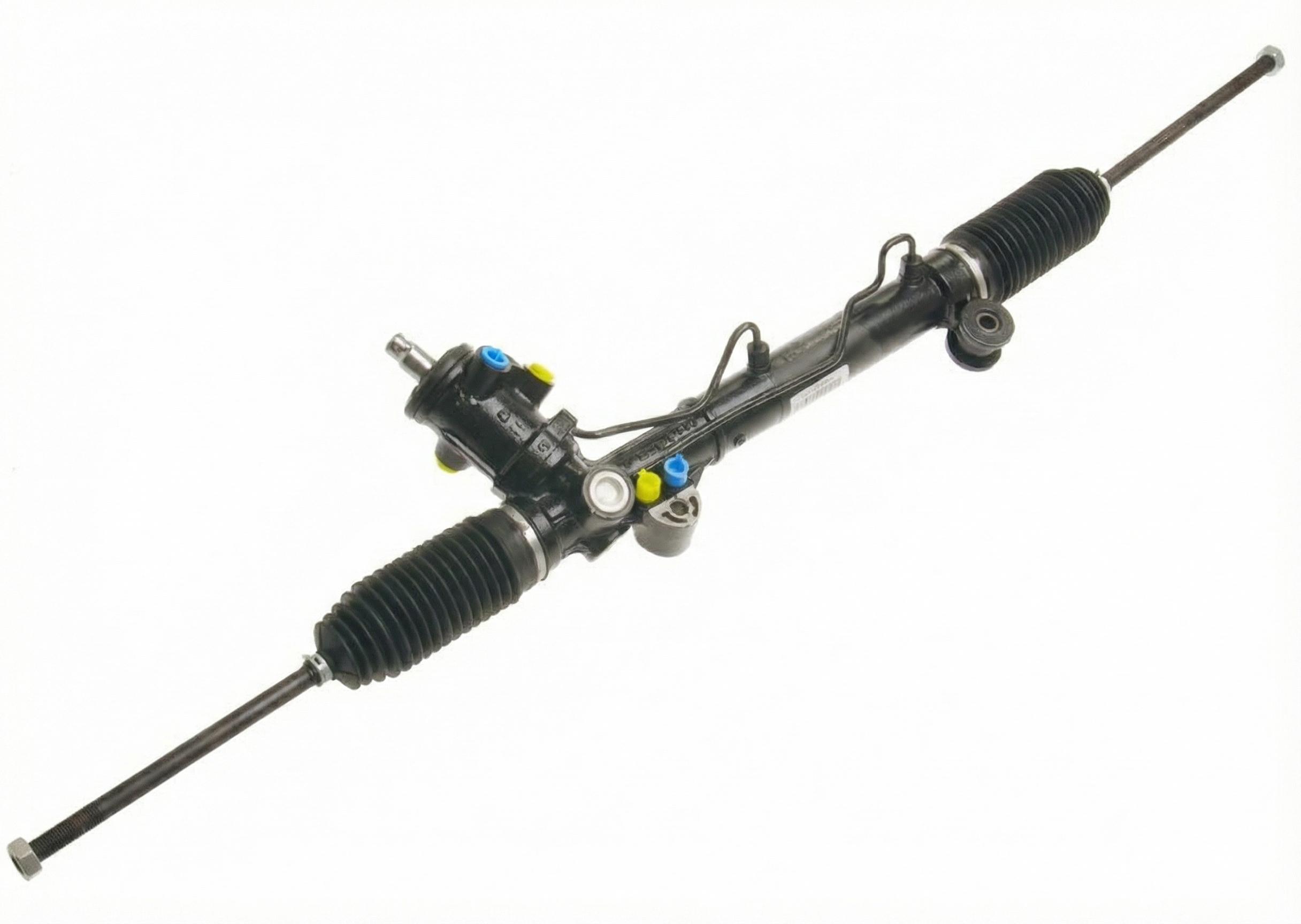
This guide covers common failures, leak diagnosis, and the critical compatibility differences for the front-wheel-drive Dodge Stealth and Mitsubishi 3000GT steering rack.
- This rack and pinion (MB636225) is ONLY for Front-Wheel Drive (FWD) models of the Dodge Stealth and Mitsubishi 3000GT.
- It is NOT interchangeable with the All-Wheel Drive (AWD) VR-4 and R/T Turbo models, which use a different system.
- The most common failure is leaking seals, identifiable by wet, oily rubber boots on the ends of the rack.
- A four-wheel alignment is mandatory after replacing the steering rack to prevent tire damage and ensure safety.
- Always replace the outer tie rod ends and inspect power steering hoses when installing a new rack.
Critical Compatibility Warning: FWD Models Only
Warning: This steering rack and pinion assembly (OEM Part Number MB636225) is for Front-Wheel Drive (FWD) models of the 1991-1996 Dodge Stealth and 1991-1999 Mitsubishi 3000GT only. It will NOT fit the All-Wheel Drive (AWD) Dodge Stealth R/T Turbo or Mitsubishi 3000GT VR-4 models. The AWD models use a completely different steering rack, often integrated with a four-wheel steering (4WS) system. Attempting to install a FWD rack on an AWD vehicle will not work.
Symptoms of a Failing Rack and Pinion
A failing steering rack can present a variety of symptoms, from strange noises to a change in steering feel. Ignoring these signs can be dangerous, as a complete failure could lead to a loss of steering control.
Noises While Steering
Unusual sounds are often the first sign of a problem. Listen for:
- Clunking or Knocking: A distinct clunk or knock when you turn the steering wheel, especially at low speeds, can indicate worn internal gears or loose mounting bushings.
- Grinding: A grinding noise suggests metal-on-metal contact within the rack, often due to a lack of lubrication caused by a fluid leak.
- Whining or Squealing: A high-pitched whine that changes with steering wheel movement often points to a low power steering fluid level, which could be caused by a leak in the rack or its connecting hoses.
Steering Feel and Response Issues
- Difficulty Turning: If the steering wheel feels unusually heavy or tight, especially at low speeds, the power assist may be failing. This can be due to low fluid or a problem within the rack's internal valve body.
- Loose Steering or Excessive Play: A 'dead spot' in the center of the steering wheel, where small movements don't translate to the wheels turning, indicates excessive wear in the internal gears. This can make the car feel unstable and wander on the highway.
- Steering Wheel Vibration: Shaking or vibration felt through the steering wheel, particularly while turning, can be a sign of worn components inside the rack.
Visible Leaks
Power steering fluid leaks are the most common failure mode. Look for:
- Red or Brown Puddles: Power steering fluid is typically reddish or pinkish-brown. Puddles under the front of the car are a sure sign of a leak.
- Fluid-Soaked Boots: The rubber boots (bellows) on each end of the steering rack should be dry. If they are wet, swollen, or dripping fluid, the internal seals of the rack have failed. This is a very common issue on the 3000GT and Stealth.
- Low Fluid Level: Regularly check the power steering fluid reservoir. If the level is consistently low, you have a leak somewhere in the system that needs to be found and fixed.
Known Issues, TSBs, and Recalls
For vehicles of this age, major recalls are rare. The primary issues are related to wear and tear.
- No Recalls: There are no specific NHTSA recalls for the rack and pinion assembly on the 1991-1996 Dodge Stealth or 1991-1999 Mitsubishi 3000GT.
- TSB for Steering Column Squeal: A common complaint is a squealing noise when turning the wheel. While this sounds like a rack issue, Chrysler issued Technical Service Bulletin (TSB) 19-04-91 for the 1991-1992 Stealth, identifying the cause as a dry steering column shaft bearing inside the cabin. The fix involves lubricating this bearing, not replacing the rack. This may also apply to the Mitsubishi 3000GT.
Buying a Used Rack and Pinion Assembly
A quality used OEM rack is often a reliable and cost-effective alternative to expensive new parts or potentially problematic remanufactured units. Here’s what to look for:
- Confirm FWD Origin: First and foremost, verify the donor vehicle was a front-wheel-drive (FWD) model. Do not purchase a rack from a VR-4 or R/T Turbo.
- Inspect the Boots: The rubber boots on both ends of the rack are the best indicator of its condition. They should be clean, dry, and free of any cracks or tears. If the boots are oily, wet, or look swollen, the internal seals have failed, and the rack is no good.
- Check for Physical Damage: Inspect the housing for any cracks or signs of heavy impact. Check that the fluid ports and mounting points are clean and the threads are not stripped.
- Input Shaft Play: Wiggle the input shaft (where the steering column connects). There should be minimal to no side-to-side play.
- Mileage Considerations: While any used part has a limited lifespan, these racks are fairly robust. Failure is more often due to age (seal deterioration) than high mileage. A lower-mileage part is always preferable, but a visual inspection is more important. Most failures occur well over 100,000 miles.
Rebuild vs. Replace
While seal kits to rebuild the rack and pinion are available (such as Duralast part #8692), rebuilding is a complex and precise job. It requires special tools to remove and install seals and bushings without damaging them. An improper rebuild will almost certainly result in leaks. For most DIY mechanics and professional shops, replacing the entire assembly with a good used or quality remanufactured unit is faster, more reliable, and often not significantly more expensive when factoring in labor.
Cost of Replacement
The cost to replace a rack and pinion can vary widely based on the parts chosen and local labor rates.
| Part / Service | Estimated Cost |
|---|---|
| New OEM (Dealer) | $2,000 - $2,500+ (part only) |
| Remanufactured Aftermarket | $150 - $750 (part only, wide range based on supplier) |
| Used OEM | $100 - $300 |
| Shop Labor | $400 - $700 |
| Mandatory Wheel Alignment | $100 - $200 |
| Total Professional Job (Used OEM Part) | $600 - $1,200 |
Related Parts to Replace
When replacing the steering rack, it is highly recommended to replace other related components at the same time to save on future labor costs and ensure proper system performance.
- Outer Tie Rod Ends: The steering rack does not include outer tie rod ends. It is essential to install new ones with your replacement rack. Reusing old, worn tie rod ends will compromise steering precision and prevent a proper alignment.
- Power Steering Hoses: After decades of use, the rubber power steering lines can become brittle and prone to leaking. Since you will be disconnecting them anyway, this is the perfect time to inspect and replace any suspect hoses.
- Power Steering Fluid: Always flush and fill the system with fresh, new fluid. Using old, contaminated fluid can damage your new rack. Any standard power steering fluid or one specified for Asian vehicles will work. Mitsubishi also offers its DiaQueen PSF fluid.
Pro Tip: After installing the new rack but before starting the car, turn the steering wheel from lock to lock several times. This helps manually bleed air from the system and ensures fluid is circulated before the pump engages.
Frequently Asked Questions (FAQ)
Will this rack and pinion fit my 3000GT VR-4 or Stealth R/T Turbo?
No. This is the single most important thing to know. This guide and the part number MB636225 are ONLY for the front-wheel-drive (FWD) models. The AWD models have a different part that is not interchangeable.
Is a small power steering leak a big deal?
Yes. A small leak will only get worse. More importantly, if the system runs low on fluid, it can permanently damage the power steering pump, leading to a much more expensive repair. Leaking fluid can also damage other rubber components like control arm bushings.
Do I need a wheel alignment after replacing the rack?
Yes, absolutely. Replacing the steering rack makes a four-wheel alignment mandatory. Without it, your steering wheel will be off-center, and your tires will wear out very quickly.
What fluid should I use for my power steering system?
You can use any high-quality, conventional power steering fluid from brands like Prestone or ShopPro. Fluids specifically formulated for Asian vehicles are also a good choice. Do not use automatic transmission fluid (ATF) unless it is explicitly stated as compatible.
What are the torque specs for installation?
Finding official factory specs can be difficult. However, a forum rebuild guide suggests 65 ft-lbs for the inner tie rod ends (where they screw into the rack) and 18 ft-lbs for the pinion locknut. These should be used as a general reference, and consulting a factory service manual is always the best practice.
Technical Specifications
OEM Part Numbers: MB636225
Hydraulic Power Steering Rack for Front-Wheel Drive (FWD) applications.
We Have This Part in Stock

The information in this article is provided for general reference and educational purposes only. Vehicle specifications, procedures, and part compatibility can vary by production date, trim level, and region. Always consult your vehicle's factory service manual and verify part numbers before purchasing or performing repairs. Safety-critical components such as airbags, seat belts, and braking systems should be installed by a qualified professional.
- Dodge Stealth:
- Mitsubishi 3000GT:
- 🛍️ Shop This Part
- Critical Compatibility Warning: FWD Models Only
- Symptoms of a Failing Rack and Pinion
- Noises While Steering
- Steering Feel and Response Issues
- Visible Leaks
- Known Issues, TSBs, and Recalls
- Buying a Used Rack and Pinion Assembly
- Rebuild vs. Replace
- Cost of Replacement
- Related Parts to Replace
- Frequently Asked Questions (FAQ)
- 🎟️ Get 5% Off