

2007-2017 Toyota Camry Quarter Panel: Decoding US vs. Japan Builds & Generation Gaps
This guide covers the critical differences between the three distinct quarter panel versions for the 2007-2017 Camry, ensuring you get the right part for a perfect repair.
- There are three non-interchangeable body styles: 2007-2011, 2012-2014, and 2015-2017.
- For 2007-2011 models, you must verify if your Camry was built in the US (VIN starts with '4') or Japan (VIN starts with 'J') as the panels are different.
- Replacement is a complex, professional-only job requiring cutting, welding, and painting; it is not a simple bolt-on part.
- A used OEM panel is highly recommended over a new aftermarket one for its superior fit, metal quality, and factory corrosion protection.
Critical Compatibility Warnings: Read This First

Before buying a quarter panel for a 2007-2017 Toyota Camry, you must identify three key pieces of information about your vehicle. Ordering the wrong part is a common and costly mistake, as the panels are not interchangeable.
- Vehicle Generation: The 2007-2017 Camry spans three distinct body styles that use different quarter panels.
- XV40: 2007-2011
- XV50 (Pre-Facelift): 2012-2014
- XV50 (Facelift): 2015-2017
- Country of Origin (2007-2011 models): For the 2007-2011 generation, Toyota used different quarter panels depending on where the vehicle was assembled. You must verify if your Camry was built in the US or Japan.
- US-Built: Your Vehicle Identification Number (VIN) begins with a '4'.
- Japan-Built: Your VIN begins with a 'J'.
- Side: Determine if you need the Left (Driver Side) or Right (Passenger Side) panel.
Warning: A quarter panel from a 2011 Camry will not fit a 2012 Camry. Likewise, a panel for a US-built 2010 Camry will not fit a Japan-built 2010 Camry. Always verify your vehicle's year and VIN before purchasing.
Symptoms of a Failed Quarter Panel

Failure of a quarter panel is not mechanical but is related to physical damage or corrosion. The symptoms are almost always visible from the outside.
Collision Damage
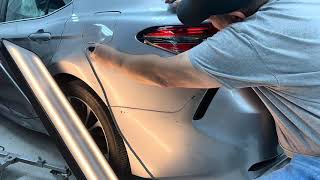
This is the most common reason for replacement. Damage can range from minor dents and deep scratches to severe creases and punctures from an accident. While small dents can sometimes be repaired by a body shop using paintless dent repair (PDR) or traditional body filler, 🎬 Watch: Paintless dent repair on a Camry quarter panel significant damage often requires full panel replacement to restore structural integrity and appearance.
Rust and Corrosion
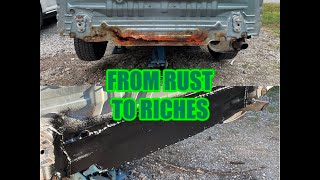
Rust is a frequent issue on older vehicles, especially in regions that use road salt in the winter. Key areas to inspect for rust on a Camry quarter panel include:
- The wheel arch lip, where moisture and debris collect.
- The bottom edge where it meets the rocker panel (the panel below the doors).
- Around the fuel filler door opening.
Buyer's Guide: What to Check When Purchasing a Used Quarter Panel

A used Original Equipment Manufacturer (OEM) quarter panel from a salvage vehicle is often the best choice for repair, offering better fit and quality than a new aftermarket part. Here’s what to look for.
Step 1: Confirm Compatibility
Use the guide at the top of this article. Double-check the donor vehicle's year and, for 2007-2011 models, its country of origin via the VIN. All trim levels within a generation, including Hybrid and non-Hybrid models, use the same quarter panels.
Step 2: Physical Inspection Checklist
When inspecting the part, either in photos or in person, check for the following:
- Previous Repairs: Look for signs of body filler (Bondo), sanding marks, or primer spots. A magnet can help detect thick filler. A panel with previous, poorly done repairs should be avoided.
- Hidden Rust: Inspect the backside of the panel, especially around the wheel well and lower seams. Surface rust on the inside is common and acceptable if it can be easily treated, but avoid panels with deep pitting or flaking metal.
- Dents and Dings: Minor dings from storage are often acceptable and can be easily fixed by a body shop. However, avoid panels with sharp creases or widespread hail damage.
- The Cut: A used quarter panel is cut from the donor car's body. Examine where the cuts were made. Good salvage yards provide large, clean sections, giving the body shop more material to work with. Ragged or poorly placed cuts can make installation more difficult.
Why Choose a Used OEM Panel Over New Aftermarket?
For a structural part like a quarter panel, used OEM is almost always superior to a cheap, new aftermarket panel for several reasons:
- Fitment: An OEM panel was made by Toyota and is guaranteed to match the vehicle's body lines and contours perfectly. Aftermarket panels are notorious for poor fit, requiring extra labor to align, which can increase costs.
- Metal Quality: Factory panels are made from high-quality, galvanized steel with the correct thickness and strength properties for crash safety. Many aftermarket panels use thinner, lower-grade steel.
- Corrosion Protection: A used OEM panel retains its original factory e-coating and corrosion-resistant primers, offering better long-term protection than many aftermarket alternatives.
Quarter Panel Replacement Overview
Replacing a quarter panel is a major structural repair that should only be performed by a professional body shop. It is not a bolt-on part and is not a feasible DIY project for a home mechanic.
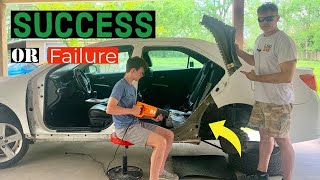
Pro Tip: The process involves drilling out dozens of spot welds, cutting the panel along structural pillars (like the roof C-pillar and rocker panel), and welding the new panel into place. 🎬 Watch: Cutting out a wrecked Camry quarter panel The vehicle must be measured and sometimes mounted to a frame machine to ensure everything stays in alignment. After welding, extensive bodywork is needed to smooth the seams, followed by professional priming and paint matching.
Cost to Replace a 2007-2017 Camry Quarter Panel
The total cost includes the part, labor for installation, and materials for painting and finishing. Labor is the largest expense due to the complexity of the job.
| Part Type | Estimated Cost |
|---|---|
| New OEM | $600 - $930 |
| New Aftermarket | $150 - $400 |
| Used OEM (Salvage) | $250 - $600 |
| Shop Labor & Paint | $1,200 - $2,500+ |
Known Issues, Recalls, and TSBs
While there have been numerous recalls for the 2007-2017 Toyota Camry, none directly pertain to the quarter panels themselves. Recalls for this period typically involve issues like accelerator pedals, power window switches, and seat heaters. There are no widespread, documented issues of premature rust or paint failure specific to the Camry's quarter panels, though individual cases can always occur.
OEM Part Numbers
This table lists known OEM part numbers. Always confirm fitment with the seller using your VIN.
| Year Range | Side | Build Location | Part Number |
|---|---|---|---|
| 2007-2011 | Right (Passenger) | Japan-Built (VIN starts with 'J') | 61601-33310 |
| 2007-2011 | Left (Driver) | Japan-Built (VIN starts with 'J') | 61602-33190 |
| 2007-2011 | Right (Passenger) | US-Built (VIN starts with '4') | 61601-06130 |
| 2007-2011 | Left (Driver) | US-Built (VIN starts with '4') | 61602-06120 |
| 2012-2014 | Right (Passenger) | N/A | 61601-06110 |
| 2012-2014 | Left (Driver) | N/A | 61602-06180 |
| 2015-2017 | Right (Passenger) | N/A | 61601-06100 |
| 2015-2017 | Left (Driver) | N/A | 61602-06100 |
Frequently Asked Questions (FAQ)
How do I know for sure if my 2007-2011 Camry is US or Japan built?
Look at the first character of your car's 17-digit VIN. If it starts with a 'J', it was built in Japan. If it starts with a '4' or '1', it was built in the USA. This information is on the driver's side door jamb sticker and on your vehicle's registration and insurance documents.
Can a small dent in a quarter panel be repaired instead of replaced?
Yes, often it can. For minor to moderate dents where the metal is not creased or torn, a skilled technician can often pull the dent and use a thin layer of body filler to smooth the area before painting. This is generally much cheaper than a full replacement. Always get a quote from a reputable body shop.
Will a quarter panel from a Camry Hybrid fit my standard gas model?
Yes. For any given year range, the quarter panels are the same for all trim levels and powertrains, including the Hybrid models.
Is replacing a quarter panel a DIY job?
No, it is not recommended for DIY. The job requires specialized tools for cutting and welding, precise measurements to maintain structural alignment, and professional-grade equipment for paint application. This is a job best left to experienced collision repair technicians.
Helpful Videos
Technical Specifications
OEM Part Numbers: 61601-06100 61601-06110 61601-06130 61601-33310 61602-06100 61602-06120 61602-06180 61602-33190
Material: Stamped Steel. Attachment Method: Weld-on.
We Have This Part in Stock



The information in this article is provided for general reference and educational purposes only. Vehicle specifications, procedures, and part compatibility can vary by production date, trim level, and region. Always consult your vehicle's factory service manual and verify part numbers before purchasing or performing repairs. Safety-critical components such as airbags, seat belts, and braking systems should be installed by a qualified professional.
- Toyota Camry:
- 🎬 Helpful Videos
- 🛍️ Shop This Part
- Critical Compatibility Warnings: Read This First
- Symptoms of a Failed Quarter Panel
- Collision Damage
- Rust and Corrosion
- Buyer's Guide: What to Check When Purchasing a Used Quarter Panel
- Step 1: Confirm Compatibility
- Step 2: Physical Inspection Checklist
- Why Choose a Used OEM Panel Over New Aftermarket?
- Quarter Panel Replacement Overview
- Cost to Replace a 2007-2017 Camry Quarter Panel
- Known Issues, Recalls, and TSBs
- OEM Part Numbers
- Frequently Asked Questions (FAQ)
- 🎟️ Get 5% Off