

1992-2001 Toyota Camry Quarter Panel: Navigating Generations, Body Styles, and VINs
This guide covers the critical differences between 1992-1996 and 1997-2001 Camry quarter panels to ensure you get the right part for your repair.
- Crucially, you must identify your Camry's generation: XV10 (1992-1996) or XV20 (1997-2001). Panels are not interchangeable.
- Verify your car's specific body style (Sedan, Coupe, or Wagon for 92-96) as the quarter panels are unique to each.
- Check the first letter of your VIN ('J' for Japan, '4' or '1' for USA) and try to match it to the donor part for best fit.
- Replacement is a professional-only job requiring cutting, welding, and painting; it is not a DIY project.
Two Cars, One Name: Understanding the 1992-2001 Camry Generations
Before you begin your search for a quarter panel, it's essential to know that the 1992-2001 Toyota Camry spans two completely different vehicle generations. Parts are not interchangeable between them.
- Third Generation (XV10): 1992-1996 - This generation featured a more rounded body style and was available in multiple configurations.
- Fourth Generation (XV20): 1997-2001 - This generation was a significant redesign with sharper lines. For the North American market, the body style options were simplified.
Identifying your specific generation is the first and most important step in finding a compatible quarter panel.
Common Reasons for Quarter Panel Replacement
Unlike mechanical parts, quarter panels don't 'fail' in the traditional sense. Replacement is almost always necessary due to two main causes: collision damage and corrosion.
Collision Damage
This is the most frequent reason for replacement. Impacts to the side or rear of the vehicle can cause significant denting, creasing, or tearing of the quarter panel metal. Because the panel is a large, welded part of the car's structure, even moderate damage often requires professional repair or full replacement to restore the vehicle's appearance and structural integrity.
Rust and Corrosion
For cars of this age, rust is a major enemy. The most common rust-prone areas on a Camry quarter panel are the wheel arch lip and the lower section behind the rear wheel where moisture and road salt collect. While small surface rust spots can sometimes be sanded and repaired, severe corrosion that eats through the metal compromises the panel's strength and requires the rusted section or the entire panel to be cut out and replaced.
🎬 Watch: How to repair lower quarter panel rustPro Tip: Check the inner structure behind the quarter panel for rust as well. Damage that seems cosmetic on the outside can sometimes hide more serious corrosion on the unibody frame itself.
Buying a Used 1992-2001 Camry Quarter Panel: A Buyer's Checklist
Finding a clean, used OEM quarter panel is often the best choice for fit and quality. However, due to the many variations, you must be extremely careful to get an exact match. Follow this checklist to avoid costly mistakes.
Step 1: Identify Your Exact Camry (The Compatibility Gauntlet)
- Confirm Your Generation: Is your Camry a 1992-1996 (XV10) or a 1997-2001 (XV20)? A panel from the wrong generation will not fit.
- Match the Body Style:
- 1992-1996 (XV10): These were available as a 4-Door Sedan, 2-Door Coupe (1994-1996), and 4-Door Wagon. A sedan quarter panel will NOT fit a coupe or wagon, and vice-versa.
- 1997-2001 (XV20): In North America, these were sold almost exclusively as a 4-Door Sedan. The wagon was discontinued for the US market, and the coupe was spun off into the separately-styled Camry Solara, whose panels are not a direct match.
- Check the Country of Origin (VIN): Toyota produced these Camrys in both Japan and the USA, and there can be minor differences in the parts. Check the first character of your VIN.
- 'J' = Japan: Your car was assembled in Japan.
- '4' or '1' = USA: Your car was assembled in the United States.
- Note the Antenna Cutout (1992-1996 models only): Many XV10 Camrys had a power antenna mounted on the driver's or passenger's side quarter panel. If your car has this feature, you must get a panel with the corresponding antenna hole. If your car does not, you need a panel without the hole. Panels for 1997-2001 models typically do not have an antenna cutout.
Step 2: Inspecting the Used Panel
- Check for Hidden Rust: Flip the panel over and inspect the inner wheel arch lip and lower edges. Fresh paint can easily hide rust on the outside.
- Look for Previous Repairs: Feel the surface for waviness or tap on it to listen for the dull thud of thick body filler (Bondo). 🎬 Watch: How to fix a bad quarter panel repair job Check the back for signs of previous welding or hammer marks.
- Verify Flanges are Intact: Ensure the edges where the panel will be welded to the car (the flanges) are straight and undamaged. A bent flange will make installation much more difficult.
- Assess Dents and Scratches: A few minor dings or surface scratches are acceptable and will be handled during prep and paint, but avoid panels with deep creases or large dents.
Why Choose a Used OEM Panel?
For a large body panel like this, fit is everything. A used original equipment (OEM) panel was stamped in the same factory press as your car's original panels, ensuring that body lines and panel gaps will line up correctly. While new aftermarket panels are cheaper, they are notorious for poor fitment, often requiring significant extra labor (and cost) at the body shop to be bent, cut, and forced into place.
Known Issues, Recalls, and Service Bulletins
There have been no specific recalls or Technical Service Bulletins (TSBs) issued by Toyota or the NHTSA for quarter panel corrosion on the 1992-2001 Camry. Any rust issues are considered a result of age, climate, and maintenance rather than a specific manufacturing defect. While Toyota did face recalls for frame rust on some trucks of the era, this program did not extend to the Camry.
Replacement Overview and Difficulty
Replacing a quarter panel is a complex and labor-intensive job that should only be performed by a professional auto body technician.
- Difficulty Rating: 5 out of 5 (Professional Only)
- DIY Feasible: No
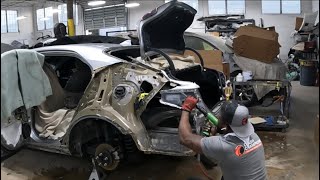
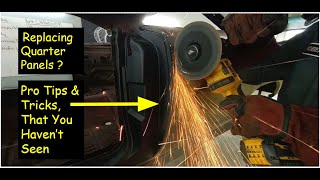
The process involves precisely cutting the old panel off the vehicle's frame, often using specialized air saws and drilling out dozens of spot welds. The new panel must then be carefully fitted, clamped, and welded into place. Finally, the welds are ground smooth, a thin layer of body filler is applied to even the seams, and the entire area is primed, sanded, and painted to match the rest of the vehicle. This is far beyond the scope of a typical DIY mechanic.
🎬 See this step-by-step Camry quarter panel replacement walkthroughCost of Replacing a 1992-2001 Camry Quarter Panel
The total cost is a combination of the part itself and the extensive labor required for installation and paint.
| Part/Service | Estimated Cost |
|---|---|
| New OEM (If available) | $500 - $900+ |
| New Aftermarket | $120 - $250 |
| Used OEM (Salvage) | $150 - $400 |
| Shop Labor & Paint | $800 - $2,000+ |
Note: Labor costs can vary significantly based on shop rates and the extent of any hidden rust or damage found after the original panel is removed.
Frequently Asked Questions (FAQ)
Can I just repair my rusty quarter panel instead of replacing it?
For small spots of surface rust, yes. The area can be ground down to bare metal, treated, and repainted. However, if the rust has created a hole (perforation), a proper repair involves cutting out the bad metal and welding in a new patch panel. For large areas of rust, replacement is often the more effective and durable solution.
How can I tell if my Camry was made in the US or Japan?
Look at the 17-digit Vehicle Identification Number (VIN) on the driver's side door jamb or at the base of the windshield. If the first character is a 'J', it was made in Japan. If it's a '1' or a '4', it was made in the USA.
Does the quarter panel from a 2-door coupe fit a 4-door sedan?
No. The quarter panels are completely different shapes and sizes. You must get a panel from the exact same body style as your car (Sedan, Coupe, or Wagon).
What's the difference between a quarter panel and a fender?
A fender is the panel over the front wheels and is typically bolted on, making it relatively easy to replace. A quarter panel is the panel over the rear wheels and is welded to the car's unibody structure, making replacement a major operation.
Helpful Videos
Technical Specifications
OEM Part Numbers: 61601-06030 61601-06040 6160233904 61602AA900 61602AA901 61611-33050 61612-06030 61612-33010 61612-33050 61612-33060 61612-AA010
Material: Sheet Steel. Fitment is specific to generation (1992-1996 vs 1997-2001), body style (Sedan, Wagon, Coupe), and country of origin (USA vs Japan).
We Have This Part in Stock



The information in this article is provided for general reference and educational purposes only. Vehicle specifications, procedures, and part compatibility can vary by production date, trim level, and region. Always consult your vehicle's factory service manual and verify part numbers before purchasing or performing repairs. Safety-critical components such as airbags, seat belts, and braking systems should be installed by a qualified professional.
- Toyota Camry:
- 🎬 Helpful Videos
- 🛍️ Shop This Part
- Two Cars, One Name: Understanding the 1992-2001 Camry Generations
- Common Reasons for Quarter Panel Replacement
- Collision Damage
- Rust and Corrosion
- Buying a Used 1992-2001 Camry Quarter Panel: A Buyer's Checklist
- Step 1: Identify Your Exact Camry (The Compatibility Gauntlet)
- Step 2: Inspecting the Used Panel
- Why Choose a Used OEM Panel?
- Known Issues, Recalls, and Service Bulletins
- Replacement Overview and Difficulty
- Cost of Replacing a 1992-2001 Camry Quarter Panel
- Frequently Asked Questions (FAQ)
- 🎟️ Get 5% Off