

2015-2018 BMW M3 (F80) Quarter Panel: Repair, Replacement, and Used Buying Guide
A detailed look at the structural quarter panel for the F80 M3, covering common damage, replacement costs, and how to inspect a used OEM part.
- This is a structural, weld-in panel, not a simple bolt-on part. Replacement is a job for professionals only.
- Compatibility is critical: F80 M3 Sedan panels do NOT fit standard F30 3-Series sedans or F82/F83 M4 models.
- When buying used, prioritize a panel with no hidden body filler, no major creases, and ample extra material around the cut lines.
- The total cost of replacement, including labor and paint, will significantly exceed the cost of the part itself, often running over $4,000.
Symptoms of Quarter Panel Failure

As a fixed structural body panel, the quarter panel does not 'fail' mechanically. Instead, issues are always related to external factors like collisions, rust, or improper previous repairs. When inspecting an F80 M3, pay close attention to this area.
- Visible Dents and Creases: The most obvious sign of a problem is damage from an impact. Even minor dents can be difficult to repair perfectly due to the complex curves and character lines of the M3's flared arches.
- Poor Panel Gaps: Check the alignment and spacing between the quarter panel and the rear door, trunk lid, and bumper. Uneven or wide gaps can indicate a previous low-quality repair or underlying structural misalignment.
- Paint and Finish Issues: Look for paint bubbling, peeling, or a mismatched texture ('orange peel'). These can be signs of underlying rust or heavy body filler use from a past repair.
- Rust Formation: While less common on modern BMWs, rust can still occur, especially in regions that use road salt. Inspect the inner lip of the wheel arch and the lower seam where the panel meets the rocker panel (side skirt).
Known Issues, TSBs, and Recalls

There are no specific recalls or widespread Technical Service Bulletins (TSBs) from BMW related to the quarter panel assembly itself for the 2015-2018 M3. Body panels are generally only recalled for major issues like bonding failure or severe, premature corrosion, which are not known problems for this model.
However, several recalls exist for the F80 M3 that involve nearby components:
- Rear Sub-frame Bolts: A recall was issued because rear sub-frame bolts may have been improperly reused during a previous service action, potentially allowing them to loosen and affect vehicle handling. While not directly part of the quarter panel, any major rear-end work could involve the sub-frame.
- Driveshaft Recalls: Multiple recalls were issued for driveshaft issues that could lead to a loss of power.
- Head Airbag Inflator: A recall was issued for head airbag inflators that could fail at the weld joint.
A body shop performing a quarter panel replacement must be aware of these related systems to ensure the vehicle is reassembled correctly and safely.
Compatibility Warning: The quarter panel for the F80 M3 Sedan is unique. It will not fit a standard F30 3-Series sedan, as the M3's panels are significantly wider to accommodate its flared wheel arches. It also does not fit the F82 M4 Coupe or F83 M4 Convertible, which have different body structures.
Buying a Used Quarter Panel Assembly

For a structural part like this, a used Original Equipment Manufacturer (OEM) panel is often the best choice outside of buying new from a dealer. Aftermarket panels, if available, often suffer from poor fitment, incorrect body lines, and may use a different gauge of steel, compromising safety and aesthetics.
Inspection Checklist for a Used Part:
- Verify the Part Number: Confirm the part number matches your vehicle's needs. The right (passenger) side and left (driver) side have different part numbers. The right side includes the cutout for the fuel door.
- Right (Passenger Side): 41-00-7-298-172
- Left (Driver Side): 41-00-7-298-171 or 41-00-8-060-247
- Inspect for Hidden Repairs: Bring a small magnet. If it doesn't stick to an area, it's likely filled with Bondo (body filler), indicating a previous repair. Light filler for minor imperfections is acceptable, but thick layers suggest major damage.
- Check for Rust: Thoroughly inspect the inside of the panel, especially around the wheel arch lip and lower seams. Surface rust can be treated, but avoid any panel with holes or deep, flaking rust.
- Examine the Cut Lines: A used quarter panel is cut from a donor vehicle. Ensure the seller has left plenty of extra material around the factory seams (like the C-pillar and rocker panel). This gives your body shop more room to work with for a clean, strong weld.
- Look for Dings and Creases: Minor dings may be acceptable and easily fixed by a body shop, but deep creases, especially along sharp body lines, are very difficult to repair perfectly. One listing for a used panel noted a small ding and scratches as typical wear.
Pro Tip: When purchasing a used panel, ask the seller for photos of the donor car if possible. This can help you understand the history of the part and ensure it didn't come from a vehicle with severe structural damage in another area.
Installation and Repair Details

Replacing a quarter panel is a complex and labor-intensive job that should only be performed by a professional, certified collision repair facility.
- Difficulty: 5 out of 5 (Professional Only)
- Process: The job involves precisely drilling out dozens of factory spot welds, cutting the panel along specific seams, and removing it without damaging the underlying structure. The new panel is then fitted, clamped, and welded into place using a combination of spot welds, plug welds, and sometimes structural adhesives, following BMW's specific factory procedures. 🎬 Watch: Step-by-step quarter panel replacement following OEM guidelines The process requires specialized tools like spot weld cutters, MIG/TIG welders, and panel bond adhesives.
- Finishing: After welding, the seams are ground smooth, sealed, and treated for corrosion protection. The entire area then requires extensive prep work before being primed and painted. The paint must be blended into adjacent panels (door, roof pillar, trunk lid) to achieve an invisible repair.
Cost Breakdown
The cost of replacing an F80 M3 quarter panel is significant due to the high price of the part and the extensive labor required for welding, bodywork, and paint.
| Part/Service | Estimated Cost | Notes |
|---|---|---|
| New OEM Panel | $1,150 - $1,870 | Price varies by side (left/right) and dealer. |
| New Aftermarket Panel | $600+ | Fiberglass widebody kits are available, but direct steel replacements are rare. Fitment may be an issue. |
| Used OEM Panel | $750 - $1,300 | Price depends heavily on condition and how it was cut from the donor car. |
| Shop Labor & Paint | $3,000 - $6,000+ | This is a highly skilled, 20-40 hour job. Cost varies by shop rate and the extent of paint blending required. Forum users have reported insurance quotes of $4,000+ for the work. |
Frequently Asked Questions (FAQ)
Can I repair my damaged quarter panel instead of replacing it?
It depends on the severity of the damage. Minor to moderate dents and scratches can often be repaired by a skilled technician using paintless dent repair (PDR) and traditional bodywork techniques. However, if the panel is severely creased, torn, or has damage near a structural seam, replacement is often the safer and better long-term solution. Always consult a reputable body shop for an expert opinion.
Why is the installation so expensive and difficult?
The quarter panel is a structural part of the car's unibody, welded in place at the factory. Replacement requires cutting the old panel off the car's frame, which is an invasive process. The new panel must be welded on with precision to maintain the car's structural integrity, safety, and panel alignment. This process is followed by multi-stage bodywork, seam sealing, and paint blending, all of which are highly skilled and time-consuming tasks.
Does this panel fit a standard BMW 3-Series (F30) or an M4 (F82)?
No. The F80 M3 quarter panel is specific to the M3 sedan. It is much wider than the panel on a standard F30 3-Series. It also will not fit the F82 M4 Coupe or F83 M4 Convertible, as they have a completely different rear body structure.
Is the left (driver's side) and right (passenger's side) panel the same part?
No, they are separate parts with unique part numbers. The right-side panel is manufactured with a cutout for the fuel filler door, while the left side is a solid panel.
Helpful Videos
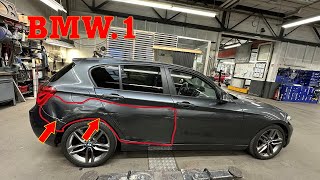
Technical Specifications
OEM Part Numbers: 41-00-7-298-172 41007298172 41-00-7-298-171 41007298171 41-00-8-060-247 41008060247
Material: Stamped Steel. Fitment: 2015-2018 BMW M3 Sedan (F80 Chassis) only.

The information in this article is provided for general reference and educational purposes only. Vehicle specifications, procedures, and part compatibility can vary by production date, trim level, and region. Always consult your vehicle's factory service manual and verify part numbers before purchasing or performing repairs. Safety-critical components such as airbags, seat belts, and braking systems should be installed by a qualified professional.
- BMW M3: