

Tesla Model 3 & Y Steering Rack Failure (2017-2023): The 'Steering Assist Reduced' Warning and Replacement Guide
This guide explains the sudden loss of power steering in the Tesla Model 3 and Model Y, covering the critical differences between RWD and AWD racks, recall information, and replacement costs.
- A "Steering Assist Reduced" warning is a critical safety failure; the vehicle is unsafe to drive and should be towed immediately.
- Compatibility is the biggest trap: All-Wheel Drive (AWD) and Rear-Wheel Drive (RWD) models use different, non-interchangeable steering racks. Always match the OEM part number from your original rack.
- Replacement is NOT a DIY job. The new rack must be calibrated using Tesla's specific software via Service Mode, and a full wheel alignment is mandatory.
- A major recall (NHTSA 25V-092) for 2023 models was addressed with a software update, but many vehicles still experience hardware failures requiring a full rack replacement.
Symptoms of a Failing Steering Rack

A failing steering rack in a Tesla Model 3 or Model Y can present several distinct symptoms. The most critical is a warning message on the center display, which often precedes a noticeable change in steering feel. In some cases, the loss of steering assist can be sudden and without prior warning.
"Steering Assist Reduced" Warning Message
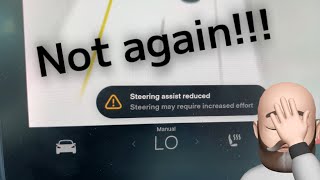
This is the most common and urgent symptom. A visual alert will appear on the vehicle's touchscreen that reads, "Steering assist reduced. Steering may require increased effort." This indicates the EPS motor is not providing full assistance. This can be caused by a software glitch, an internal electronic fault in the rack's control module, or a mechanical issue. While sometimes temporary, this warning should always be taken seriously as it can lead to a complete loss of power steering.
Heavy, Stiff, or Notchy Steering
Following the warning message, or sometimes occurring on its own, the steering will become extremely heavy and difficult to turn. This is most noticeable at low speeds, such as when parking or navigating an intersection. Some drivers describe the feeling as "notchy," "clicky," or as if the steering wheel is getting stuck. This happens because you are manually turning the wheels without any help from the electric motor.
Unusual Noises
While less common than the warning message, some failures are accompanied by noise. These can include:
- Whining or Squealing: A high-pitched whine when turning the wheel can indicate a problem with the electric motor.
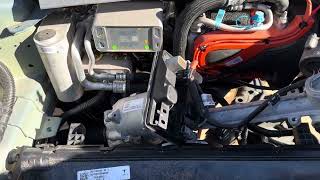
- Clunking or Grinding: A clunking sound from the front end could point to a loose steering rack or worn internal gears. However, be aware that clunking noises on these vehicles are also very commonly caused by failing upper control arms or 🎬 Watch: Diagnosing steering noises and suspension issues sway bar end links, which are known weak points. A thorough inspection is needed to isolate the sound.
Error Codes
In some instances, a specific error code like UI_a020 may appear on the screen along with the steering warning. Providing this code to a service technician can help speed up diagnosis.
Known Issues, Recalls, and Investigations

NHTSA Recall 25V-092: Sudden Loss of Power Steering
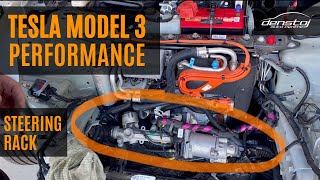
In early 2025, Tesla issued a recall for over 376,000 Model 3 and Model Y vehicles from the 2023 model year due to a defect that could cause a sudden loss of power steering assist. An investigation found that an "overvoltage breakdown" could overstress components on the steering rack's printed circuit board (PCB). 🎬 Watch: See a teardown of the internal steering rack components By design, if this fault occurs while driving, the assist continues to work until the vehicle comes to a stop. When the driver attempts to accelerate again, the power assist may be completely gone, making the wheel extremely difficult to turn.
The official remedy for this recall is an over-the-air (OTA) software update (version 2023.38.4 or later). However, thousands of owners have reported that the issue can persist even after the software update, ultimately requiring a full hardware replacement of the steering rack. This suggests that while the software may prevent certain faults, it cannot fix a rack that has already suffered an internal hardware failure.
Water Ingress and Corrosion
The steering rack is located low on the front subframe, exposing its electrical connectors to the elements. Water intrusion into these connectors can cause corrosion and electrical faults, leading to a sudden loss of power assist. This is a known issue on other Tesla models with similar steering rack designs.
Compatibility Warning: The single most important step before buying a replacement steering rack is to verify the part number on your vehicle's original unit and match it to the replacement. Do not rely on year and model alone. Part numbers change based on drivetrain and production date.
Buying a Used Tesla Model 3 & Model Y Steering Rack

Given that a new OEM steering rack can cost over $3,000 from Tesla, a quality used OEM part is a cost-effective solution. However, because this is a critical safety component with complex electronics, careful inspection and verification are essential.
1. Verify Drivetrain Compatibility: AWD vs. RWD
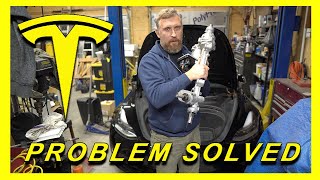
All-Wheel Drive (Dual Motor) and Rear-Wheel Drive (Single Motor) models use different steering racks. They are not interchangeable. Tesla's own service manuals list separate replacement procedures for RWD and AWD, 🎬 Watch: Step-by-step steering rack replacement tutorial confirming physical differences. You must purchase a rack that matches your vehicle's original drivetrain configuration.
2. Match the OEM Part Number
Tesla frequently revises part numbers. The only way to guarantee compatibility is to find the sticker on your original steering rack and match the number exactly. Common base part numbers for this generation include 1044831, 1044832, and 1188832, followed by revision letters like -00-H or -00-J. For example, part number 1044831-00-H is commonly associated with AWD models.
3. Physical Inspection
When you receive the used part, inspect it carefully before installation:
- Electrical Connectors: Check the main electrical connector and any other sensor connections for signs of corrosion, bent pins, or damage to the wiring harness. This is a primary failure point.
- Inner Tie Rods: Check that the inner tie rods are straight and not bent, which would indicate the donor vehicle was in a collision. Check for excessive play in the inner tie rod joints.
- Housing and Mounts: Inspect the aluminum housing of the rack for any cracks, deep gouges, or damage, particularly around the mounting points.
- Boots: Ensure the rubber boots covering the tie rods are not torn or leaking grease.
Is Mileage a Concern?
For an electronic part like an EPS rack, failure is not always tied to high mileage. The primary issue is often an electronic failure on the internal circuit board, which can happen suddenly at any mileage. A low-mileage part is generally preferable, but verifying its electronic integrity through a seller's warranty or return policy is more important than mileage alone.
Cost to Replace a Tesla Steering Rack
Replacing the steering rack is an expensive repair. Expect the total cost to vary based on your location and choice of parts.
| Part or Service | Estimated Cost | Notes |
|---|---|---|
| New OEM (from Tesla) | $2,500 - $3,500+ | Part only. Price can be very high, as reported by owners. |
| New OEM (from 3rd Party) | $1,500 - $2,000 | Some online retailers sell new, genuine Tesla racks. |
| Used OEM | $300 - $750 | A cost-effective option, but requires careful inspection and compatibility verification. |
| Shop Labor | $700 - $1,200 | Labor typically takes 4-6 hours. A mandatory wheel alignment adds to the cost. |
| Total (with Used OEM) | $1,000 - $1,950 | This represents a significant savings over using a new part from the dealer. |
Replacement and Calibration

Pro Tip: This is not a recommended DIY job for the average mechanic. Replacement requires special software procedures to calibrate the new rack to the vehicle. Failure to perform this calibration will result in the power steering not working correctly.
Post-Installation Software Procedures
After a new or used steering rack is mechanically installed, it must be electronically calibrated. This process involves putting the vehicle into 'Service Mode' through a sequence on the touchscreen. A technician then uses the service menu to perform a routine called "Clear Applied Offset" for the steering angle sensor. This tells the car's computer the new rack's center position. Finally, a full four-wheel alignment is required to ensure the vehicle tracks straight and to prevent premature tire wear.
Torque Specifications
For professional technicians, here are the critical torque specs from Tesla's service manuals. Note the differences between RWD and AWD models.
Dual Motor (AWD) Models
| Description | Torque |
|---|---|
| Inner bolts (x2) attaching steering gear to subframe | 75 Nm (55.3 lb-ft) |
| Outer bolts attaching steering gear to subframe | 47 Nm (34.7 lb-ft) |
| Nut attaching tie rod end to knuckle | 180 Nm (132.7 lb-ft) |
| Jamb nuts for outer tie rod ends | 80 Nm (59.0 lb-ft) |
| Bolt attaching steering column to steering gear | 18 Nm (13.3 lb-ft) |
Source: Tesla Service Manual
Rear-Wheel Drive (RWD) Models
| Description | Torque |
|---|---|
| Inner bolts attaching steering gear to subframe | 75 Nm (55.3 lb-ft) |
| Outer bolts (15 mm head) attaching steering gear to subframe | 47 Nm (34.7 lb-ft) |
| Outer bolts (13 mm head) attaching steering gear to subframe | 27 Nm (19.9 lb-ft) |
| Nut attaching tie rod end to knuckle (Replace nut) | 180 Nm (132.7 lb-ft) |
Source: Tesla Service Manual
Frequently Asked Questions
Can I drive my Model 3 or Model Y if the "Steering Assist Reduced" warning is on?
No, it is not safe to drive. The warning indicates a fault that could lead to a sudden and complete loss of power steering, making the vehicle extremely difficult to control, especially at low speeds or in an emergency. The vehicle should be towed for service.
Can I use a steering rack from an AWD Model 3 in my RWD Model 3?
No. The steering racks for All-Wheel Drive (Dual Motor) and Rear-Wheel Drive models are physically different and use different part numbers. They are not interchangeable. You must install a rack that matches your vehicle's original specifications.
Does a replacement steering rack need to be programmed or calibrated?
Yes, calibration is mandatory. After installation, the steering rack must be electronically calibrated to the vehicle using Tesla's specific diagnostic software, which can be accessed via Service Mode on the touchscreen. Without this step, the power steering will not function correctly and a wheel alignment cannot be properly completed.
Is rebuilding my Tesla steering rack an option?
Rebuilding these specific electric power steering racks is not a common or recommended practice. The internal mechanisms, including the control module and recirculating ball system, are complex. The standard repair procedure is to replace the entire steering rack assembly with a new or serviceable used unit.
Helpful Videos
Technical Specifications
OEM Part Numbers: 1044831-00-B 1044831-00-E 1044831-00-F 1044831-00-G 1044831-00-H 1044831-00-J 1044831-90-J 1044832-00-A 1188831-00-H 1188832-00-A 1188832-00-B GE80221R11
Fully Electric Power Steering (EPS) rack and pinion with integrated motor and control module. No hydraulic fluid is used.
We Have This Part in Stock



The information in this article is provided for general reference and educational purposes only. Vehicle specifications, procedures, and part compatibility can vary by production date, trim level, and region. Always consult your vehicle's factory service manual and verify part numbers before purchasing or performing repairs. Safety-critical components such as airbags, seat belts, and braking systems should be installed by a qualified professional.
- Tesla 3:
- Tesla Y:
- 🎬 Helpful Videos
- 🛍️ Shop This Part
- Symptoms of a Failing Steering Rack
- "Steering Assist Reduced" Warning Message
- Heavy, Stiff, or Notchy Steering
- Unusual Noises
- Error Codes
- Known Issues, Recalls, and Investigations
- NHTSA Recall 25V-092: Sudden Loss of Power Steering
- Water Ingress and Corrosion
- Buying a Used Tesla Model 3 & Model Y Steering Rack
- 1. Verify Drivetrain Compatibility: AWD vs. RWD
- 2. Match the OEM Part Number
- 3. Physical Inspection
- Is Mileage a Concern?
- Cost to Replace a Tesla Steering Rack
- Replacement and Calibration
- Post-Installation Software Procedures
- Torque Specifications
- Frequently Asked Questions
- 🎟️ Get 5% Off