

2013-2018 Toyota Camry Engine Crankshaft Position Sensor: A Complete Guide
Experiencing stalling or a no-start condition with your Camry? Your crankshaft position sensor could be the problem.
- A failing crankshaft sensor will cause stalling or a no-start condition and should be replaced immediately.
- For this critical part, use an OEM-quality brand like Denso for reliability and to avoid future issues.
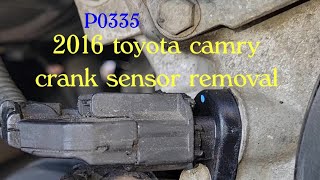
- The most common trouble code is P0335, indicating a fault in the sensor's circuit.
- On the 4-cylinder Camry, this is a simple, low-cost repair that many owners can do themselves in under an hour.
Is Your Camry's Crankshaft Sensor Failing?

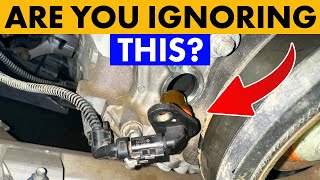
A crankshaft position sensor doesn't fail often on a Toyota Camry, but when it does, the symptoms are hard to ignore. Because this sensor is essential for engine operation, a complete failure will leave you stranded. Recognizing the early warning signs can help you address the issue before the car refuses to start.
Common Symptoms of Failure:
🎬 Watch: 8 common symptoms of a bad Toyota crankshaft sensor.- Check Engine Light: This is often the first sign. The most common trouble code associated with a failing crankshaft sensor is P0335.
- Engine Will Not Start: The engine will turn over (crank) but won't fire up. This happens because the computer doesn't know the crankshaft is spinning and won't trigger the spark plugs or fuel injectors.
- Intermittent Stalling: The engine may shut off unexpectedly while driving, which can be very dangerous. This can happen when the sensor gets hot and temporarily fails.
- Rough Idle and Engine Vibrations: Your car may shake or feel unstable when stopped at a light.
- Poor Acceleration: The car may feel sluggish, hesitate, or jerk when you press the gas pedal.
- Reduced Fuel Economy: Incorrect timing information from a faulty sensor can cause the engine to use more fuel than necessary.
Choosing the Right Aftermarket Sensor

When replacing a critical sensor like this, quality matters. While saving money is tempting, a cheap, unreliable sensor can fail quickly, leaving you in the same situation. Here’s how the available brands stack up for your Camry.
Pro Tip: Stick with OEM or OEM-Equivalent
For a part this critical, the consensus among Toyota mechanics and owners is to use a sensor from the original equipment manufacturer. Denso is the OE supplier for Toyota. Buying a Denso sensor gives you the same quality as the part from a Toyota dealership, often at a lower price.
- Tier 1 (Highly Recommended): Denso, Genuine Toyota. Denso makes the sensor for Toyota, so the quality is identical. These parts are designed for long life and perfect communication with your Camry's computer.
- Tier 2 (Reputable Aftermarket): Delphi, NGK/NTK, Hitachi. These are well-known brands with a strong reputation for producing quality sensors. In some cases, a brand like Delphi might even re-box an original Denso sensor. They are a solid choice if a Denso part is not available.
- Tier 3 (Economy Brands): Dorman, True Tech, and other lower-priced options. While the price is attractive, the quality and durability can be inconsistent for sensitive electronics. Using an economy sensor is a gamble that could lead to premature failure, poor performance, or hard-to-diagnose issues.
Cost to Replace the Crankshaft Position Sensor
The cost can vary depending on whether you do the job yourself or take it to a repair shop. The replacement is straightforward on the 4-cylinder Camry, making it a good DIY project for those with basic tools.
| Item | Estimated Cost |
|---|---|
| New Aftermarket Part | $23.76 - $155.13 |
| New OEM Part (Toyota/Denso) | $103 - $210 |
| Shop Labor | $140 - $228 |
| Total at a Shop (Aftermarket Part) | $164 - $383 |
| Total at a Shop (OEM Part) | $243 - $438 |
Installation Guide (2.5L 4-Cylinder Engine)

Replacing the crankshaft sensor on the 2013-2018 Camry with the 2.5L engine is a relatively easy job.
- Location: The sensor is on the passenger side of the engine, mounted to the engine block near the main crankshaft pulley.
- Access: You can access it from underneath the car or by turning the steering wheel to the right and going through the passenger-side wheel well. You do not need to remove the wheel.
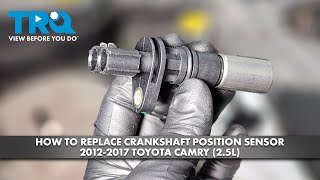
- Procedure: Disconnect the negative battery terminal. Locate the sensor. You may need to remove a small plastic splash guard held by two 10mm bolts. Press the tab on the electrical connector to unplug it. Remove the single 10mm bolt holding the sensor in place.
- Removal: Gently twist and pull the old sensor out. It has an O-ring that can sometimes get stuck. Be careful not to break it off in the engine block.
- Installation: Lightly lubricate the O-ring on the new sensor with clean engine oil. Push the new sensor into place, install the 10mm bolt (do not overtighten), and reconnect the electrical connector. 🎬 Watch this step-by-step walkthrough for the 2.5L sensor replacement. Reconnect the battery and clear any engine codes.
Frequently Asked Questions
Can I drive my Camry with a bad crankshaft position sensor?
It is not recommended. A failing sensor can cause the engine to stall at any time, including at high speeds or in traffic, which is a serious safety hazard. If the sensor fails completely, the engine will not restart, leaving you stranded.
What is the OBD-II code P0335?
P0335 stands for "Crankshaft Position Sensor 'A' Circuit Malfunction." This code means the engine's computer has lost the signal from the crankshaft sensor, or the signal is erratic. While a bad sensor is the most common cause, the issue could also be damaged wiring or a poor connection.
🎬 See how to diagnose the P0335 circuit malfunction code.Where is the crankshaft sensor located on my 2013-2018 Camry?
For the 2.5L 4-cylinder engine, it is on the passenger side of the engine near the crankshaft pulley (harmonic balancer), held in by one 10mm bolt. The location on the 3.5L V6 engine is different and more difficult to access.
Do I need to perform a "relearn" procedure after replacing the sensor?
For the 2013-2018 Toyota Camry, a specific crankshaft position sensor relearn procedure is typically not required. After installing the new sensor and clearing any diagnostic trouble codes, the engine computer will adapt to the new sensor during normal driving.
Helpful Videos
Technical Specifications
OEM Part Numbers: 90919-05047 90919-A5004 90919-05070
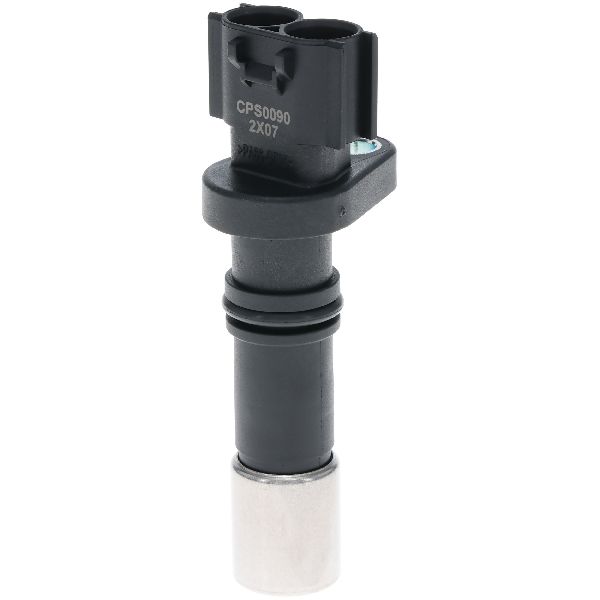
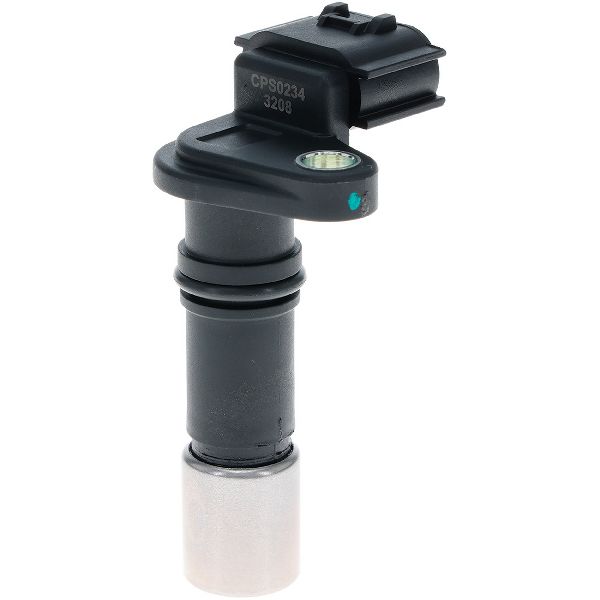
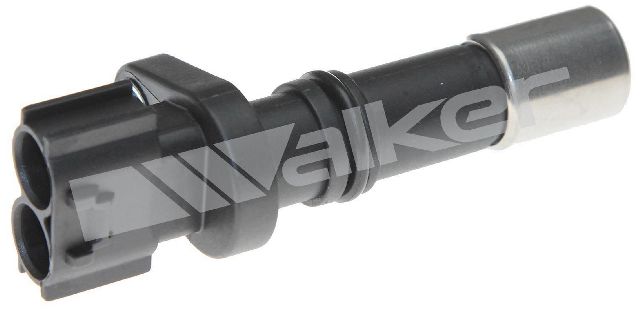
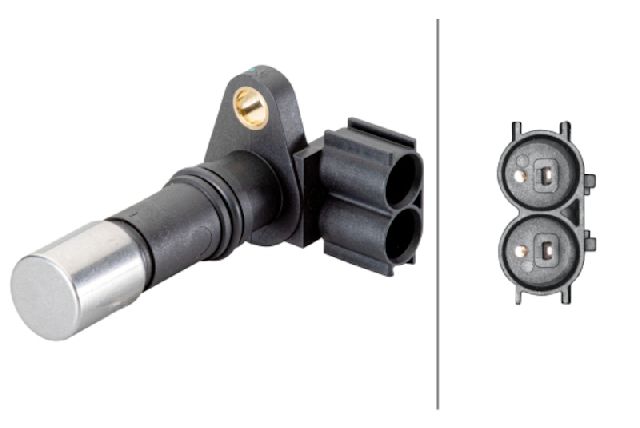
The sensor for the 2013-2018 Toyota Camry is a magnetic resistance element (MRE) or Hall-effect type sensor that reads teeth on the crankshaft to determine its speed and position. It is held in place by a single 10mm bolt.
We Have This Part in Stock


The information in this article is provided for general reference and educational purposes only. Vehicle specifications, procedures, and part compatibility can vary by production date, trim level, and region. Always consult your vehicle's factory service manual and verify part numbers before purchasing or performing repairs. Safety-critical components such as airbags, seat belts, and braking systems should be installed by a qualified professional.
- Toyota Camry: