

A Guide to Fuel Injector Replacement for the 2013-2018 Jeep Cherokee
Diagnose and understand the repair process for failing fuel injectors in your Jeep Cherokee KL.
- Look for specific trouble codes like P0201-P0206 to confirm an electrical injector failure.
- If you have a 2018 Cherokee with the 2.4L engine, check for the fuel supply tube recall (NHTSA 18V-282).
- For the 3.2L V6, plan to replace all six injectors at once and replace the intake manifold gaskets to save on future labor.
- A reputable aftermarket brand like Standard Ignition provides a cost-effective alternative to expensive OEM parts without the risks of cheap, unbranded injectors.
Is Your Jeep Cherokee Running Rough? It Could Be a Fuel Injector.


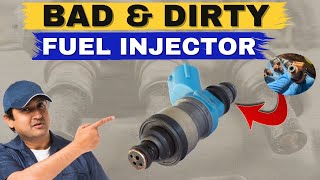
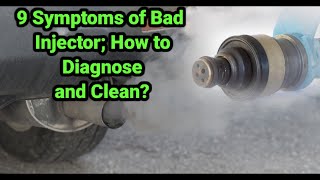
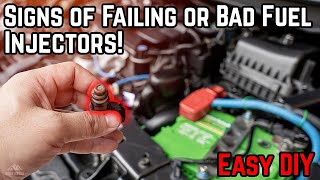
A failing fuel injector can cause a range of problems, from annoying vibrations to a no-start condition. Because injectors can get clogged with fuel deposits or fail electrically over time, it's a common maintenance item on vehicles as they age. Understanding the signs of a bad injector 🎬 Watch: 13 common symptoms of a clogged fuel injector. can help you diagnose the problem before it causes more serious issues.
Symptoms of a Bad Fuel Injector

- Rough Idle and Engine Misfires: One of the most common signs is an engine that shakes or idles unevenly. You may feel a distinct shuddering, which is often a cylinder misfiring because it's not getting the right amount of fuel.
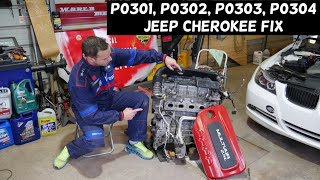
- Check Engine Light (CEL): A failing injector will almost always trigger the check engine light. You'll likely see codes related to the injector circuit (P0201-P0206) or a specific cylinder misfire (P0301-P0306). 🎬 See how to diagnose these specific engine misfire codes.
- Poor Fuel Economy: If an injector is stuck open or leaking, it will dump excess fuel into the engine, causing your gas mileage to drop noticeably.
- Fuel Smell: A strong smell of raw gasoline around the engine bay is a serious symptom. It could indicate an injector that is leaking externally, which is a significant fire hazard.
- Hesitation or Loss of Power: When you press the gas pedal, your Cherokee might hesitate or feel sluggish if an injector isn't delivering enough fuel.
Important Safety Recall: Fuel Supply Tube
There is a safety recall (NHTSA ID: 18V-282) for certain 2018 Jeep Cherokee models equipped with the 2.4L engine. The recall addresses a fuel supply tube that may have been damaged during manufacturing, which could result in a fuel leak and increase the risk of a fire. While this is not the fuel injector itself, it is a critical fuel system component. You can check if your vehicle is affected by entering your VIN on the NHTSA website.
Choosing an Aftermarket Fuel Injector

When replacing a fuel injector, you have a choice between original equipment (OEM) and aftermarket parts. OEM Mopar injectors are a direct match for what your vehicle had from the factory, offering guaranteed compatibility but at the highest price.
Reputable aftermarket brands like Standard Ignition offer a quality alternative that balances performance and cost. These parts are engineered to meet or exceed OEM specifications for spray pattern and fuel flow, which is critical for your engine to run correctly. Cheaper, unbranded injectors found on auction sites can be a gamble; they may have inconsistent spray patterns or flow rates that can lead to poor performance, reduced fuel economy, or even engine damage.
Pro Tip: Replace as a Set
If one injector has failed due to age or high mileage, the others are likely not far behind. Because replacing the injectors on the 3.2L V6 requires removing the intake manifold, it is highly recommended to replace all six injectors at once to save on future labor costs. When you perform the replacement, you should also install new intake manifold gaskets.
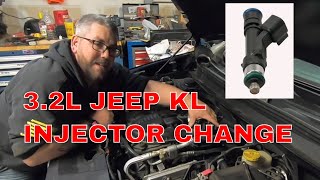
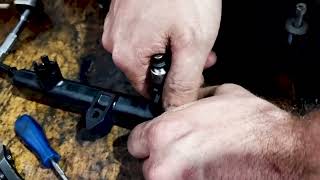
🎬 Watch this step-by-step guide to replacing 3.2L petrol injectors.Cost to Replace a Jeep Cherokee Fuel Injector
| Part Type | Estimated Part Cost (Single Injector) |
|---|---|
| New OEM (Mopar) | $130 - $200 |
| New Aftermarket (Standard Ignition) | $63 - $174 |
| Shop Labor | $131 - $192 |
Note: Costs are estimates and can vary based on location, engine type (2.4L vs. 3.2L), and the specific retailer. The 3.2L V6 will have higher labor costs due to the need to remove the intake manifold.
Frequently Asked Questions
Can I drive with a bad fuel injector?
It is not recommended. While the vehicle may run, a bad injector can cause unburned fuel to enter the exhaust, potentially damaging the expensive catalytic converter. If the injector is leaking fuel externally, it is a fire hazard and the vehicle should not be driven at all.
What are the common trouble codes for a bad fuel injector?
The most common codes are P0300 (Random Misfire) and P0301-P0306 (for misfires in cylinders 1-6). You will also likely see a corresponding code P0201-P0206, which indicates an "Injector Circuit/Open" fault for that specific cylinder.
Is it hard to replace the fuel injectors on a 2013-2018 Cherokee?
The difficulty depends on the engine. On the 3.2L V6, the job requires removing the upper intake manifold to access the rear fuel rail and injectors, making it a more involved job. On the 2.4L 4-cylinder, the injectors are also under the intake manifold and can be difficult to access. It is a feasible DIY project for someone with mechanical experience, but a beginner may find it challenging.
Should I use fuel injector cleaner first?
If the injector is clogged, a high-quality fuel injector cleaner added to the gas tank might help. However, if the injector has failed electrically (which is common and will set a P020x code), no amount of cleaner will fix it. An electrical failure requires replacement of the injector.
Helpful Videos
Technical Specifications
OEM Part Numbers: 4593986AB 4627890AB
The 2013-2018 Jeep Cherokee (KL) uses port fuel injection for both the 2.4L Tigershark and 3.2L Pentastar engines. A healthy injector should have an electrical resistance between approximately 10 and 16 ohms.
We Have This Part in Stock


The information in this article is provided for general reference and educational purposes only. Vehicle specifications, procedures, and part compatibility can vary by production date, trim level, and region. Always consult your vehicle's factory service manual and verify part numbers before purchasing or performing repairs. Safety-critical components such as airbags, seat belts, and braking systems should be installed by a qualified professional.
- Jeep Cherokee: