

A Guide to the Manifold Absolute Pressure (MAP) Sensor for the 2013-2016 Dodge Dart
Poor performance or bad gas mileage in your Dart could point to a failing MAP sensor.
- First, confirm if your Dart has the 1.4L Turbo, 2.0L, or 2.4L engine, as they use different and differently-priced MAP sensors.
- Symptoms of a bad MAP sensor include a check engine light (P0106, P0107), rough idle, poor acceleration, and bad gas mileage.
- Replacement is very easy on 2.0L/2.4L engines but more difficult on the 1.4L Turbo model.
- Choose a quality aftermarket brand like Bosch, Delphi, or Standard Ignition for reliability over the cheapest available options.
Is Your Dart's MAP Sensor Failing?

A bad MAP sensor can cause noticeable problems with how your car drives. Because the engine's computer gets incorrect information, it can't manage the engine properly. This can lead to a range of issues from annoying to serious.
Common Symptoms of Failure:
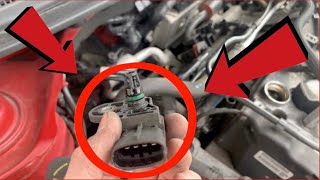
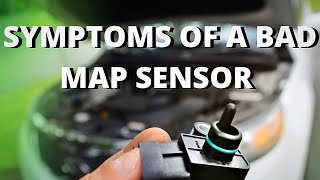
🎬 Watch: A visual guide to symptoms of a bad MAP sensor- Check Engine Light: This is often the first sign. The system will store trouble codes like P0105, P0106, P0107, or P0108. 🎬 See how to diagnose these specific MAP sensor trouble codes
- Rough or Erratic Idle: The engine may shake, surge, or idle unevenly when stopped.
- Poor Acceleration: Your Dart might feel sluggish, hesitate, or lack power when you press the gas pedal.
- Reduced Fuel Economy: If the computer injects too much fuel based on bad sensor data, your gas mileage will suffer.
- Black Smoke from Exhaust: This is a sign the engine is running "rich," with too much fuel and not enough air, which can be caused by a faulty MAP sensor reading.
- Failed Emissions Test: Incorrect air-fuel mixture will lead to higher emissions.
Known Issues, Recalls, and TSBs
As of early 2026, there are no specific recalls or Technical Service Bulletins (TSBs) from Dodge or the NHTSA for MAP sensor failure on the 2013-2016 Dodge Dart. While other recalls exist for this vehicle, such as for the shifter cable bushing and powertrain control module software, they are not related to the MAP sensor itself.
Choosing the Right Aftermarket MAP Sensor

When shopping for a new MAP sensor for your Dodge Dart, the most important step is to identify your engine. The Dart was sold with three different engines, and they do not all use the same sensor. This is why the price range for this part is so wide.
Engine-Specific Sensors:
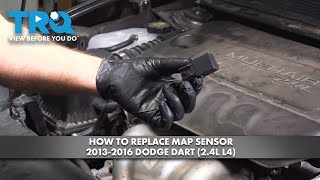
- For 2.0L and 2.4L Engines: These naturally aspirated engines use a traditional MAP sensor that is relatively simple and affordable. It is located on the intake manifold and is typically easy to access and replace. 🎬 Watch this step-by-step replacement walkthrough for the 2.4L engine
- For the 1.4L Turbo Engine: This engine uses a more complex and expensive sensor, often called a T-MAP sensor, which measures both pressure and temperature. It is also located on the intake manifold but can be more difficult to access. Using the wrong sensor will not work.
Pro Tip: Before ordering, confirm your engine size. You can find this on the emissions sticker under the hood or on your vehicle's documentation. Buying the correct sensor for your specific engine is critical.
Aftermarket Brand Quality
While some owners prefer to stick with OEM Mopar parts, several reputable aftermarket brands offer quality replacements.
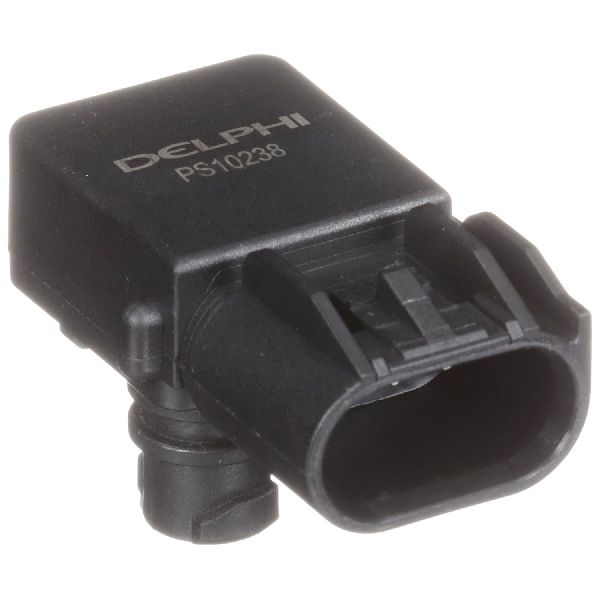
- Premium Aftermarket (Bosch, Delphi): These brands are often original equipment manufacturers for many car companies. They are known for high-quality sensors that meet or exceed OEM specifications. Bosch is a common choice for the 1.4L Turbo engine's specific T-MAP sensor.
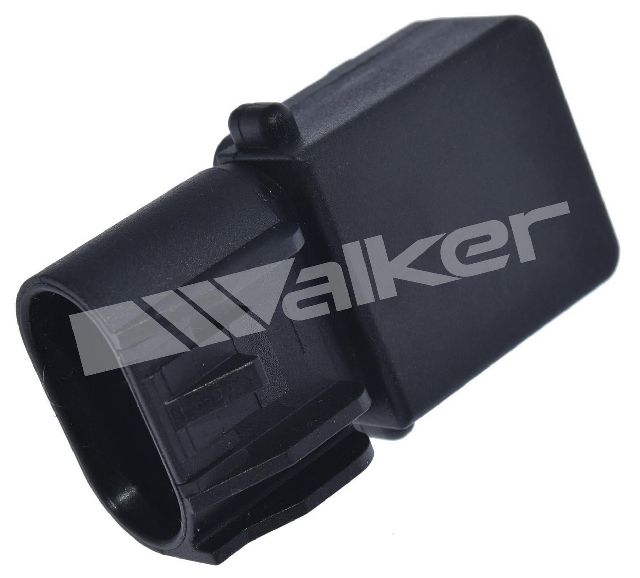
- Reliable Aftermarket (Standard Ignition, Walker Products, NGK, Holstein): These brands provide a good balance of quality and value. They are a dependable choice for a daily driver and are widely available for both engine types.
- Budget-Friendly: While lower-cost options exist, sensors are precise electronic components. Sticking with a recognized brand is recommended to avoid premature failure or performance issues.
Cost of Replacing a Dodge Dart MAP Sensor
The cost varies significantly based on your engine. The part for the 1.4L Turbo is much more expensive than the part for the 2.0L or 2.4L engines.
| Item | Estimated Cost |
|---|---|
| New OEM (Mopar) | $60 - $150 |
| New Aftermarket | $30 - $410 |
| Shop Labor | $50 - $140 |
| Total Professional Replacement | $110 - $600+ |
Cost estimates are approximate and can vary by location and your vehicle's engine. The higher end of the range typically reflects replacement for the 1.4L Turbo model.
Frequently Asked Questions

Where is the MAP sensor located on my Dodge Dart?
The location depends on your engine. On the 2.4L and 2.0L engines, it's on the intake manifold and easy to see after removing the engine cover. On the 1.4L Turbo, it is also on the intake manifold but may be harder to reach, requiring the removal of other components for access.
Can I clean my MAP sensor instead of replacing it?
Sometimes, cleaning a MAP sensor with a dedicated electronic parts cleaner can resolve issues if it's contaminated with oil or carbon. However, if the sensor's internal electronics have failed, cleaning will not help, and replacement is the only solution.
Is this a difficult DIY job?
For the 2.0L and 2.4L engines, this is a very easy job for a DIYer, often taking less than 30 minutes with basic tools. For the 1.4L Turbo engine, it is more challenging due to the sensor's location and may require more time and tools like a T20 Torx bit.
Do I need to disconnect the battery or reset the computer after replacement?
It is a good practice to disconnect the battery before working on any electronic sensor. After replacing the sensor, the check engine light should turn off on its own after a few drive cycles. You can also clear the codes immediately with an OBD2 scanner.
Helpful Videos
Technical Specifications
OEM Part Numbers: 05033310AC 5149091AA 68199324AA 05033310AB
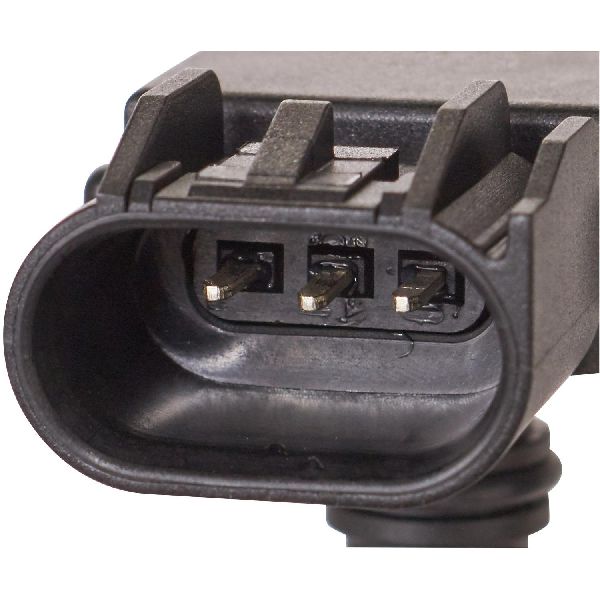
Sensor type varies by engine. The 2.0L/2.4L engines use a 3-pin MAP sensor. The 1.4L Turbo engine uses a more complex T-MAP (Temperature and Pressure) sensor.
We Have This Part in Stock


The information in this article is provided for general reference and educational purposes only. Vehicle specifications, procedures, and part compatibility can vary by production date, trim level, and region. Always consult your vehicle's factory service manual and verify part numbers before purchasing or performing repairs. Safety-critical components such as airbags, seat belts, and braking systems should be installed by a qualified professional.
- Dodge Dart: