

Kia Optima Brake Light Switch Guide: 2012-2020 Models
Having trouble with your brake lights, starting your car, or seeing warning lights? Your brake light switch could be the culprit.
- A faulty brake light switch can cause more than just brake light problems; it can prevent your car from starting or shifting out of park.
- Before replacing the switch, check the small plastic/rubber stopper on the brake pedal arm. A broken stopper causes identical symptoms and is a common issue.
- This is a very DIY-friendly repair that can be done in under an hour with basic tools, saving on labor costs.
- There was a recall for the switch on some 2011 models and a warranty extension for the pedal stopper on 2012-2013 models; check if your car is covered.
Symptoms of a Failing Brake Light Switch


A bad brake light switch on a Kia Optima can cause several confusing problems. Because the switch is connected to multiple vehicle systems, its failure can trigger a range of symptoms that might not seem related to the brakes at first.
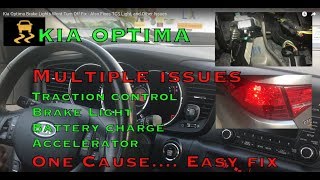
🎬 Watch this video to see common symptoms of a failing switch.- Brake lights don't work or stay on: The most obvious sign is that your brake lights do not light up when you press the pedal, or they stay on constantly, even when the car is off. This can drain your battery overnight.
- Car won't start: If you have a push-button ignition, a faulty switch may prevent the car from recognizing that the brake pedal is depressed, which is required to start the engine.
- Can't shift out of Park: The switch is part of the shift interlock system. If it fails, your gear selector may get stuck in the Park position.
- Warning lights on the dash: A failing brake light switch can cause the Electronic Stability Control (ESC) or ABS warning lights to illuminate on your dashboard.
- Cruise control issues: The cruise control may not engage, or it might not disengage when you press the brake pedal, which is a significant safety issue.
A Related Common Failure: The Brake Pedal Stopper
Sometimes, the problem isn't the switch itself but a small rubber or plastic pad on the brake pedal arm called a "stopper" or "pad." This pad presses against the switch's plunger. Over time, these stoppers can become brittle, crack, and fall apart. When this happens, the switch plunger is no longer depressed when the pedal is at rest, making the system think the brakes are always on. This leads to brake lights that won't turn off and a drained battery. Kia issued a warranty extension for this specific part on 2012-2013 Optima models. Always check the condition of this stopper pad before replacing the entire switch.
🎬 See how to fix brake lights that won't turn off.Choosing the Right Aftermarket Brake Light Switch

When replacing the brake light switch, you have several aftermarket options. The quality can vary, so it's helpful to understand the general reputation of each brand.
- Premium Aftermarket (Beck Arnley, Standard Ignition): Brands like Beck Arnley and Standard Motor Products (SMP) are often considered top-tier aftermarket choices. Beck Arnley specializes in parts that meet OE (Original Equipment) specifications for form, fit, and function, sometimes even sourcing from the original manufacturers. Standard Ignition is another well-respected brand known for quality electronic components.
- Standard Aftermarket (Dorman, Vemo): Dorman is a widely available brand that offers a huge catalog of parts, including "OE Solutions" that aim to fix known flaws in the original design. However, owner and mechanic reviews on Dorman quality are often mixed; some parts are excellent, while others can be inconsistent. Vemo is another option in this tier.
- Value-Oriented (Rostra Powertrain): These brands focus on providing a cost-effective solution. While they can be a good budget choice, they may not always have the same long-term durability or precise fit as premium brands.
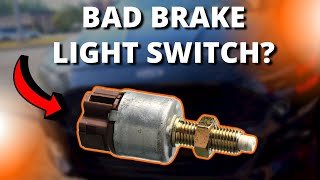
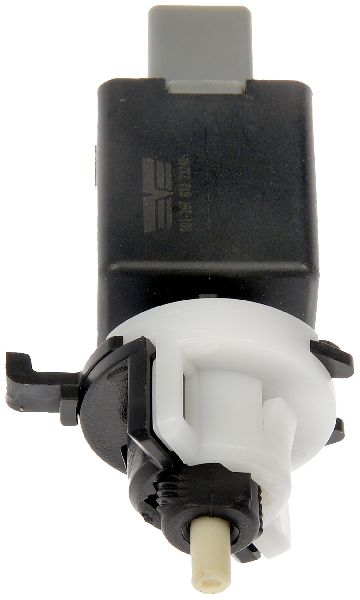
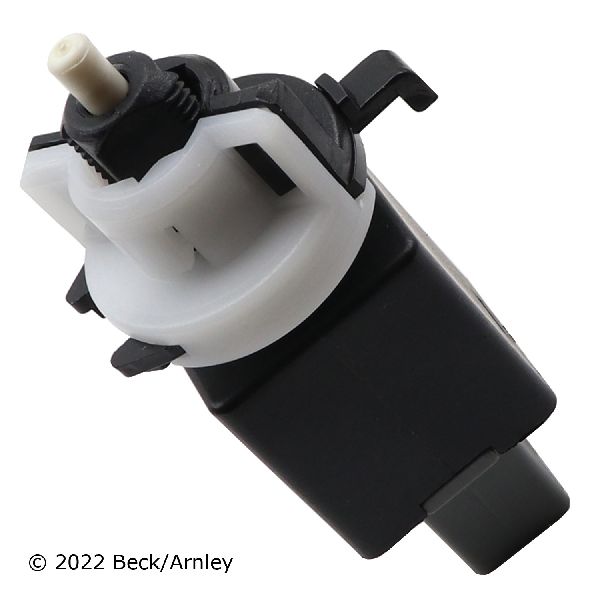
Pro Tip: Before ordering, it's a good idea to visually inspect your current switch. Note the number of electrical pins and the color of the connector to ensure you purchase an exact match.
Cost of Replacing a Kia Optima Brake Light Switch
The cost to replace a brake light switch is relatively low, as the part itself is inexpensive and the labor is straightforward.
| Item | Estimated Cost |
|---|---|
| New Aftermarket Part | $17.50 - $96.46 |
| Estimated Shop Labor | $57 - $140 |
| Total Estimated Cost (Aftermarket) | $75 - $236 |
Note: Prices are estimates and can vary based on your location, the specific brand chosen, and the repair shop's labor rates.
Frequently Asked Questions (FAQ)

Was there a recall on the Kia Optima brake light switch?
Yes, Kia has issued recalls for brake light switches on various models, including some 2011 Optimas, as part of a larger campaign. The issues cited were brake lights not illuminating, cruise control not deactivating, and problems with push-button start. Additionally, Kia extended the warranty for the brake pedal stopper pad on 2012-2013 models, which can cause similar symptoms. It is always best to check with a Kia dealer or the NHTSA website with your VIN to see if your specific vehicle is affected by any open recalls or warranty extensions.
Can I replace the brake light switch myself?
Yes, for most people with basic tools, this is a very feasible DIY job. The switch is located under the driver's side dashboard, attached to the brake pedal assembly. The process typically involves disconnecting the electrical connector, rotating the switch to unlock it, and pulling it out. The most difficult part is often the uncomfortable position required to access it. The replacement should take less than an hour.
Why are my ESC and ABS lights on?
The brake light switch sends a signal to the ABS (Anti-lock Braking System) and ESC (Electronic Stability Control) systems. If the switch provides an incorrect or inconsistent signal—for example, showing the brakes are applied when they are not—it can confuse these systems and trigger a fault, illuminating the warning lights on your dash. Often, replacing a faulty brake light switch will resolve these warning lights after a short drive or clearing the codes.
My brake lights work, but the car won't start. Could it still be the switch?
Yes. The brake light switch is often a dual-circuit switch. One circuit controls the brake lights, and the other sends a signal to systems like the push-to-start ignition and stability control. It is possible for one circuit to fail while the other continues to function, leading to a no-start condition even if the brake lights appear to be working correctly.
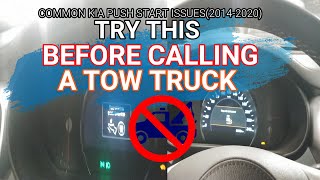
🎬 Learn more about troubleshooting Kia push-to-start ignition issues.Helpful Videos
Technical Specifications
OEM Part Numbers: 93810-3S000 93810-3K000 93810-3S700 93810-2E000 93810-38100 93810-38110
The brake light switch for the 2012-2020 Kia Optima is typically a 4-pin switch located on the brake pedal assembly. It functions as a dual-circuit switch, controlling both the brake lights and sending signals to other vehicle systems like the ECU, ABS, and push-start module. Always verify the pin count and connector shape before purchasing a replacement.
We Have This Part in Stock


The information in this article is provided for general reference and educational purposes only. Vehicle specifications, procedures, and part compatibility can vary by production date, trim level, and region. Always consult your vehicle's factory service manual and verify part numbers before purchasing or performing repairs. Safety-critical components such as airbags, seat belts, and braking systems should be installed by a qualified professional.
- Kia Optima: