

Ram 1500 (2011-2019) Speed Sensor Failure and Replacement Guide
Solving your Ram's shifting problems or ABS lights starts with finding the right speed sensor.
- First, diagnose whether it's a wheel sensor (ABS light) or transmission sensor (bad shifting).
- Before replacing the sensor, always inspect the wiring harness for damage, as this is a common point of failure on these trucks.
- If you have a 2019 model with ABS/ESC lights, check with a dealer about recall 24V-653 for a potential free software fix.
- Replacing a speed sensor is a DIY-friendly task, but a wheel sensor can be stuck by rust and require extra effort to remove.
Is It a Wheel Sensor or a Transmission Sensor?

Before buying a part, you need to know which sensor has failed. Your Ram 1500 has two different types, and they show different symptoms when they go bad. Getting the diagnosis right saves you time and money.
- Wheel Speed Sensor (ABS Sensor) Failure: If this sensor is the problem, you will almost always see the ABS and traction control (ESC) warning lights on your dashboard. You might also see a "Service 4WD" message. Cruise control will likely stop working as well.
- Transmission Speed Sensor Failure: If this sensor is the problem, your main symptoms will be related to driving performance. Look for harsh or erratic gear shifting, or a speedometer that doesn't work or bounces around. This will usually turn on the Check Engine Light.
Pro Tip: Use an OBD-II scanner to read the trouble codes. A code starting with 'P' (like P0501) usually points to the transmission sensor, while a code starting with 'C' (like C0031) points to a wheel speed sensor. Note that many basic scanners cannot read 'C' codes, so you may need a more advanced tool.
Known Issues for 2011-2019 Ram 1500

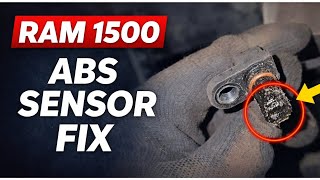
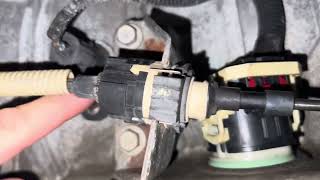
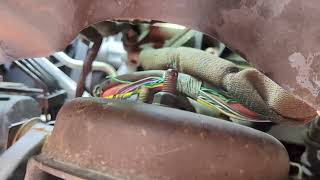
While the sensors themselves can fail, they are often misdiagnosed. Ram 1500 owners frequently find that the real problem is damaged wiring or a corroded connector, not the sensor itself. 🎬 Watch how to diagnose and fix common sensor wiring issues. Always inspect the wiring harness leading to the sensor for any breaks, chafing, or corrosion before spending money on a new part. Sometimes, simply cleaning road grime or rust from the sensor and its mounting location can solve the problem.
Recall & Service Bulletin Notice: A recall (NHTSA 24V-653) was issued for some 2019 Ram 1500 models for an ABS software issue that could disable stability control. The fix is a free software update at the dealership, not a new sensor. Additionally, Technical Service Bulletin (TSB) 21-017-16 addresses a P0731 code (Gear Ratio Error) which can be caused by a software issue, not a bad sensor. Check if these apply to your truck before replacing parts.
Choosing a New Aftermarket Speed Sensor

For a part like a speed sensor, you have a choice between OEM (Mopar) and aftermarket brands. Aftermarket sensors, like the 'Replacement' brand, offer a significant cost saving and are often perfectly reliable for this repair. However, because these are sensitive electronic parts, a faulty aftermarket sensor can sometimes cause the same problems as the part you are replacing. If the price difference is small, or if you want the highest probability of fixing it right the first time, a Mopar sensor is a good choice. That said, for many owners, a quality aftermarket sensor works fine and is a smart way to save money, especially if you are doing the repair yourself.
Cost of Replacing a Ram 1500 Speed Sensor
| Part Type | Estimated Cost |
|---|---|
| New Aftermarket Sensor | $25 - $40 |
| New OEM (Mopar) Sensor | $70 - $120 |
| Shop Labor | $80 - $120 |
| Total (Aftermarket Part + Labor) | $105 - $160 |
| Total (OEM Part + Labor) | $150 - $240 |
Frequently Asked Questions (FAQ)

Where are the speed sensors located on my Ram 1500?
The wheel speed (ABS) sensors are located at each wheel hub, behind the brake rotor. 🎬 Watch this walkthrough on replacing front wheel speed sensors. You have to remove the wheel and brake caliper to see it. The transmission output speed sensor is typically found on the driver's side of the transmission housing, toward the rear.
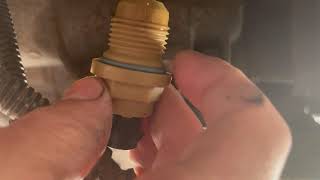
🎬 See how to replace the transmission output speed sensor.Can I replace a speed sensor myself?
Yes, this is a manageable DIY job for many owners. Replacing the transmission sensor is often easier, usually held by just one bolt. The wheel speed sensors are more involved because you must remove the wheel, brake caliper, and brake rotor. The sensor itself is held by a small bolt but can sometimes be seized with rust and difficult to remove.
Why are my ABS and traction lights still on after replacing the sensor?
First, the trouble codes may need to be cleared with a scanner. If the lights return, the problem is likely not the sensor. The most common cause is a damaged wire or a bad connector in the harness leading to the sensor. It could also be a problem with the ABS control module itself or a damaged tone ring on the axle/hub.
Do I need to replace all the sensors at once?
No. You only need to replace the specific sensor that has failed. A good OBD-II scanner that can read ABS codes will tell you which wheel sensor is faulty (e.g., "Left Front Wheel Speed Sensor Circuit"). This saves you from buying unnecessary parts.
Helpful Videos
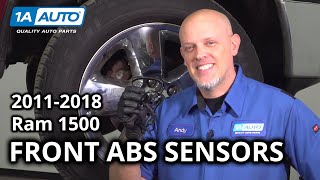
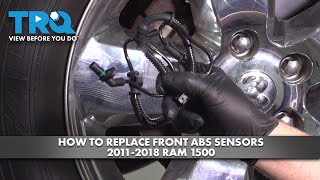
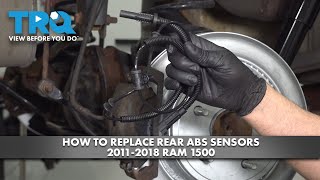
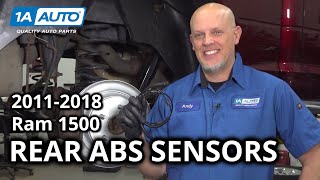

Technical Specifications
OEM Part Numbers: 68292050AH 68262947AF 56028668AG 4799061AB 52854001AA
The Ram 1500 uses two types of sensors: magneto-resistive sensors for the wheel hubs (ABS) and a hall-effect sensor for the transmission output shaft. The correct part depends on which system has failed.

The information in this article is provided for general reference and educational purposes only. Vehicle specifications, procedures, and part compatibility can vary by production date, trim level, and region. Always consult your vehicle's factory service manual and verify part numbers before purchasing or performing repairs. Safety-critical components such as airbags, seat belts, and braking systems should be installed by a qualified professional.
- Ram 1500: