

Ford F-150 (2011-2018) Engine Camshaft Position Sensor Replacement Guide
Diagnosing and replacing the camshaft position sensors on your 2011-2018 Ford F-150 to fix stalling, rough idle, and check engine lights.
- Your 2011-2018 F-150 has four camshaft position sensors; confirm which one is faulty before ordering.
- Diagnostic codes like P0340/P0345 can also be caused by wiring problems or failing VCT system components, not just the sensor.
- For best results, use OEM (Motorcraft) or reputable aftermarket brands like Delphi, Denso, NGK, or Standard Motor Products.
- Replacement can be easy or difficult depending on the sensor's location; rear sensors on the 3.5L EcoBoost are challenging to access.
Is Your F-150 Stalling or Running Rough? It Could Be a Camshaft Position Sensor.


If your 2011-2018 Ford F-150 is experiencing a check engine light, rough idling, stalling, or difficulty starting, a failing camshaft position sensor is a common culprit. These sensors tell the engine's computer when to fire the fuel injectors and spark plugs. When a sensor fails, the computer gets bad information, leading to poor engine performance. This guide will help you understand the symptoms, choose the right replacement part, and know what to expect during the repair.
Symptoms of a Failing Camshaft Position Sensor
A bad cam sensor can make your truck run poorly or not at all. Watch for these signs:
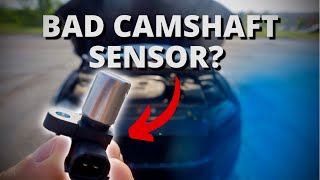
🎬 Watch: 7 telltale signs of a bad camshaft position sensor- Check Engine Light: This is the most common symptom. You will likely see codes such as P0340, P0344, P0345, or P0349.
- Engine Stalling: The engine may stall unexpectedly while idling or driving.
- Rough Idle: The truck may shake or vibrate more than usual at a stop.
- Hard Starting: The engine may crank for a long time before it starts, or it may not start at all.
- Poor Acceleration: You might notice the engine hesitates or feels weak when you press the gas pedal.
- Reduced Fuel Economy: When the engine isn't running efficiently, your gas mileage will suffer.
A Warning About Diagnostic Codes
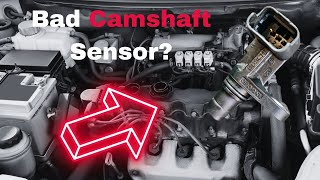
While codes like P0340 and P0345 point to the camshaft sensor circuit, they don't always mean the sensor itself is the problem. These codes can also be triggered by wiring issues, a failing alternator, or problems 🎬 See how to fix common cam sensor and transmission codes with the VCT solenoids or cam phasers. For example, Ford issued Technical Service Bulletin (TSB) 18-2360 for some 2018 5.0L F-150s where codes P0390 and P0394 were caused by a faulty VCT solenoid, not the sensor. Always consider a full diagnosis before simply replacing parts.
Choosing the Right Aftermarket Sensor
For a critical part like this, brand quality matters. While you can save money with aftermarket parts, choosing a reputable brand is key to avoiding repeat failures. Here’s a breakdown of your options:
- Tier 1 / OEM-Equivalent: Brands like Motorcraft (OEM), Delphi, Denso, NGK (NTK), and Standard Motor Products (SMP) are highly recommended. These companies are often the original equipment manufacturers for Ford. Forum users and mechanics report the best results with these brands, as they provide the same fit and reliability as the factory part.
- Tier 2 / Quality Aftermarket: Brands such as Dorman, Hitachi, and Walker Products offer a balance of value and quality. They are a solid choice for a reliable repair without the OEM price tag.
- Tier 3 / Economy: Other brands offer the lowest prices but may have a shorter lifespan or less consistent quality. For a sensor this critical to engine operation, spending a few extra dollars for a Tier 1 or Tier 2 brand is a wise investment.
Pro Tip: Replace in Sets?
Your F-150 has four cam sensors. If one has failed due to age and high mileage, the others may not be far behind. While not strictly necessary, if your budget allows and the sensors are easily accessible, consider replacing them in pairs (both intake or both exhaust) or all four at once for peace of mind.
Common Ordering Mistakes
The 2011-2018 F-150 uses four sensors, but they are not all the same part number. There are distinct intake and exhaust sensors. The sensors for the 5.0L V8, 3.5L EcoBoost, and 3.7L V6 engines may differ. Always verify the part number fits your specific engine, model year, and the sensor's location (Bank 1/Passenger Side vs. Bank 2/Driver Side, Intake vs. Exhaust) before ordering.
Installation Notes
The difficulty of this job depends entirely on which sensor has failed and which engine you have.
- On the 5.0L V8, the sensors are located on the front of the engine on the valve covers and are relatively easy to access.
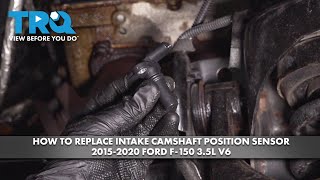
- On the 3.5L EcoBoost V6, two sensors are on the front, but two are on the back of the cylinder heads, which can be very difficult to reach. The passenger-side rear sensor may require removing the wheel and fender liner to access. 🎬 Watch: How to replace the intake sensor on a 3.5L V6
The basic process involves disconnecting the battery, unplugging the electrical connector, removing a single 8mm bolt, and carefully twisting and pulling the old sensor out. Always apply a dab of clean engine oil to the new sensor's O-ring before installation to ensure a good seal and prevent damage.
| Part Type | Estimated Cost (Per Sensor) |
|---|---|
| New OEM (Motorcraft) | $30 - $50 |
| New Aftermarket | $17 - $89 |
| Shop Labor | $100 - $200 |
Frequently Asked Questions (FAQ)
Where are the camshaft position sensors located on my F-150?
Your truck has four sensors. On the 5.0L V8, they are on the front of the valve covers. On the 3.5L EcoBoost, two are on the front and two are on the rear of the valve covers. Bank 1 is the passenger side, and Bank 2 is the driver's side.
Can I drive with a bad camshaft position sensor?
It is not recommended. While the truck may still run, you risk sudden stalling in traffic, which is dangerous. Continued driving can also lead to poor fuel economy and potentially damage other engine components like the catalytic converters over time.
Why did the check engine light come back after replacing the sensor?
This could mean the replacement sensor was faulty (especially if it was a low-quality brand), there is an issue with the wiring or connector, or the root cause is another part, like a VCT solenoid or cam phaser. It's also possible the code was for a different sensor, as there are four of them.
Was there a recall for this part?
There have been no specific recalls issued by the NHTSA for the camshaft position sensors on the 2011-2018 Ford F-150. However, there were related recalls for a faulty transmission speed sensor that caused sudden downshifting, which was fixed with a PCM software update.
Helpful Videos

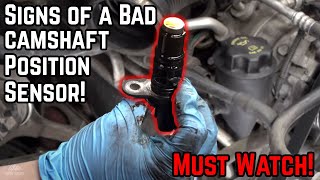
Technical Specifications
OEM Part Numbers: 7T4Z6B288A DU-102 HL3Z-6B288-A
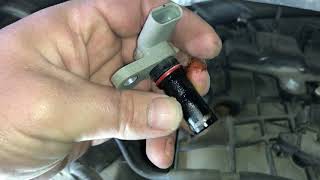
The 2011-2018 Ford F-150 uses four hall-effect type camshaft position sensors. There are separate part numbers for the intake and exhaust sensors, which vary by engine (3.5L, 3.7L, 5.0L). Each sensor is typically secured by a single 8mm bolt and uses a 3-pin electrical connector.
We Have This Part in Stock

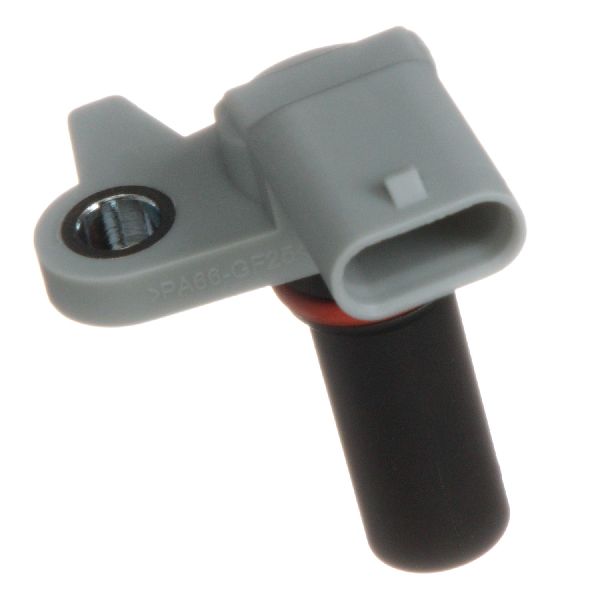
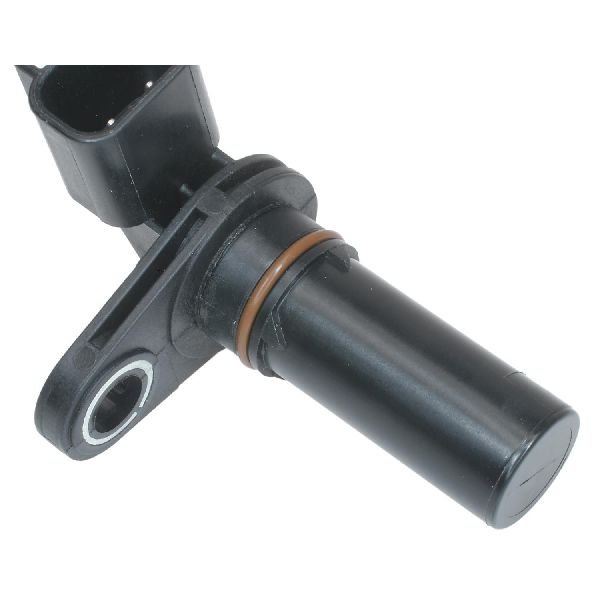
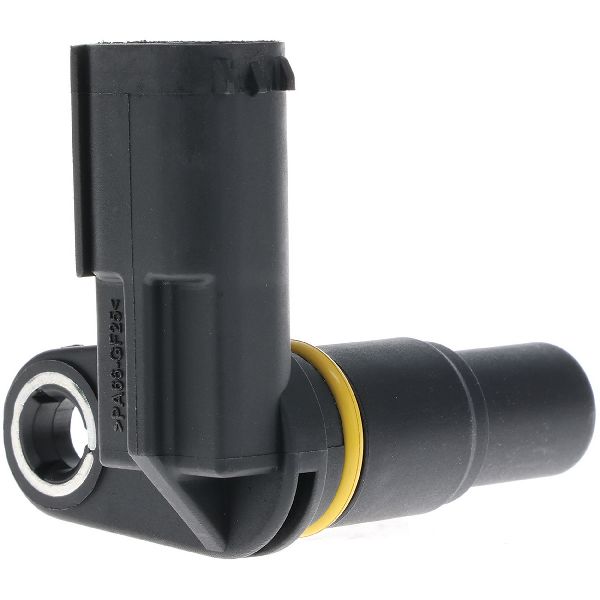

The information in this article is provided for general reference and educational purposes only. Vehicle specifications, procedures, and part compatibility can vary by production date, trim level, and region. Always consult your vehicle's factory service manual and verify part numbers before purchasing or performing repairs. Safety-critical components such as airbags, seat belts, and braking systems should be installed by a qualified professional.
- Ford F-150: