

Ford F-150 (2010-2018) Engine Crankshaft Position Sensor: A Complete Guide
Solve starting issues and rough running by understanding this critical sensor in your F-150.
- A failing crankshaft sensor can cause a no-start condition, stalling, or rough running in your F-150.
- Common trouble codes associated with a bad sensor are P0335 and P0336.
- Sensor location and replacement difficulty vary greatly depending on your engine (e.g., 5.0L V8 vs. 3.5L EcoBoost).
- For reliability, it is recommended to use an OEM Motorcraft part or a premium aftermarket brand like Delphi or Denso.
Symptoms of a Failing Crankshaft Position Sensor

When the crankshaft position sensor on your F-150 starts to fail, it can cause a range of problems from annoying to leaving you stranded. Because the sensor's signal is so critical for engine timing, a bad sensor can make your truck run poorly or not at all. You might notice one or more of the following symptoms:
- Engine Cranks but Won't Start: This is the most common and severe symptom. If the PCM doesn't get a signal from the crank sensor, it doesn't know the engine is turning, so it won't trigger the spark plugs or fuel injectors.
- Check Engine Light: A faulty sensor will almost always trigger the check engine light and store diagnostic trouble codes like P0335 or P0336.
- Rough Idling and Stalling: The engine may run rough, vibrate, or stall unexpectedly, especially when you come to a stop. This happens because the bad sensor signal causes incorrect ignition timing.
- Poor Acceleration and Reduced Power: Your truck may feel sluggish and lack power because the engine timing isn't optimized for performance.
- Decreased Fuel Economy: When ignition and fuel timing are off, the engine burns fuel less efficiently, leading to worse gas mileage.
Choosing the Right Aftermarket Crankshaft Sensor

When it comes to electronic sensors for your F-150, quality matters. While saving money is tempting, a cheap, low-quality sensor can fail quickly, leaving you with the same problem. It's often recommended to use the OEM Motorcraft part, but several aftermarket brands offer a good balance of quality and value.
Aftermarket Brand Quality Tiers
| Tier | Brands | Notes |
|---|---|---|
| Premium Aftermarket | Delphi, Denso, NGK/NTK | These brands are often original equipment manufacturers for Ford and other automakers. They are known for high-quality materials and rigorous testing, offering performance and reliability very close to the OEM part. |
| Standard Aftermarket | Standard Motor Products (SMP), Hitachi, Walker Products | These are reputable brands that offer a solid replacement part. They are a good mid-range option providing reliable performance and are widely available. |
| Economy / Value | Dorman, Holstein, various store brands | These brands offer the most affordable options. While they can be a good choice for a budget repair, quality can sometimes be inconsistent. Dorman is a popular choice, but it's wise to check reviews for your specific vehicle. |
Pro Tip: Many professional mechanics and experienced F-150 owners recommend sticking with Motorcraft or a premium aftermarket brand like Delphi or Denso for critical sensors like the crankshaft position sensor to avoid premature failure and ensure proper engine operation.
Known Issues, Recalls, or TSBs

As of late 2024, there are no widespread recalls specifically for the crankshaft position sensor on the 2010-2018 Ford F-150. However, some related issues have been noted:
- TSB 15-0142: Some owners reported a check engine light with a code indicating "crankshaft position sensor variation not learned" after a software update for a hard transmission downshift. This required a dealer to perform a relearn procedure.
- Recall 24S37 (2014 F-150): This recall was for a different sensor (transmission output shaft speed sensor) that could cause an unexpected downshift. While not the crank sensor, it highlights the importance of sensor signals to the PCM.
- Fuse 27 Issue (2009-2014): A well-known issue on earlier trucks in this generation is a melting fuse for the fuel pump, which can cause a crank-no-start condition easily mistaken for a bad crankshaft sensor. It's always worth checking Fuse 27 in the under-hood fuse box on these models.
Frequently Asked Questions (FAQ)

Where is the crankshaft position sensor located 🎬 Watch this video to find the sensor on 2010 models. on a 2010-2018 F-150?
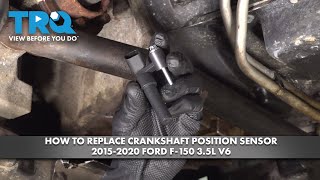
The location varies by engine. On V8 engines (like the 5.0L, 4.6L, and 5.4L), it's typically on the passenger side of the engine, low down on the front timing cover near the main crankshaft pulley. On the 3.5L EcoBoost, it is notoriously difficult to access, located on the driver's side behind the turbo and a heat shield, often accessed through the wheel well.
Is replacing the crankshaft sensor a DIY job?
For many F-150 engines, yes. If the sensor is easily accessible, it's often held by just one or two bolts. However, on engines like the 3.5L EcoBoost, the location makes it a much more difficult job that may require removing a heat shield and working in a tight space. The difficulty can range from easy to moderately difficult depending on your specific engine and your mechanical experience.
Do I need to perform a "relearn" procedure after replacing the sensor?
Sometimes. Many F-150s will not require a special procedure; the computer will adapt to the new sensor after a few start cycles or a short drive. However, in some cases, especially if you're still having issues after replacement, a "crankshaft position sensor profile correction" or "misfire monitor neutral profile correction" may need to be performed with a high-end scan tool or by a dealer.
What's the difference between OEM and aftermarket sensors?
OEM (Original Equipment Manufacturer), which is Motorcraft for Ford, is the exact part your truck was built with. High-quality aftermarket parts from brands like Delphi or Denso are made to meet or exceed OEM specifications and are often produced by the same companies that supply Ford. Economy aftermarket parts are cheaper but may use materials that are less durable, leading to a shorter lifespan.
Helpful Videos

Technical Specifications
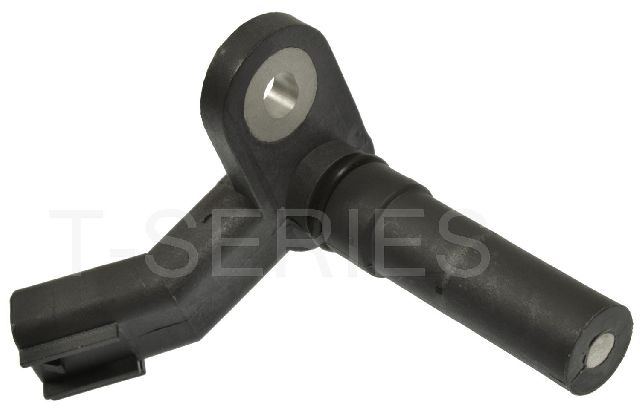
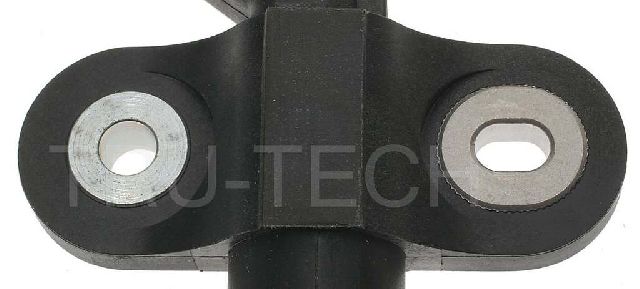
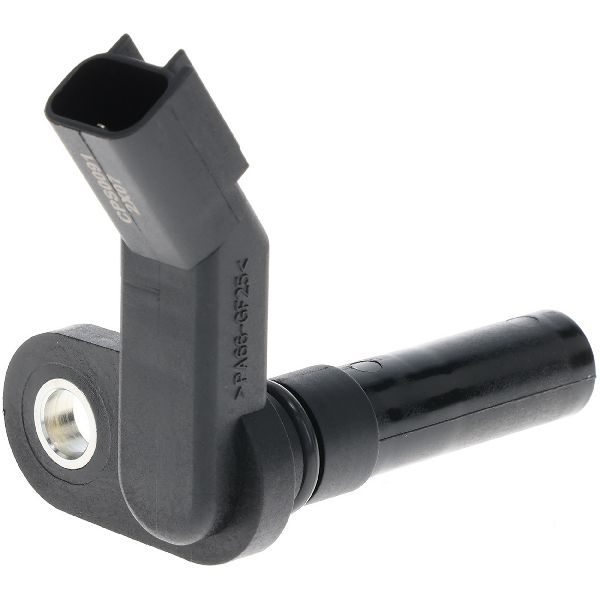
OEM Part Numbers: JR3Z6C315A DY-1138 DY-985 DY-922 PC862 PC753
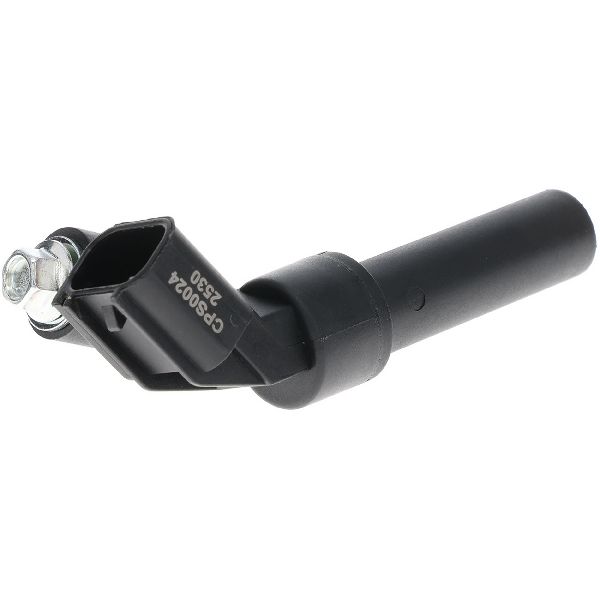
The crankshaft position sensor for the Ford F-150 is typically a Hall-effect or magnetic pickup sensor that generates a voltage signal based on the passing of teeth on a reluctor wheel attached to the crankshaft. It is a critical input for ignition timing, fuel injection, and misfire detection.
We Have This Part in Stock


The information in this article is provided for general reference and educational purposes only. Vehicle specifications, procedures, and part compatibility can vary by production date, trim level, and region. Always consult your vehicle's factory service manual and verify part numbers before purchasing or performing repairs. Safety-critical components such as airbags, seat belts, and braking systems should be installed by a qualified professional.
- Ford F-150: