

Ford Mustang Ignition Coil Guide for 2010-2017 Models
If your Mustang's engine is running rough, misfiring, or losing power, a bad ignition coil could be the culprit.
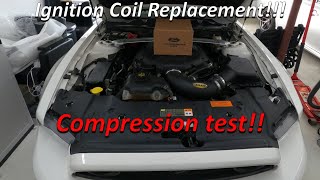
- A flashing check engine light indicates a severe misfire that requires immediate attention to prevent catalytic converter damage.
- For most owners, high-quality OEM-equivalent brands like Delphi, Denso, or Bosch offer the best value and reliability.
- Replacing an ignition coil is a very simple DIY task on 2010-2017 Mustangs, requiring only basic tools and about 15 minutes.
- Always confirm the part fits your specific engine (V6, V8, or EcoBoost) as they are not interchangeable.
Is Your Mustang Stumbling? Signs of a Failing Ignition Coil

A bad ignition coil is a common issue that can make your Mustang run poorly. Because each cylinder has its own coil, the symptoms can range from a slight roughness to a car that's difficult to drive. Watch out for these signs:
- Check Engine Light: This is the most common signal. A faulty coil will almost always trigger the check engine light. If the light is flashing, it means a severe misfire is happening that could damage your expensive catalytic converter.
- Engine Misfires: You'll feel this as a shake, stutter, or hesitation from the engine. It's often most noticeable when you're idling at a stoplight or accelerating.
- Rough Idle: When stopped, your engine might feel shaky or the RPMs may bounce around.
- Loss of Power: The car will feel sluggish and weak, especially when you try to accelerate quickly or go uphill.
- Worse Fuel Economy: When a cylinder isn't firing right, your engine becomes less efficient, and you'll notice you're filling up the gas tank more often.
- Hard Starting: While less common with a single failed coil, having multiple weak coils can make the engine difficult to start.
Choosing the Right Aftermarket Ignition Coil

When it's time to replace a coil, you have many choices beyond the dealership parts counter. For the 2010-2017 Mustang, aftermarket coils can be broken down into three general tiers:
1. OEM-Equivalent Brands
These brands aim to meet or exceed the original factory specifications. They are the best choice for most daily driven Mustangs, offering a great balance of quality, reliability, and price. Many forum users recommend sticking with OEM (Motorcraft) or proven OEM-equivalent brands, as some Fords can be sensitive to non-spec electrical parts. Brands like Bosch, Delphi, NGK, Hitachi, and Denso fall into this category. Delphi and Denso are known to be original equipment manufacturers for Ford and other carmakers, so their quality is often identical to the Motorcraft part.
2. Performance Brands
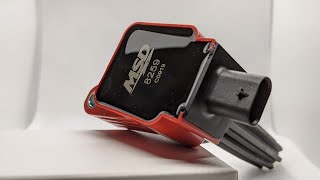
If your Mustang is modified with a supercharger, turbo, or aggressive tune, you might consider a performance coil. Brands like Granatelli, Edelbrock, FAST, and Mishimoto offer coils that promise a hotter or more powerful spark. This can help ensure complete combustion under high-performance conditions. 🎬 See how to install a performance coil kit on EcoBoost models. For a stock or lightly modified engine, these are often unnecessary and won't provide a noticeable power gain over a fresh set of quality OEM-style coils.
3. Value-Oriented Brands
Brands like DriveWire, True Tech, and other store brands offer a low-cost alternative. While the price is attractive, reliability can be inconsistent. For a critical part like an ignition coil, a failure can leave you stranded. These are best considered for a temporary fix or if budget is the absolute primary concern, but a proven OEM-equivalent brand is generally a safer long-term investment.
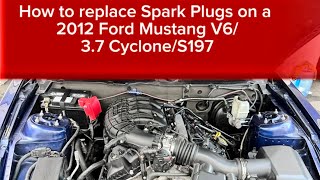
Pro Tip: When you replace a bad ignition coil, it's a smart move to replace the spark plug in that same cylinder. An old, worn spark plug can cause a new coil to fail prematurely. Also, 🎬 Watch: How to change spark plugs on a Mustang V6. applying a small amount of dielectric grease to the inside of the coil boot helps seal out moisture and makes future removal easier.
Known Issues, Recalls, and Service Bulletins

While there are no widespread ignition coil-specific recalls for the 2010-2017 Mustang, some related issues are worth noting. For early 2011-2014 5.0L models, Ford issued Technical Service Bulletin (TSB) 13-6-15 for false misfire codes (P0300-P0308) caused by the crankshaft position sensor, not the coils themselves. The fix involves installing a simple O-ring on the sensor. Owners of 2.3L EcoBoost Mustangs have also reported ignition coil and spark plug failures, sometimes leading to misfires under acceleration. No specific recalls were found for ignition coils on the NHTSA website for this year range.
Cost of Replacing a Ford Mustang Ignition Coil
| Part Type | Estimated Cost (Single Coil) |
|---|---|
| New OEM (Motorcraft) | $50 - $80 |
| New Aftermarket | $22 - $100+ |
| Shop Labor | $50 - $120 |
Note: Costs are estimates and can vary based on brand, location, and vehicle engine type. Performance coil sets can cost over $600.
Frequently Asked Questions

Should I replace all ignition coils at once?
If one coil fails and your car has high mileage (over 80,000 miles), it's a good idea to replace all of them. The others are likely near the end of their service life, and replacing them all at once can save you from future breakdowns. If your car has lower mileage, replacing only the failed coil is acceptable.
How do I find out which coil is bad?
A code reader will give you a Diagnostic Trouble Code (DTC). Codes P0301 through P0308 point to a misfire in a specific cylinder (e.g., P0304 is cylinder 4). You can then swap the coil from the misfiring cylinder with a coil from a good cylinder. Clear the codes and drive the car. If the misfire code returns for the cylinder you moved the coil to, you've confirmed the coil is bad. Codes like P0351 or P0354 point directly to a fault in the coil's circuit.
Is this a difficult DIY job?
No, this is one of the easiest repairs you can do on a Mustang. The coils are located right on top of the engine and are held in by a single 8mm bolt. You simply unplug the electrical connector, unbolt the coil, and pull it straight out. The entire job for a single coil can be done in less than 15 minutes.
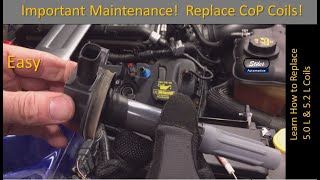
🎬 Watch: Step-by-step coil replacement for 5.0L and 5.2L engines.What's the difference between V6, GT, and EcoBoost coils?
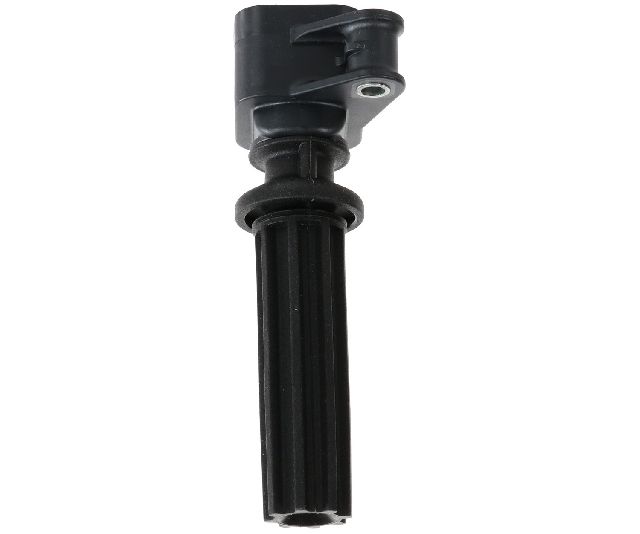
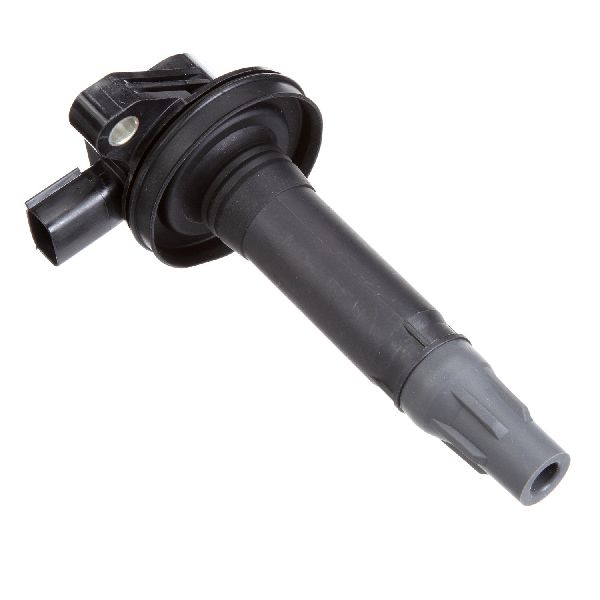
The ignition coils are specific to the engine in your Mustang. A coil for a 3.7L V6 will not work on a 5.0L V8 or a 2.3L EcoBoost, and vice-versa. Always ensure you are buying the correct part for your specific engine.
Helpful Videos

Technical Specifications
OEM Part Numbers: DG542 DG521 BR3Z-12029-A CYFS-12Y-2 M-12029-M50C
Coil-on-Plug (COP) design. Each engine (3.7L V6, 5.0L V8, 2.3L EcoBoost) requires a specific coil type. The system is controlled by the Powertrain Control Module (PCM).
We Have This Part in Stock


The information in this article is provided for general reference and educational purposes only. Vehicle specifications, procedures, and part compatibility can vary by production date, trim level, and region. Always consult your vehicle's factory service manual and verify part numbers before purchasing or performing repairs. Safety-critical components such as airbags, seat belts, and braking systems should be installed by a qualified professional.
- Ford Mustang: