

Dodge Journey Coolant Temperature Sensor Guide (2009-2019)
Understanding the signs of a failing coolant sensor in your Dodge Journey and how to fix it.
- A bad coolant sensor can cause a check engine light, poor fuel economy, and constant fan noise.
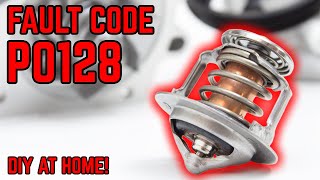
- Common fault codes are P0117, P0118, and P0128; the latter can also indicate a bad thermostat.
- This is a DIY-friendly repair that can be done in under an hour with basic tools.
- For 2.4L engines, check for a damaged sensor wire caused by a nearby vacuum hose, as noted in a TSB.
Is Your Dodge Journey Acting Up? It Could Be a Small Sensor.

If you're experiencing issues like a check engine light, poor gas mileage, or fans that won't shut off, a faulty Engine Coolant Temperature (ECT) sensor might be the culprit. This small part plays a big role in how your Journey's engine runs. When it fails, the engine's computer receives incorrect information, leading to a variety of problems. Ignoring these symptoms can lead to reduced fuel efficiency, poor performance, and potentially severe engine damage from overheating.
Symptoms of a Bad Coolant Sensor in a Dodge Journey

- Check Engine Light: This is often the first sign. The computer will log fault codes like P0117, P0118, or P0128.
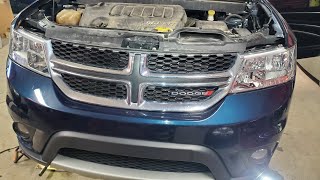
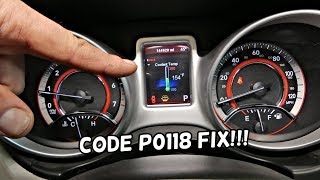
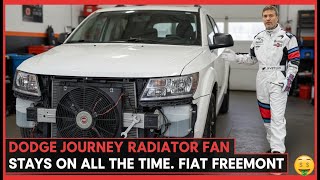
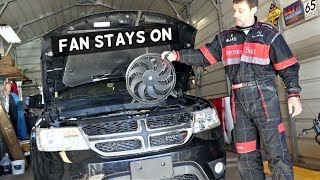
- Cooling Fans Run Constantly: A common symptom, especially with code P0118, is the sensor sending a false, extremely cold reading 🎬 Watch this guide to fix code P0118 and replace the sensor. (like -40°F), causing the computer to run the cooling fans at full speed 🎬 See why your radiator fan won't turn off and how to fix it. all the time.
- Erratic Temperature Gauge: The temperature gauge on your dashboard may behave erratically, show no reading, or jump to hot for no reason.
- Poor Fuel Economy: If the sensor incorrectly tells the computer the engine is cold, the system will inject too much fuel, wasting gas.
- Black Smoke from Exhaust: A rich fuel mixture caused by a bad sensor can result in unburnt fuel burning in the exhaust, creating black smoke.
- Engine Overheating: If the sensor fails to report that the engine is hot, the cooling fans may not turn on when needed, leading to overheating.
Known Issue for 2.4L Engines (TSB 05-002-12)
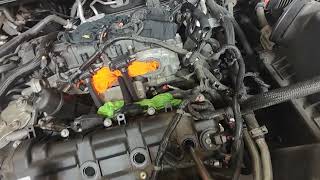
For the 2011 Dodge Journey with the 2.4L engine, a Technical Service Bulletin (TSB) was issued for trouble codes P0117 or P0118. The bulletin notes that the brake booster vacuum hose may have been routed too close to the ECT sensor connector, causing damage. If you have these codes on a 2.4L model, inspect the wiring and hose routing near the sensor before replacing the part.
Choosing a New Aftermarket Sensor

When replacing the ECT sensor, you have a choice between an OEM part from the dealer and an aftermarket part. For a critical component like this, quality matters. While OEM Mopar parts are a guaranteed fit and quality, a good aftermarket sensor can provide reliable performance for a lower price. Forum users often report mixed experiences with budget or economy-tier sensors, sometimes leading to replacing the part twice. For a part that is relatively inexpensive but crucial for engine health, choosing a standard, reputable aftermarket brand offers a good balance of cost and reliability.
| Part/Service | Estimated Cost |
|---|---|
| New OEM (Mopar) Part | $45 - $70 |
| New Aftermarket Part | $15 - $30 |
| Shop Labor Cost | $75 - $150 |
| Total DIY Cost (Aftermarket) | $15 - $30 |
| Total Shop Cost (Aftermarket) | $90 - $180 |
Frequently Asked Questions

Where is the coolant temperature sensor on a Dodge Journey?
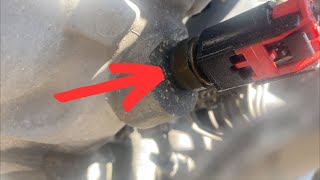
The location depends on your engine. On the 3.6L V6 (2011-2019), it is typically on the front of the engine block, near the cooling fan assembly. On the 2.4L 4-cylinder, it is located on the driver's side of the engine in the water outlet housing.
Can I replace the sensor myself?
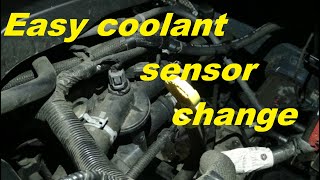
Yes, this is a good DIY job for a home mechanic. The process involves letting the engine cool completely, partially draining some coolant, unplugging the sensor, unscrewing it, and quickly installing the new one to minimize coolant loss. The job can usually be completed in under an hour.
Is it the sensor or the thermostat?
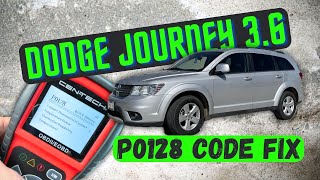
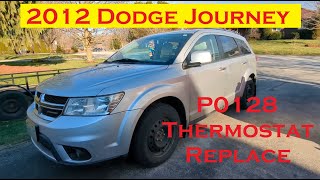
The code P0128 (Coolant Temperature Below Thermostat Regulating Temperature) is very common on the Journey and can be caused by either a bad thermostat stuck open or a faulty ECT sensor. A thermostat stuck open will often cause the engine to warm up very slowly. If your temperature gauge seems to work but never reaches the normal operating range on the highway, the thermostat is a likely suspect. 🎬 Follow this walkthrough to replace the thermostat and clear code P0128. If the gauge is erratic, dead, or the fans run constantly, the sensor is more likely to blame.
Are there any recalls for this part?
No, as of early 2026, there are no specific NHTSA recalls for the engine coolant temperature sensor on the 2009-2019 Dodge Journey.
Helpful Videos


Technical Specifications
OEM Part Numbers: 5149077AB 5269870AB 5033313AA 5033314AA
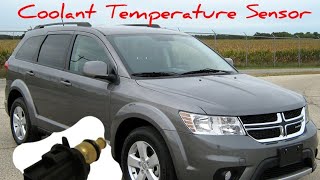
Typically a 2-pin, plug-in thermistor sensor that threads into the engine block, cylinder head, or thermostat housing.

The information in this article is provided for general reference and educational purposes only. Vehicle specifications, procedures, and part compatibility can vary by production date, trim level, and region. Always consult your vehicle's factory service manual and verify part numbers before purchasing or performing repairs. Safety-critical components such as airbags, seat belts, and braking systems should be installed by a qualified professional.
- Dodge Journey: