

Chevrolet Camaro Crankshaft Position Sensor: A 2009-2015 Guide
Solve stalling, no-start conditions, and check engine lights related to your Camaro's crank sensor.
- A failing sensor will cause a no-start or stalling condition, which can be dangerous.
- For V8 models, the starter must be removed to access the sensor, increasing replacement time and cost.
- On V6 models, check for TSB PIP3423P, as a moved reluctor ring can mimic sensor failure but requires a different, more complex repair.
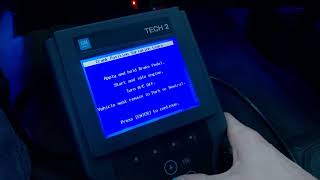
- A 'Crankshaft Variation Relearn' procedure with a scan tool is required after installation for proper engine operation.
Is Your Camaro's Crankshaft Sensor Failing?


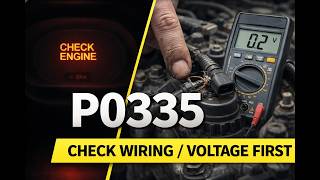
A bad crankshaft position sensor can cause problems that range from annoying to leaving you stranded. The most common sign is a Check Engine Light on your dashboard. If you use a code reader, you will likely see error code P0335 or P0336. Watch for these other common symptoms:
- Engine Cranks but Won't Start: This is a classic sign. The starter turns the engine over, but it never fires up because the computer doesn't know when to create a spark.
- Sudden Stalling: The engine may die for no reason while you are driving, sometimes at low speeds or when idling at a stoplight. This is a serious safety risk.
- Rough Idle and Misfires: You might feel the engine shaking or vibrating when the car is stopped. An incorrect sensor signal can cause the engine to misfire.
- Poor Acceleration: Your Camaro may feel weak, hesitate, or jerk when you step on the gas pedal.
- Worse Gas Mileage: When ignition and fuel timing are off, your engine burns more fuel than it needs to.
V6 Engine Warning: Check for TSB PIP3423P
For 2010-2015 V6 models (3.6L LLT and LFX engines), a known issue can mimic a bad crank sensor. A Technical Service Bulletin (TSB) notes that the reluctor ring on the crankshaft can move out of position. This causes timing-related codes (like P0016, P0017, P0008) and requires major engine work to fix, not just a new sensor. If you have these codes, this is a possible cause that should be investigated before replacing parts.
Choosing a New Aftermarket Sensor

When replacing a critical part like this, you have a choice between OEM and aftermarket brands. For the 2009-2015 Camaro, many owners and mechanics recommend using an OEM part from ACDelco or a trusted OEM supplier like Delphi. This is because the sensor is essential for the engine to run, and a cheap, unreliable part can fail early, leaving you with the same problem.
Value-priced aftermarket brands, such as the "Replacement" brand, offer a significant cost saving. This can be a good option if you are on a tight budget. However, be aware of the trade-off. The quality and lifespan may not match the original part. For a sensor that can cause your car to stall in traffic, spending more for a higher-quality part is often a worthwhile investment in reliability.
Cost to Replace a Camaro Crankshaft Position Sensor
| Part Type | Estimated Cost |
|---|---|
| New OEM (ACDelco) | $45 - $90 |
| New Aftermarket | $20 - $50 |
| Shop Labor | $120 - $350 |
Cost estimates are approximate and can vary by location and engine type. V8 models typically have higher labor costs due to part location.
Installation Tips
On V6 models, the sensor is on the passenger side and can be reached through the wheel well. 🎬 Watch this step-by-step replacement guide for V6 Camaro models. On V8 models (LS3, L99), the sensor is located above the starter motor on the passenger side, so the starter must be removed to access it, making the job more difficult. After replacing the sensor, a "Crankshaft Variation Relearn" procedure with a capable scan tool is required to sync the new sensor with the car's computer.
Frequently Asked Questions

Can I drive my Camaro with a bad crankshaft sensor?
It is not recommended. The engine could stall at any moment, which is a major safety hazard, especially in traffic or at high speeds.
Is this a difficult DIY job?
For V6 owners, it's a fairly simple job requiring basic tools and access through the passenger wheel well. For V8 owners, the job is more complex because you must remove the starter motor 🎬 See how to access the sensor on V8 SS models. to get to the sensor.
What is a "crank relearn" and is it necessary?
A crank relearn, or Crankshaft Position System Variation Learning Procedure, is a calibration process done with a scan tool. It teaches the ECM the minor imperfections of your specific crankshaft reluctor wheel so it can accurately detect misfires. After replacing the sensor, this procedure is required to clear certain codes and ensure the system works correctly.
Could a bad battery cause a P0335 code?
Yes, in some cases. A very low battery can cause various electrical issues and trigger random, incorrect error codes when you try to start the car. It's always a good idea to ensure your battery is fully charged and healthy before diagnosing sensor issues.
Helpful Videos


Technical Specifications
OEM Part Numbers: 12674702 213-354
The sensor is a magnetic or Hall-effect type that reads a reluctor wheel on the crankshaft to determine its speed and position. It is typically held in place by a single 10mm bolt.

The information in this article is provided for general reference and educational purposes only. Vehicle specifications, procedures, and part compatibility can vary by production date, trim level, and region. Always consult your vehicle's factory service manual and verify part numbers before purchasing or performing repairs. Safety-critical components such as airbags, seat belts, and braking systems should be installed by a qualified professional.
- Chevrolet Camaro: