

Buick Enclave Camshaft Position Sensor Guide (2008-2020)
Address stalling, rough idling, and check engine lights by understanding your Enclave's camshaft position sensors.
- Your Enclave has four identical camshaft position sensors; use a code scanner to identify which one has failed before buying a replacement.
- Codes P0016-P0019 are a major red flag for stretched timing chains, a common and serious issue on these engines that must be ruled out first.
- The two sensors at the rear of the engine (Bank 1) are very difficult to access and will significantly increase labor time and cost compared to the front two (Bank 2).
- Due to high failure rates with cheap electronics, it is recommended to use a quality aftermarket brand or an OEM part to avoid doing the job twice.
Is a Failing Camshaft Sensor a Big Deal?

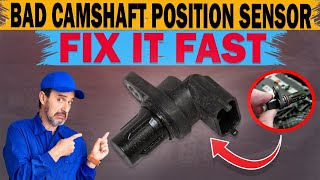
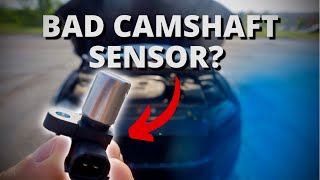
Yes, it can be. A bad camshaft position sensor can leave you stranded. The engine's computer relies on the sensor's signal to time fuel delivery and spark. When the signal is gone, the computer can't inject fuel properly, leading to a range of problems from poor performance to the engine not starting at all. Continuing to drive with a faulty sensor can cause stalling in traffic, which is a serious safety risk.
🎬 Watch: Common symptoms of a bad camshaft position sensorA Critical Warning for Enclave Owners: Timing Chains
The 3.6L V6 engine in 2008-2017 Buick Enclaves is widely known for problems with stretched timing chains. Often, the first warning sign is not a rattling noise, but a check engine light with camshaft-related codes like P0016, P0017, P0018, or P0019. These codes indicate a mismatch between the camshaft and crankshaft positions. Before you replace the sensors, it is absolutely critical to rule out a stretched timing chain, especially on higher-mileage vehicles. A new sensor will NOT fix a timing chain issue. A GM Technical Service Bulletin (TSB) also notes that these codes can be caused by a moved reluctor wheel on the crankshaft, which is a major mechanical repair.
🎬 See this potential fix for P0017 before replacing timing chainsChoosing the Right Aftermarket Sensor

When replacing a critical engine sensor, quality matters. While OEM is an option, premium aftermarket brands often provide similar quality at a better price. Forum users and mechanics often recommend sticking with known OE suppliers like Delphi or Bosch, or trusted aftermarket brands. Inexpensive, no-name sensors have a reputation for failing early, forcing you to do the job twice. Given that some sensors on the Enclave are difficult to access, it's wise to use a quality part to avoid repeat repairs.
Pro Tip: Replace in Pairs
Your Enclave has four camshaft position sensors that are all the same part. They have all experienced the same heat and wear. If one fails, especially at higher mileage, it's a good practice to replace its corresponding sensor on the other bank (e.g., both intake sensors) or all four at once to prevent future breakdowns.
Cost to Replace a Buick Enclave Camshaft Position Sensor

| Part Type | Estimated Cost |
|---|---|
| New Aftermarket Sensor | $23.51 - $31.63 |
| New OEM Sensor | $123 - $183 |
| Shop Labor | $229 - $337 |
| Total Professional Replacement | $252 - $520+ |
Note: Labor costs vary significantly. The Enclave's 3.6L V6 has two sensors on the front (Bank 2) that are easy to access and two on the rear (Bank 1) that are much harder to reach, increasing labor time and cost.
Frequently Asked Questions (FAQ)

Where are the camshaft position sensors on my Enclave?
The 3.6L V6 has four sensors. Bank 2 sensors are on the front of the engine, near the radiator, and are fairly easy to see and access. Bank 1 sensors are on the rear of the engine against the firewall and are much more difficult to replace, often requiring the removal of other components like an engine mount strut.
Can I replace a camshaft position sensor myself?
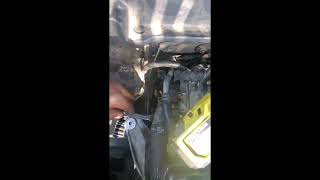
Yes, if you are comfortable working on engines. The sensors on the front of the engine (Bank 2) are feasible for a DIYer with basic tools (typically a 10mm socket). 🎬 Watch: Step-by-step walkthrough for replacing the Enclave camshaft sensor The sensors on the rear (Bank 1) are significantly more difficult and may be best left to a professional.
What are the diagnostic codes for a bad camshaft sensor?
Common codes include P0340-P0349 and P0365-P0369, which point directly to the sensor circuits. However, be very cautious of codes P0016, P0017, P0018, and P0019, as they often indicate a more serious timing chain problem.
Are there any recalls for this part?
There are no specific recalls on the camshaft position sensors for the 2008-2020 Buick Enclave. However, GM has issued several Technical Service Bulletins (TSBs) related to the timing system that can trigger camshaft sensor codes, such as PIP3423P for stretched timing chains or a moved crankshaft reluctor wheel.
Could something else cause these symptoms?
Yes. As mentioned, timing chain issues are the biggest concern. Additionally, dirty engine oil can clog the VVT solenoids (oil control valves), causing similar symptoms and codes. Sometimes, an engine oil flush can resolve these issues before more expensive repairs are attempted. Problems with the crankshaft position sensor can also cause similar stalling and no-start conditions.
Helpful Videos
Technical Specifications
OEM Part Numbers: 12613030 12590991
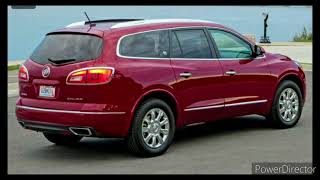
The 2008-2020 Buick Enclave uses a 3.6L V6 engine with four identical camshaft position sensors. There is one intake and one exhaust sensor for Bank 1 (rear, by firewall) and one intake and one exhaust sensor for Bank 2 (front, by radiator).

The information in this article is provided for general reference and educational purposes only. Vehicle specifications, procedures, and part compatibility can vary by production date, trim level, and region. Always consult your vehicle's factory service manual and verify part numbers before purchasing or performing repairs. Safety-critical components such as airbags, seat belts, and braking systems should be installed by a qualified professional.
- Buick Enclave: