

A Guide to Oxygen Sensor Replacement for the 2008-2017 Mitsubishi Lancer
Fix your check engine light and improve gas mileage by understanding how to choose the right oxygen sensor for your Lancer.
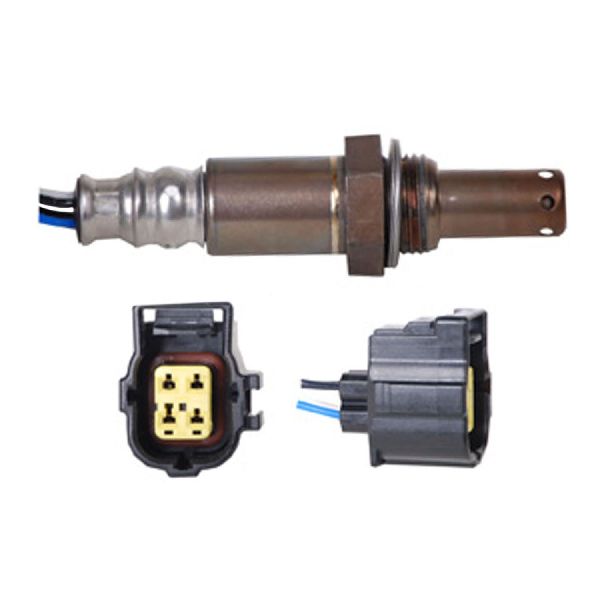
- For best results and to avoid compatibility issues, choose a direct-fit oxygen sensor from Denso or NGK/NTK.
- Most 2008-2017 Lancers have two sensors (upstream and downstream) that are not interchangeable.
- A failing oxygen sensor will decrease your fuel economy and can eventually damage your catalytic converter if ignored.
- If you own a 2011 Lancer with a P0145 code, investigate TSB-13-13-002REV for a potential software fix before replacing the sensor.
Is Your Lancer's Oxygen Sensor Failing?

A bad oxygen sensor is a common problem that will almost always trigger your check engine light. Ignoring a failing sensor can lead to reduced fuel economy and, in the long run, potential damage to your expensive catalytic converter. Recognizing the symptoms early can save you money and keep your Lancer running smoothly.
Common Failure Symptoms
- Check Engine Light: This is the most common sign. An OBD-II scanner will likely show codes between P0130-P0167, which point directly to an O2 sensor circuit fault. You might also see a P0420 code, which indicates a problem with the catalytic converter's efficiency, often caused by a failing downstream sensor.
- Poor Fuel Economy: A bad sensor can cause the engine to run too rich (using too much fuel), leading to a noticeable drop in your miles per gallon.
- Rough Idle or Engine Hesitation: Incorrect air-fuel mixture can cause your engine to idle poorly, hesitate during acceleration, or even misfire.
- Rotten Egg Smell: A sulfur or rotten egg smell from the exhaust can indicate that the catalytic converter isn't working correctly, which can be a result of a bad O2 sensor.
Known Issue: 2011 Lancer TSB
Mitsubishi issued Technical Service Bulletin TSB-13-13-002REV for some 2011 Lancer models with the 2.0L engine. This TSB addresses a false check engine light with code P0145 (Heated oxygen sensor (3rd) circuit slow response). The fix is a software update for the engine's computer, not a sensor replacement. 🎬 Watch: A step-by-step 9th gen Lancer O2 sensor replacement If you have this specific model, year, and code, check with a dealer to see if this TSB applies before replacing the sensor.
Choosing the Right Aftermarket Oxygen Sensor

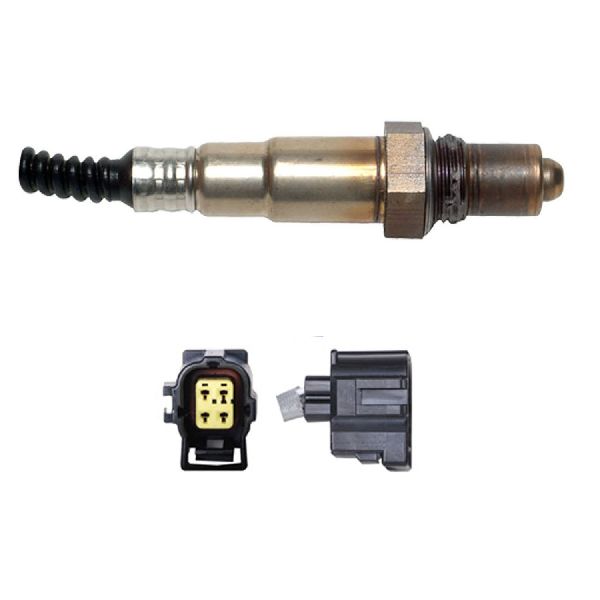
When shopping for an aftermarket oxygen sensor for your Lancer, quality and compatibility are key. While OEM is an option, high-quality aftermarket brands can offer the same performance for less money. It is highly recommended to use a "direct-fit" sensor with the correct plug, rather than a "universal" sensor that requires splicing wires.
Brand Quality Tiers for Mitsubishi Lancer
Tier 1 (OEM-Equivalent): Denso & NGK/NTK. These brands are often the original equipment manufacturers for Mitsubishi and other Japanese vehicles. They are widely recommended in owner forums for their reliability, correct fit, and performance. Choosing Denso or NGK is the safest bet for a hassle-free replacement that works like the factory part.
Tier 2 (Reputable Aftermarket): Bosch & Delphi. Bosch invented the modern oxygen sensor and is a massive parts supplier. However, their sensors get mixed reviews for Japanese cars; some owners use them without issue, while many mechanics recommend sticking to Denso or NGK to avoid potential compatibility problems. Delphi is another reputable brand that is a good alternative.
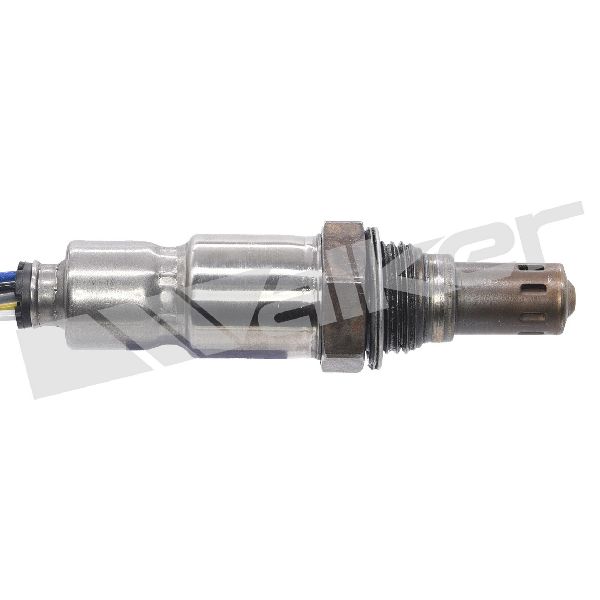
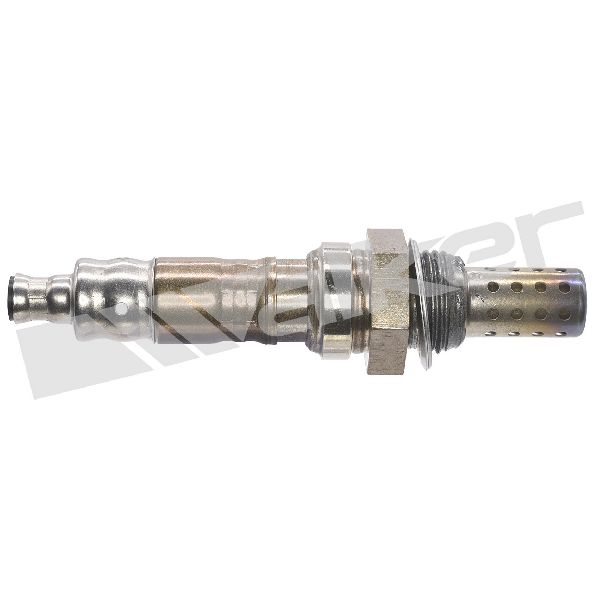
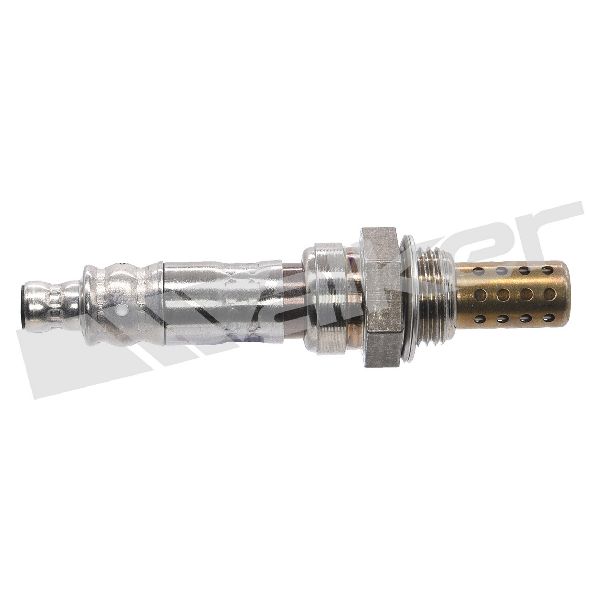
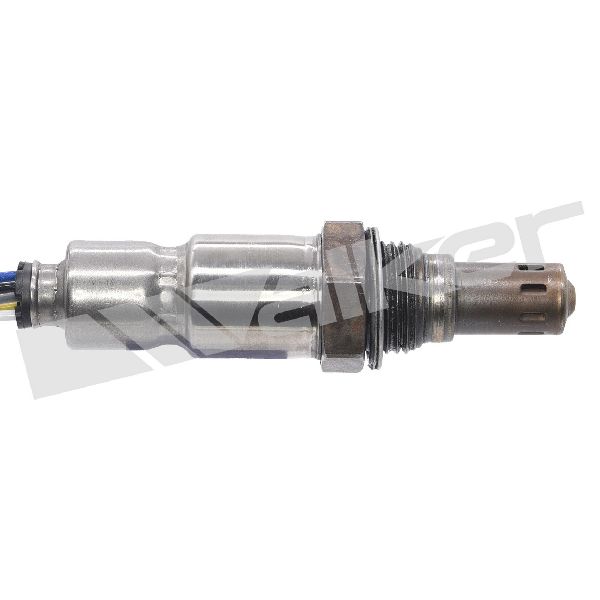
Tier 3 (Economy): Walker Products, DriveWire, Spectra, Facet. These brands offer a significant cost saving. Walker is a well-known economy brand, but experiences vary; some find they work well, while others report premature failures. For a critical component like an oxygen sensor, these brands are best considered for budget-conscious repairs where long-term reliability is less of a concern.
Pro Tip: Always confirm the sensor's location before buying. Your Lancer has an "upstream" (Bank 1, Sensor 1) and a "downstream" (Bank 1, Sensor 2) sensor. They are different parts and are not interchangeable. The upstream sensor is more critical for engine performance and is typically more expensive.
🎬 Watch: How to remove your Lancer's upstream O2 sensorUnderstanding Replacement Costs
The price for a new oxygen sensor can vary widely based on the brand and whether it is an upstream or downstream unit. Upstream air-fuel ratio sensors are more complex and cost more than downstream sensors.
| Part Type | Price Range |
|---|---|
| New Aftermarket | $25 - $360 |
| New OEM | $200 - $350+ |
| Shop Labor | $100 - $200 |
Frequently Asked Questions

How many oxygen sensors does my 2008-2017 Lancer have?
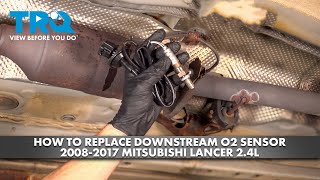
Most non-turbo 2.0L and 2.4L Lancers from this generation have two oxygen sensors: one upstream (before the catalytic converter) and one downstream (in or after the catalytic converter). 🎬 See this walkthrough for replacing the downstream sensor Turbo models like the Ralliart and Evolution may have different configurations.
What's the difference between an upstream and downstream sensor?
The upstream sensor (Sensor 1) reads the raw exhaust from the engine and helps the computer fine-tune the air-fuel mixture for performance and efficiency. The downstream sensor (Sensor 2) measures the exhaust after it has passed through the catalytic converter to ensure the converter is cleaning the emissions properly.
Can I clean my old oxygen sensor instead of replacing it?
While some online videos show methods for cleaning O2 sensors, it is generally not a reliable or long-term fix. The sensing elements degrade over time and can be contaminated internally. For a lasting repair that turns off the check engine light, replacement is the recommended solution.
Are there any recalls for the Lancer oxygen sensor?
No. As of late 2024, there are no active NHTSA recalls for oxygen sensors on the 2008-2017 Mitsubishi Lancer. Recalls for this vehicle concern other components like airbags, drive belts, and brake system parts.
Helpful Videos
Technical Specifications
Most 2008-2017 Mitsubishi Lancers use two 4-wire, heated, narrow-band oxygen sensors with a specific-fit connector. The thread size is typically M18x1.5. The upstream sensor is often a more complex and expensive air-fuel ratio sensor, while the downstream is a standard O2 sensor.
We Have This Part in Stock

The information in this article is provided for general reference and educational purposes only. Vehicle specifications, procedures, and part compatibility can vary by production date, trim level, and region. Always consult your vehicle's factory service manual and verify part numbers before purchasing or performing repairs. Safety-critical components such as airbags, seat belts, and braking systems should be installed by a qualified professional.
- Mitsubishi Lancer: