

Jeep Wrangler Coolant Temperature Sensor Guide (2008-2017)
Is your Jeep's temperature gauge acting up or are you getting a check engine light? It could be a bad coolant temperature sensor.
- A bad coolant sensor can cause a check engine light, poor fuel economy, rough running, and overheating.
- Replacement is very easy on the 3.8L engine (2008-2011) but more difficult on the 3.6L engine (2012-2017).
- On 3.6L models, be careful not to confuse the coolant sensor with the nearby oil temperature sensor.
- An affordable aftermarket sensor is a good first step in diagnosing temperature-related issues before replacing more expensive parts.
Is Your Wrangler's Temperature Gauge Acting Up?

A faulty Engine Coolant Temperature (ECT) sensor can cause a variety of confusing problems for your 2008-2017 Jeep Wrangler JK. When this sensor fails, it sends incorrect data to your Jeep's computer, which can lead to poor performance, bad fuel economy, and even a check engine light. This guide covers the symptoms of a bad sensor and what to know when buying a new aftermarket replacement.
Symptoms of a Failing Coolant Sensor

When the ECT sensor starts to fail, it can cause several noticeable issues:
- Check Engine Light: This is often the first sign. The computer will log a fault code like P0117 (Circuit Low), P0118 (Circuit High), or P0128 (Thermostat Rationality).
- Poor Fuel Economy: If the sensor wrongly tells the computer the engine is cold, the computer will enrich the fuel mixture, causing your Jeep to use more gas.
- Black Smoke from Exhaust: A very rich fuel mixture may not burn completely, leading to black smoke from the tailpipe.
- Engine Overheating: The sensor might fail to trigger the cooling fans when needed, leading to overheating. Conversely, the temperature gauge on your dashboard may show erratic readings, like jumping to hot on a cold engine or not moving at all.
- Rough Idle or Hard Starting: With incorrect data, the engine's computer can't properly adjust fuel and timing, which can make the engine run poorly, especially when idling or trying to start.
Common Ordering Mistake: Coolant vs. Oil Sensor
On 3.6L Pentastar engines (2012-2017), it's common for owners to mistake the Engine Coolant Temperature (ECT) sensor with the Oil Temperature sensor. They can look similar and may even use the same electrical connector. The ECT sensor is located on the driver's side cylinder head, while the oil temp sensor is typically near the oil filter housing. Always confirm you are ordering and replacing the correct part for your issue.
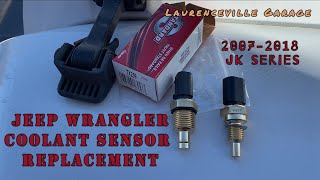
🎬 Watch: How to avoid confusing the coolant and oil sensors.Choosing an Aftermarket Replacement Sensor

For a simple component like a coolant temperature sensor, a quality aftermarket part is often a reliable and cost-effective choice. While OEM Mopar parts are always a safe bet, reputable aftermarket brands offer comparable performance for a lower price. Given the low cost of the part, it's a smart first step in troubleshooting temperature-related issues before moving on to more expensive components like the thermostat or water pump.
| Part Type | Typical Price Range |
|---|---|
| New OEM (Mopar) | $45 - $70 |
| New Aftermarket | $15 - $30 |
| Shop Labor | $80 - $150 |
Installation Tips

The difficulty of replacing the ECT sensor depends entirely on which engine your Wrangler has.
- 2008-2011 (3.8L V6): This is an easy job. The sensor is located right at the front of the engine, next to the thermostat housing. It's easily accessible and can be swapped in minutes.
- 2012-2017 (3.6L V6 Pentastar): This is a more challenging job. The sensor is on the driver's side cylinder head, toward the back. Access is tight, and most owners find it easiest to remove the driver's side wheel and inner fender liner to reach it.
Pro Tip: Quick Swap
You don't need to drain the entire cooling system. With the engine cold, remove the radiator cap to release any pressure, then put it back on. Have the new sensor ready to install immediately when you unscrew the old one. You will lose a small amount of coolant, but this method minimizes mess and the need to bleed the system. Top off the coolant reservoir when you're done.
Frequently Asked Questions
Where is the coolant temperature sensor on my Jeep Wrangler?
For 2008-2011 models with the 3.8L engine, it's on the front of the engine near the thermostat housing. For 2012-2017 models with the 3.6L engine, it's on the driver's side cylinder head, and you'll likely need to go through the wheel well to access it.
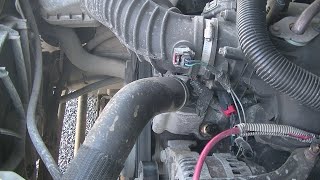
🎬 Watch this walkthrough for replacing the sensor on a 3.6L engine.Can I drive with a bad coolant temperature sensor?
It is not recommended for long distances. A bad sensor can cause poor fuel economy, engine performance issues, and could fail to activate the cooling fans, putting your engine at risk of overheating. It's best to get it replaced as soon as possible.
What's the difference between a P0128 code and a P0117 code?
A P0117 code means the sensor circuit is reading a low voltage (shorted), which the computer interprets as an extremely high temperature. A P0128 code means the computer has determined the engine is not reaching its proper operating temperature in the expected amount of time, which often points to a thermostat stuck open, but can also be caused by a faulty sensor.
Are there any recalls for the coolant temperature sensor on the 2008-2017 Wrangler?
No, there are no specific recalls from Jeep or the NHTSA for the engine coolant temperature sensor on the 2008-2017 Jeep Wrangler JK. Any related TSBs for other models do not apply to this specific vehicle and year range.
Helpful Videos
Technical Specifications
OEM Part Numbers: 5149077AB 5149077AA 05269870AB
The sensor for the 2008-2017 Jeep Wrangler (both 3.8L and 3.6L engines) is a two-pin thermistor that changes resistance based on coolant temperature. The 3.8L sensor is located on the front of the engine, while the 3.6L sensor is on the driver's side cylinder head.

The information in this article is provided for general reference and educational purposes only. Vehicle specifications, procedures, and part compatibility can vary by production date, trim level, and region. Always consult your vehicle's factory service manual and verify part numbers before purchasing or performing repairs. Safety-critical components such as airbags, seat belts, and braking systems should be installed by a qualified professional.
- Jeep Wrangler: