

Guide to the Knock Sensor in Your 2006-2020 Toyota Tundra
A bad knock sensor can trigger limp mode and hurt performance; here's what Tundra owners need to know.
- Knock sensor failure on a Tundra is very often caused by rodents chewing the wiring harness located under the intake manifold.
- Replacement is a labor-intensive job requiring the removal of the intake manifold, so it's crucial to replace both sensors and the harness at the same time.
- A bad knock sensor will trigger a Check Engine Light and often put the truck in 'limp mode,' severely limiting power.
- Due to the high labor involved, using a high-quality OEM or top-tier aftermarket sensor and harness is recommended to avoid having to do the job twice.
Symptoms of a Failing Knock Sensor in a Tundra

A bad knock sensor on a 2006-2020 Tundra will almost always trigger a Check Engine Light. Often, the Slip Indicator light will also come on and the 4-LO light may flash, putting the truck into "limp mode" to protect the engine. This severely reduces power and limits speed. You may also notice poor acceleration, reduced fuel economy, and a pinging or knocking sound from the engine, especially under load.
The Most Common Cause: Rodent Damage

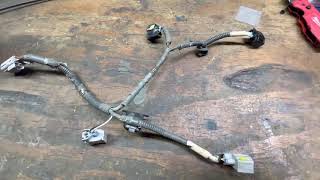
For Tundra owners, the most frequent cause of knock sensor failure isn't the sensor itself, but the wiring harness. The knock sensors on V8 Tundras are located in the valley between the cylinder heads, underneath the entire intake manifold. This warm, sheltered area is a perfect spot for rodents to build nests. Unfortunately, they often chew through the knock sensor wiring harness, causing a loss of signal and triggering trouble codes. Some sources claim the wire insulation used by Toyota is attractive to rodents, making this a very common issue.
This is a Labor-Intensive Job
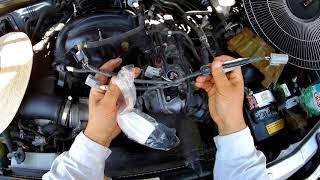
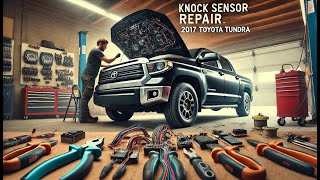
Because the sensors are located under the intake manifold, replacement is a significant job. The entire intake manifold must be removed 🎬 Watch this step-by-step walkthrough of the manifold removal and sensor replacement. to access the sensors and harness. This makes it a time-consuming repair for both DIYers and professional shops.
Choosing the Right Aftermarket Part

When it comes to electronic sensors, OEM (Original Equipment Manufacturer) parts are often recommended for best performance and longevity. However, the high cost of OEM knock sensors, which can be over $130 each, leads many owners to consider aftermarket options. For a part that is so difficult to access, reliability is key. Some owners have reported issues with budget aftermarket sensors failing prematurely, requiring the entire labor-intensive job to be done again. Given the high labor cost, spending more on a quality OEM or a top-tier aftermarket brand like Denso (who is often the original manufacturer for Toyota) can be a wise investment to avoid repeat repairs. Since the wiring harness is the most common failure point due to rodents, it is critical to replace it at the same time as the sensors.
Pro Tip: While the intake manifold is off, it is the perfect time to replace the intake manifold gaskets and clean the throttle body. It's also a good idea to inspect and replace any cracked vacuum hoses 🎬 Watch these helpful tips for preventing future rodent damage to your engine. you find.
Cost to Replace a Toyota Tundra Knock Sensor

| Part Type | Estimated Cost |
|---|---|
| New Aftermarket Sensor (Each) | $20 - $75 |
| New OEM Sensor (Each) | $135 - $200+ |
| Aftermarket Wiring Harness | $30 - $50 |
| Shop Labor | $361 - $530+ |
| Total Professional Replacement | $496 - $800+ |
Frequently Asked Questions
Where are the knock sensors on a 2006-2020 Tundra?
On V8 models (4.7L and 5.7L), the knock sensors are located on the engine block, in the valley underneath the intake manifold. This location requires removing the manifold for access.
Should I replace both knock sensors at the same time?
Yes. Because accessing the sensors is so labor-intensive, it is highly recommended to replace both sensors and the wiring harness at the same time, even if only one is showing a fault code. This prevents you from having to do the same job twice.
Are there any recalls for the Tundra knock sensor?
There are no specific recalls for the knock sensors or their wiring on the 2006-2020 Toyota Tundra. However, a recent recall for 2022-2023 Tundras mentions "engine knocking" as a potential symptom of an unrelated issue concerning manufacturing debris inside the engine. This does not apply to the 2006-2020 model years.
What are the common trouble codes for a bad knock sensor?
The most common Diagnostic Trouble Codes (DTCs) are P0325 (Knock Sensor 1 Circuit Malfunction) and P0330 (Knock Sensor 2 Circuit Malfunction). You may also see codes like P0328, P0333, P032D, or P033D, which indicate a circuit high input, often caused by chewed wires.
Helpful Videos

Technical Specifications
OEM Part Numbers: 89615-06010 89615-20090 82219-0C020
The knock sensors on a Toyota Tundra are piezoelectric resonant sensors, which generate an AC voltage signal in response to engine vibrations. They cannot be tested for resistance with a standard multimeter. The wiring harness for V8 models typically has gray connectors for one bank and black connectors for the other.

The information in this article is provided for general reference and educational purposes only. Vehicle specifications, procedures, and part compatibility can vary by production date, trim level, and region. Always consult your vehicle's factory service manual and verify part numbers before purchasing or performing repairs. Safety-critical components such as airbags, seat belts, and braking systems should be installed by a qualified professional.
- Toyota Tundra: