

Ford Fusion (2006-2020): A Guide to the Engine Cylinder Head Temperature Sensor
Is your Fusion's temperature gauge acting up or is the cooling fan always on? Your CHT sensor could be the problem.
- The CHT sensor is different from a coolant sensor; it reads metal head temperature to protect your engine even with low coolant.
- A bad sensor can mimic a serious overheating problem, causing limp mode and constant fan operation. Common codes are P1289 and P1299.
- On 2.5L engines, check for water and corrosion in the sensor's connector, as this is a common failure point.
- Replacement is a DIY-friendly task for many, typically located on top of the engine between the center spark plugs.
Understanding Your Fusion's CHT Sensor

Many Ford Fusion models use an Engine Cylinder Head Temperature (CHT) sensor instead of, or in addition to, a traditional Engine Coolant Temperature (ECT) sensor. The CHT sensor is screwed directly into the cylinder head and reads the metal temperature. This gives the engine's computer a direct reading of how hot the engine is running. If the sensor fails, it can send incorrect information, leading to a variety of engine performance issues. It can either fail outright or send signals that make the computer think the engine is overheating when it's not, or vice-versa.
Symptoms of a Failing CHT Sensor

A bad CHT sensor can make you think you have a major cooling system problem. Knowing the signs can help you diagnose the issue correctly.
- Check Engine Light: This is often the first sign. The computer will store a trouble code, such as P1289 or P1299, when it detects 🎬 See how a failed sensor and oil leak impact performance. a problem with the sensor's signal.
- Erratic Temperature Gauge: The gauge on your dashboard might swing wildly, stay on cold even when the engine is warm, or jump to hot immediately.
- Cooling Fans Won't Shut Off: If the computer receives a false 'hot' signal, it will run the radiator fans constantly to try and cool the engine.
- Reduced Engine Power: To protect the engine from what it believes is overheating, the computer may activate a 'limp mode', which significantly reduces power and acceleration.
- Hard Starting: The computer needs an accurate temperature reading for the proper air-fuel mixture during startup. A bad sensor can make the engine difficult to start.
Known Issue: Water Intrusion on 2.5L Engines
On some Fusions, particularly those with the 2.5L engine, water can pool on top of the engine and seep into the CHT sensor's electrical connector. This causes corrosion and can lead to a false overheating signal and codes like P1289. A Technical Service Bulletin (TSB 11-10-5) 🎬 Watch: Diagnosing false overheating and misfires on the 2.5L engine. was issued for this problem on some earlier models. When replacing the sensor, it's crucial to inspect the connector for green or white corrosion and apply dielectric grease to the new connection to keep moisture out.
Choosing the Right Aftermarket Sensor

While an OEM Motorcraft sensor is always a safe bet, several reputable aftermarket brands offer quality replacements at a lower price. For a critical sensor like the CHT, it's best to avoid the cheapest options and stick with known brands.
- Tier 1 (High-Quality Aftermarket): Brands like Standard Ignition (SMP) and NTK are well-regarded in the industry. They often manufacture parts for original equipment suppliers and focus on matching the OE fit and function. These are a solid choice for reliability.
- Tier 2 (Value & Reliability): Brands like Dorman, Walker Products, and Global Parts offer a good balance of price and quality. Dorman is known for providing direct-fit replacements that often address common failure points of the original design.
- Tier 3 (Budget-Friendly): While brands like Motorad are available, it's important to weigh the cost savings against the sensor's critical role. For a few dollars more, moving up to a Tier 1 or Tier 2 brand can provide more peace of mind.
Pro Tip: Check the Connector
The electrical connector pigtail can also fail from heat and corrosion. Before ordering just the sensor, inspect the connector. If the plastic is brittle, cracked, or the terminals are corroded, it's best to replace the connector at the same time.
Cost to Replace a Ford Fusion CHT Sensor

| Part Type | Price Range |
|---|---|
| New Aftermarket Sensor | $10.43 - $42.53 |
| New OEM (Motorcraft) Sensor | $15 - $55 |
| Shop Labor | $60 - $150 |
Frequently Asked Questions
What's the difference between a CHT and an ECT sensor?
A CHT (Cylinder Head Temperature) sensor measures the actual metal temperature of the engine's head. An ECT (Engine Coolant Temperature) sensor measures the temperature of the engine coolant. Ford uses the CHT sensor as a fail-safe because it can still detect a dangerous overheating condition even if there's no coolant left to measure.
Can I drive with a bad CHT sensor?
It is not recommended. A faulty CHT sensor leaves your engine vulnerable to severe damage from overheating because the car's primary protection system is compromised. If the car is in limp mode, it is telling you to stop driving and address the issue immediately.
Where is the CHT sensor located on my Fusion?
Location varies slightly by engine. On the popular 2.5L engine, it is located on the top of the cylinder head, between ignition coils for cylinders 2 and 3. On the 1.5L EcoBoost, it is typically found behind the #2 ignition coil. It is a threaded sensor with an electrical connector on top.
What do codes P1299 and P1289 mean?
P1299 (Cylinder Head Overtemperature Protection Active) means the sensor has detected dangerously high temperatures and the computer has activated fail-safe measures like cutting power. P1289 (Cylinder Head Temperature Sensor Circuit High Input) usually indicates a fault in the sensor itself or its wiring, often an open circuit or corrosion causing high resistance. Both codes should be addressed immediately.
Is there a recall for the CHT sensor?
There is no direct recall for the sensor itself. However, a significant recall (NHTSA 17S09) was issued for 2013-2014 Fusions with the 1.6L EcoBoost engine for a risk of cylinder head cracking 🎬 Watch this walkthrough for addressing P1299 codes on EcoBoost models. due to overheating. This highlights how critical temperature monitoring is on these engines.
Helpful Videos


Technical Specifications
OEM Part Numbers: 9L8Z-6G004-E 9L8Z-6G004-F 8S4Z-6G004-A 9L8Z-6G004-B 3L7Z-6G004-BA 1S7Z-6G004-AA
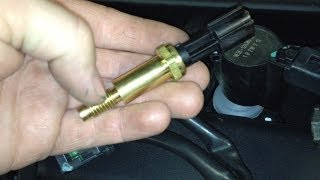
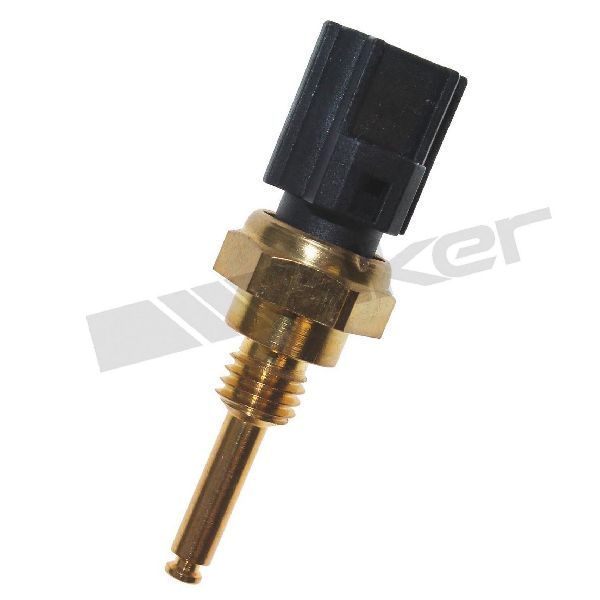
The CHT sensor is a thermistor, which is a type of resistor whose resistance changes with temperature. The sensor is threaded and typically requires a 18mm or 19mm deep socket for removal and installation.
We Have This Part in Stock


The information in this article is provided for general reference and educational purposes only. Vehicle specifications, procedures, and part compatibility can vary by production date, trim level, and region. Always consult your vehicle's factory service manual and verify part numbers before purchasing or performing repairs. Safety-critical components such as airbags, seat belts, and braking systems should be installed by a qualified professional.
- Ford Fusion: