

Chevrolet Impala MAP Sensor Guide for 2006-2020 Models
Diagnose a failing MAP sensor in your Impala and learn how to choose the right replacement part.
- A bad MAP sensor on an Impala often causes a rough idle, poor acceleration, and bad gas mileage, usually with a P0106 check engine code.
- Replacement is a simple, DIY-friendly job that usually takes less than 30 minutes with basic tools.
- Aftermarket 'Replacement' brand sensors are a cost-effective option, but ensure you buy from a reputable seller to guarantee proper function.
- Always verify the part fits your specific Impala engine (e.g., 3.5L, 3.6L, 2.5L) as the sensor location and design can differ by year.
Understanding MAP Sensor Failure in Your Impala

The Manifold Absolute Pressure (MAP) sensor on your 2006-2020 Chevrolet Impala is a small but vital component. When it starts to fail, it sends incorrect information to your car's computer, which can cause a variety of noticeable engine problems. Because it's an electronic part, it can fail without warning, often due to heat, engine vibration, or contamination over time. It's important to address these symptoms quickly to avoid poor performance, bad fuel economy, and potential long-term engine damage.
Symptoms of a Bad MAP Sensor

If your Impala's MAP sensor is failing, you'll likely notice one or more of the following issues:
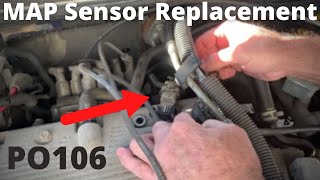
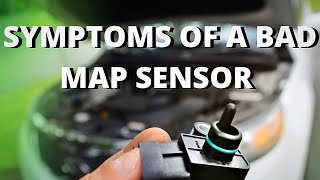
- Check Engine Light: This is often the first sign. A code like P0106, P0107, or P0108 is a strong indicator of a MAP sensor problem. 🎬 Watch this clear explanation of common MAP sensor failure symptoms.
- Rough Idle: The engine may shake, vibrate, or sound uneven when the car is stopped.
- Poor Acceleration and Power Loss: Your car may feel sluggish, hesitate when you press the gas, or have trouble getting up to speed.
- Bad Fuel Economy: A faulty sensor can cause the engine to use more fuel than necessary.
- Black Smoke from Exhaust: This indicates the engine is running "rich," meaning there's too much fuel and not enough air in the mixture.
- Stalling: In some cases, the engine may stall when coming to a stop or have difficulty starting.
Are Other Parts to Blame?
Symptoms like a rough idle or hesitation can also be caused by other issues, such as a vacuum leak, a dirty air filter, or bad wiring. It's important to rule these out before replacing the MAP sensor. A mechanic can perform a full diagnosis, but checking for cracked vacuum hoses or a dirty air filter are simple first steps.
Choosing the Right Aftermarket MAP Sensor

When replacing the MAP sensor on your Impala, you have a choice between Original Equipment Manufacturer (OEM) parts and aftermarket parts. For a component like this, a standard aftermarket part is often a cost-effective and reliable choice.
- OEM: Made by the original manufacturer for GM. These parts guarantee a perfect fit and performance but are the most expensive option.
- New Aftermarket (Replacement): These are made by third-party companies to fit and function like the original. For a common vehicle like the Impala, quality aftermarket sensors are widely available and offer significant savings. While some believe only OEM sensors work correctly, many owners use quality aftermarket brands without issue. The key is to buy from a reputable source. Avoid the absolute cheapest options online, as they have a higher risk of being poorly calibrated or failing prematurely.
Pro Tip: Check the Part Number
The 2006-2020 Impala spans two different generations with several engine options (e.g., 3.5L, 3.9L, 3.6L, 2.5L). The MAP sensor's design and location can vary. Always verify the part fits your specific year and engine before purchasing to avoid installation problems.
Cost to Replace a Chevrolet Impala MAP Sensor
| Part Type | Estimated Cost |
|---|---|
| New Aftermarket Part | $52 - $82 |
| Shop Labor | $40 - $140 |
| Total Estimated Cost (DIY) | $52 - $82 |
| Total Estimated Cost (At a Shop) | $110 - $192 |
Frequently Asked Questions

Where is the MAP sensor located on my Impala?
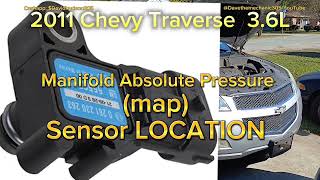
The location varies by engine. On 9th generation models (2006-2013), it's typically on top of the intake manifold, sometimes under a small bracket. For the 3.5L engine, it's on the right side of the intake manifold. For the 3.9L, it's on the left front. 🎬 See how to replace the sensor on a 3.9L engine. On 10th generation models with the 2.5L engine (2014-2020), it is located at the back of the engine on the bottom of the intake manifold. 🎬 Watch this walkthrough for changing the sensor on 2.5L models. It is usually held in by one or two small bolts and has an electrical connector.
Can I replace the MAP sensor myself?
Yes, this is a very DIY-friendly job for most Impala models. It usually requires only basic hand tools like a socket wrench. The process involves removing the engine cover, unplugging the electrical connector, unbolting the old sensor, and installing the new one. The entire job can often be done in under 30 minutes.
Can I clean my MAP sensor instead of replacing it?
While some sensors can be cleaned, it is generally not recommended for a MAP sensor. The internal components are sensitive and can be damaged by cleaning agents or physical contact. Given the relatively low cost of a new aftermarket sensor, replacement is the most reliable solution.
Are there any recalls for the Impala MAP sensor?
There are no specific recalls for the MAP sensor on the 2006-2020 Chevrolet Impala. Searches on the National Highway Traffic Safety Administration (NHTSA) database show recalls for other sensors and modules, like the passenger presence sensor (PPS) and airbag modules, but none directly address the MAP sensor.
Helpful Videos
Technical Specifications
The MAP sensor for the Chevrolet Impala is a solid-state sensor that translates intake manifold pressure into a voltage signal for the ECU. The signal typically ranges from 1 to 4.5 volts depending on engine load. It is usually a small, black plastic sensor with a 3-pin electrical connector and a nozzle that seals into the intake manifold with a rubber O-ring or grommet.

The information in this article is provided for general reference and educational purposes only. Vehicle specifications, procedures, and part compatibility can vary by production date, trim level, and region. Always consult your vehicle's factory service manual and verify part numbers before purchasing or performing repairs. Safety-critical components such as airbags, seat belts, and braking systems should be installed by a qualified professional.
- Chevrolet Impala: