

A Guide to the 2006-2010 Audi A6 Secondary Air Injection Pump
Understand why your Audi A6 has a check engine light and makes a loud noise on startup.
- A loud 'vacuum cleaner' noise on cold start is the classic sign of a failing pump.
- Before replacing the pump for codes P0491/P0492, be aware of the Audi TSB for clogged cylinder head ports, which causes the same codes.
- To prevent repeat failure, always inspect and likely replace the combi valve(s) when you replace the pump, as they are the primary cause of pump failure from moisture.
- You can continue to drive the car, but the check engine light will stay on and you will not pass an emissions test.
Understanding Secondary Air Injection Pump Failure on Your A6


If you own a 2006-2010 Audi A6, you might run into issues with the secondary air injection (SAI) system. This system is crucial for passing emissions tests, and its failure will cause a persistent check engine light. Before you buy a new pump, it's important to understand the whole system, as the pump itself may not be the only problem.
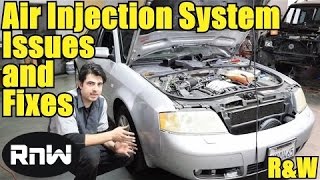
🎬 Watch: How the SAI system works and how to diagnose it.Symptoms of a Failing SAI Pump
- Loud Noise on Cold Start: The most common and obvious symptom is a very loud noise from the front passenger side of the engine bay when you first start the car. Owners often describe it as sounding like a vacuum cleaner or a small jet engine. This noise, which lasts for about a minute, is the sound of the pump's internal bearings failing.
- Check Engine Light: If the engine's computer detects a problem with the air flow from the pump, it will turn on the check engine light. You will need a code scanner to read the specific codes, which are usually P0411, P0491, or P0492.
- Failed Emissions Test: Because this is an emissions-critical part, a bad pump or a related fault code will cause your vehicle to automatically fail a state emissions inspection.
A Critical Warning Before You Replace the Pump
The most common reason a secondary air pump fails is due to a faulty combination valve (also called a combi valve). This valve is supposed to prevent exhaust and moisture from backing up into the pump. When it fails, water gets into the pump and destroys it. If you find any signs of water or rust inside the old pump or its hoses, you MUST replace the combi valve(s). Failure to do so will cause your new pump to fail very quickly.
Known Issue: Clogged Air Passages (TSB)
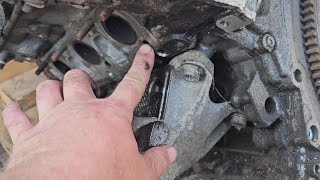
For Audi A6 models with V6 engines, there is a known issue where carbon buildup clogs the small air passages inside the cylinder heads. Audi has issued Technical Service Bulletins (TSBs) for this problem. This blockage will cause "Insufficient Flow" codes (P0491 and P0492) even if you have a brand new, perfectly working pump. The fix is a special cleaning procedure that usually must be done by a dealer. If you have these specific codes, investigate this possibility before spending money on a pump.
🎬 Watch: Why P0491 and P0492 codes often lead to expensive carbon cleaning.Choosing the Right Aftermarket Pump
You do not need to buy an expensive OEM pump from the dealer. Several quality aftermarket options are available that provide a good balance of price and reliability.
- OEM Supplier (Pierburg): Pierburg is an original equipment supplier to Audi. Choosing a Pierburg pump means you are getting the same quality as the original part without the dealer markup. This is the best choice for longevity and guaranteed fit.
- Quality Aftermarket (Dorman, SKP, URO Parts): Brands like Dorman, SKP, and URO Parts offer a more budget-friendly option. They are designed to meet the original specifications and are a reliable choice for repairing your vehicle without the high cost of an OEM or OEM-supplier part.
Pro Tip: When ordering, check if the pump comes with new rubber mounts. The old mounts can become hard and brittle, so replacing them helps ensure the new pump is held securely and free from vibration.
Cost of Replacement

The cost to replace the SAI pump can vary. The part itself is the biggest expense. Doing it yourself can save a lot on labor.
| Part | Estimated Cost |
|---|---|
| New OEM Pump | $850 - $1,100 |
| New Aftermarket Pump (OEM Supplier) | $350 - $500 |
| New Aftermarket Pump (Standard) | $150 - $300 |
| Shop Labor | $150 - $325 |
Frequently Asked Questions (FAQ)

Can I just remove the SAI pump?
Physically removing the system is not recommended. It will cause a permanent check engine light and you will fail any emissions test. While some people use software tuning to "code out" the system, this is not legal for road use in most areas.
Is the pump the only thing that causes a P0411 code?
No. A P0411 code means "Incorrect Flow Detected." This can be caused by a dead pump, but it can also be caused by a blown fuse, a bad relay, a cracked or disconnected hose, or a stuck combi valve. Always check the fuse and listen for the pump to run on a cold start before assuming the pump is dead.
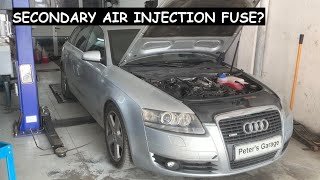
🎬 See this guide to find and replace the SAI fuse and relay.Where is the SAI pump located on the 2006-2010 A6?
The secondary air pump is typically located in the front of the vehicle, ahead of the passenger-side front wheel. Accessing it requires jacking up the car, removing the wheel, and removing the plastic wheel well liner.
What's the difference between P0411 and P0491/P0492?
P0411 is a general system flow error. P0491 (Bank 1) and P0492 (Bank 2) are more specific codes that point to insufficient flow on one or both sides of the engine. On the A6, these two codes are often the ones that point towards the clogged internal air passages described in the Audi TSB, rather than a bad pump.
Helpful Videos
Technical Specifications
OEM Part Numbers: 06A959253E 079959231L
Electric air pump, typically mounted in the front passenger wheel well area.

The information in this article is provided for general reference and educational purposes only. Vehicle specifications, procedures, and part compatibility can vary by production date, trim level, and region. Always consult your vehicle's factory service manual and verify part numbers before purchasing or performing repairs. Safety-critical components such as airbags, seat belts, and braking systems should be installed by a qualified professional.
- Audi A6: