

Dodge Durango 2005-2020 Coolant Temperature Sensor: A Guide
Is your Durango's temperature gauge acting up or is your fuel economy dropping? Your coolant sensor might be the problem.
- A failing coolant sensor can cause a check engine light, poor fuel economy, and an incorrect temperature gauge reading on your Durango.
- Verify your engine (V6 vs. V8) before ordering, as the sensor type and location are different across Durango generations.
- Replacement is a simple DIY job that can be done in under 30 minutes with basic tools, but always work on a cool engine.
- While aftermarket sensors are cheaper, some can cause incorrect gauge readings; a high-quality aftermarket or Mopar sensor is a safer bet.
Is Your Durango's Coolant Sensor Failing?

A bad engine coolant temperature (ECT) sensor can cause more than just a faulty gauge reading. Because the engine's computer relies on this sensor for critical data, a failure can lead to noticeable performance issues in your Durango. Watch for these common signs.
🎬 Watch this step-by-step coolant temperature sensor replacement walkthrough.Choosing the Right Aftermarket Sensor

When it comes to replacing the coolant temperature sensor on your Dodge Durango, you have a choice between OEM (Original Equipment Manufacturer) Mopar parts and various aftermarket brands. For a simple part like a sensor, many owners consider aftermarket options to save money.
For many electronic parts on Dodge vehicles, using a genuine Mopar part is often recommended to avoid compatibility issues. Some aftermarket sensors may not have the exact resistance values as the original, which can cause the temperature gauge to read incorrectly even with a new part. However, quality aftermarket brands like Delphi, NTK, or Standard Motor Products (which makes parts for brands like Carquest) are designed to meet or exceed original specifications and can be a reliable, cost-effective choice.
Cost to Replace a Durango Coolant Temperature Sensor
| Item | Estimated Cost |
|---|---|
| New OEM (Mopar) Part | $45 - $70 |
| New Aftermarket Part | $20.53 - $26.20 |
| Shop Labor | $85 - $125 |
| DIY Total Cost | $20.53 - $26.20 |
| Shop Total Cost | $105 - $152 |
Known Issues, Recalls, or TSBs
As of early 2026, there are no specific NHTSA recalls for the engine coolant temperature sensor itself on 2005-2020 Dodge Durango models. However, there have been several Customer Satisfaction Notifications and TSBs related to the cooling system that owners should be aware of:
- TSB 23-023-20: For some 2019 models, this bulletin addresses issues that could cause elevated engine coolant temperature or overheating indications.
- Notification ZB0: This applies to certain 2022 models with the 6.4L engine where a coolant hose could be routed incorrectly, leading to a leak. While this is outside the main year range, it highlights the importance of checking all cooling system components.
- Notification 58B: For 2021-2025 Pursuit vehicles with the 5.7L engine, the coolant pump could cause issues with the oil cooler.
While these don't point to a faulty sensor, they show that other cooling system problems can cause similar symptoms. Always diagnose the problem correctly before replacing parts.
Generation & Common Ordering Mistakes

The 2005-2020 year range covers different Durango generations, and the sensor's location and type can vary. A common mistake is ordering the wrong part for your engine.
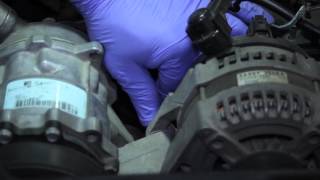
- 2nd Gen (2004-2009): On V8 engines like the 4.7L and 5.7L Hemi, the sensor is typically a screw-in type located on top of the intake manifold, between the AC compressor and the alternator.
- 3rd Gen (2011-2020): The location depends on the engine. For the 3.6L V6, the sensor is a clip-in or twist-lock style located on the plastic thermostat housing. For the 5.7L and 6.4L V8 engines, it is a screw-in sensor, often found near the front of the engine below the throttle body.
Always verify your engine size and check the location of your old sensor before ordering a replacement to ensure you get the correct part.
Frequently Asked Questions
Where is the coolant temperature sensor on a Dodge Durango?
Location varies by engine. On 2nd Gen V8s (4.7L/5.7L), it's on the intake manifold. On 3rd Gen 3.6L V6s, it's on the thermostat housing. On 3rd Gen 5.7L/6.4L V8s, it's typically near the front of the engine.
Can I drive my Durango with a bad coolant temperature sensor?
You can for a short time, but it's not recommended. A bad sensor can lead to poor engine performance, bad fuel mileage, and potentially cause the engine to overheat without warning, which could result in severe engine damage.
Why does my temperature gauge read high after replacing the sensor?
This is a common issue when using some aftermarket sensors on Dodge vehicles. The sensor's resistance values may not perfectly match the original Mopar specifications, causing the gauge to read incorrectly. If this happens, replacing it with a genuine Mopar sensor or a high-quality, OE-matched aftermarket part usually solves the problem.
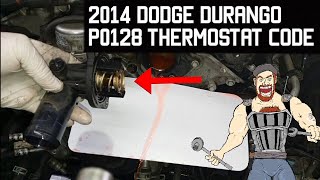
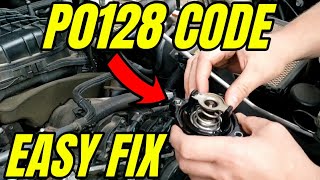
What does code P0128 mean on a Dodge Durango?
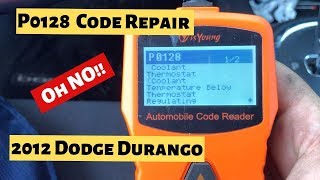
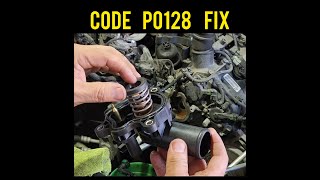
Code P0128 means the engine coolant is not getting warm enough within a specific time. While this can be caused by a faulty sensor, it is more commonly caused by a thermostat that is stuck open.
Helpful Videos
Technical Specifications
OEM Part Numbers: 5149077AB 5149096AB 56027873
The sensor is a two-pin thermistor that changes resistance based on coolant temperature. It can be a screw-in type with a threaded body (common on V8s) or a clip-in/twist-lock style (common on 3.6L V6s). Many replacement sensors come with pre-applied thread sealant.

The information in this article is provided for general reference and educational purposes only. Vehicle specifications, procedures, and part compatibility can vary by production date, trim level, and region. Always consult your vehicle's factory service manual and verify part numbers before purchasing or performing repairs. Safety-critical components such as airbags, seat belts, and braking systems should be installed by a qualified professional.
- Dodge Durango: