

A Jetta Owner's Guide to the 2005-2012 MAP Sensor
Poor performance and bad gas mileage in your Jetta could be a failing Manifold Absolute Pressure sensor.
- A bad MAP sensor on a Jetta often causes a P0106 trouble code, poor fuel economy, and rough running.
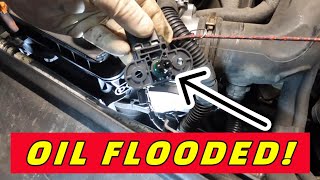
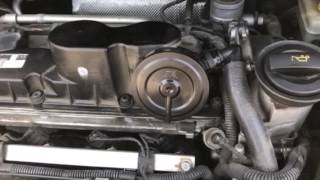
- For the 2.5L engine, check the PCV valve; its failure is a common root cause of MAP sensor contamination and failure.
- For best results and longevity, choose an OEM-supplier brand like Bosch.
- Replacement is a very simple DIY job for most owners, typically taking less than 15 minutes with basic tools.
Symptoms of a Failing MAP Sensor


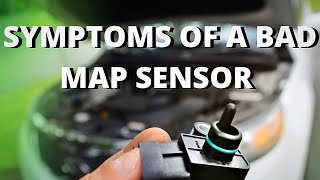
When a MAP sensor starts to fail on a 2005-2012 Jetta, the signs can be subtle at first but will worsen. The most common issue, especially on the 2.5L engine, is oil contamination from the PCV system, which coats the sensor and causes incorrect readings. Here’s what to look for:
- Check Engine Light: This is often the first sign. The most common trouble code is P0106, which means the sensor's signal is out of the expected range.
- Poor Fuel Economy: If the sensor sends a false high-pressure signal, the ECU will inject too much fuel, wasting gas.
- Rough Idle: The engine may shake or surge at idle because the air-fuel mixture is wrong.
- Hesitation or Lack of Power: During acceleration, your Jetta might feel sluggish or hesitate. This is very noticeable in turbocharged 2.0T models that rely on the MAP sensor for boost readings.
- Black Smoke from Exhaust: This is a clear sign of a rich fuel mixture (too much fuel, not enough air), which can be caused by a bad MAP sensor.
- Hard Shifting (Automatic Transmission): An incorrect engine load reading from a faulty MAP sensor can sometimes cause the transmission to shift harshly. 🎬 Watch: A visual guide to common bad MAP sensor symptoms.
A Known Issue: The P0106 Code
For the 2.5L engine, the P0106 code is very common. Often, the root cause is a failing PCV (Positive Crankcase Ventilation) valve diaphragm, which allows oil vapor to get into the intake manifold and coat the MAP sensor. Simply replacing the sensor without addressing the PCV issue may cause the new sensor to fail quickly. 🎬 See how to repair the PCV valve on your 2.5L engine. Additionally, Volkswagen released a Technical Service Bulletin (TSB) for some models indicating that the engine computer's software is too sensitive and needs an update to fix false P0106 codes. Before replacing parts, check if this TSB applies to your vehicle.
Choosing the Right Aftermarket MAP Sensor


When it comes to engine sensors for a Volkswagen, quality matters. While budget parts are available, they can be a gamble. For a critical component like the MAP sensor, it's often best to stick with brands known for their quality and reliability.
Brand Quality Tiers
Tier 1: OEM Supplier / Premium Brands (Bosch, Delphi, Hella, NGK)
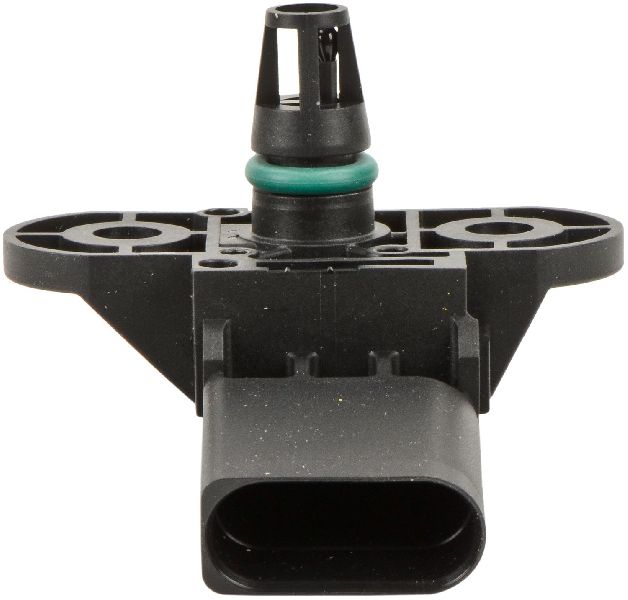
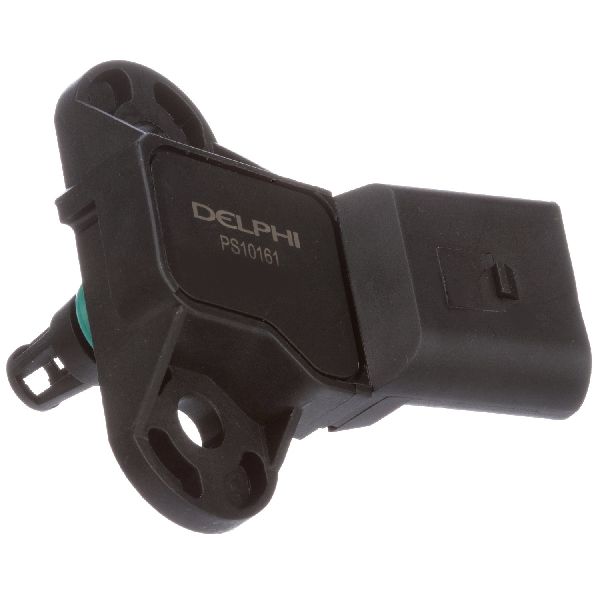
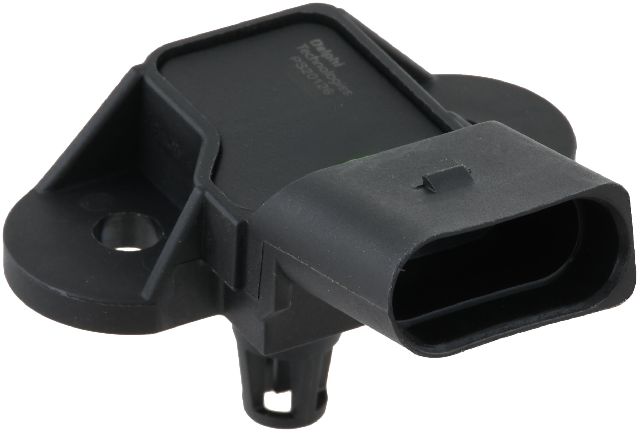
Bosch is the original equipment manufacturer (OEM) for many Volkswagen parts, including this sensor. Choosing a Bosch sensor is the closest you can get to buying a genuine part from the dealer, but at a better price. These brands are known for their high-quality manufacturing, proper calibration, and long-term reliability, which is crucial for your Jetta's performance.
Tier 2: Reputable Aftermarket (Standard Ignition, Walker Products, Spectra)
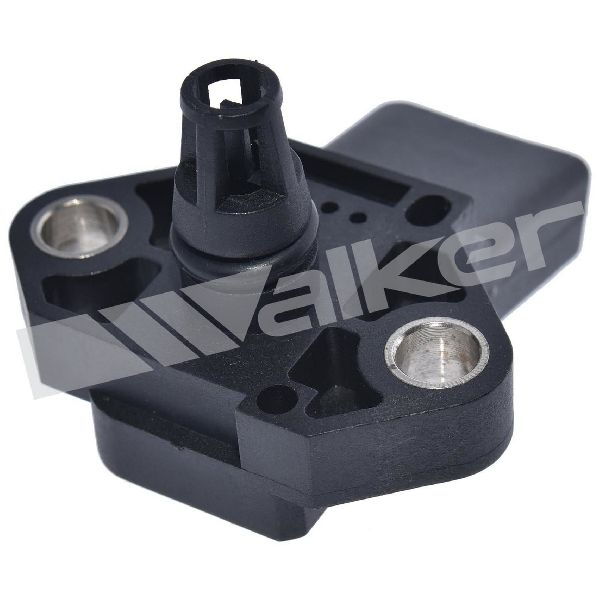
Brands like Standard Motor Products (SMP) and Walker are well-respected in the aftermarket. They engineer their parts to meet or exceed OEM specifications and offer a good balance of quality and value. They are a solid choice if a premium brand is not in the budget.
Tier 3: Economy Brands (URO Parts, Facet, Vemo, True Tech, Global Parts)
These brands offer the most budget-friendly options. While they can get your car back on the road, their long-term reliability and the precision of their sensor readings can be inconsistent. For a sensitive German car like the Jetta, using a Tier 3 sensor might lead to performance issues or a recurring Check Engine Light. They are best considered a temporary fix.
Common Ordering Mistake
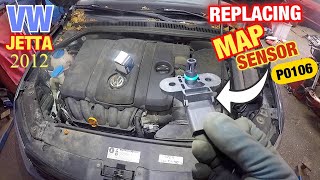
On the 2.5L engine, the MAP sensor and the Secondary Air Injection (SAI) pressure sensor look identical and have the same connector. A TSB was even issued because they were getting mixed up. The MAP sensor part number typically starts with '03C', while the SAI sensor starts with '07C'. Double-check the part number on your old sensor before ordering to ensure you are replacing the correct one.
🎬 Watch this walkthrough for replacing the MAP sensor on a 2.5L.Cost of Replacing a Jetta MAP Sensor
Replacing the MAP sensor is not an expensive repair. The part itself is affordable, and the labor is minimal because it's easy to access on most engines.
| Item | Estimated Cost |
|---|---|
| New Aftermarket MAP Sensor | $27 - $156 |
| Shop Labor | $49 - $72 |
| Total Estimated Cost (DIY) | $27 - $156 |
| Total Estimated Cost (At a Shop) | $76 - $228 |
Frequently Asked Questions
Where is the MAP sensor located on my 2005-2012 Jetta?
The MAP sensor is located on the intake manifold. On the 2.5L engine, it's found right behind the throttle body, pushed into the manifold. On turbocharged engines like the 2.0T, it can be on the intake manifold or on the intercooler piping. It is typically held in by one or two small bolts and has a single electrical connector.
Can I clean my MAP sensor instead of replacing it?
Sometimes, cleaning can be a temporary fix, especially if it's just contaminated with oil. You can use a dedicated Mass Airflow or electronics cleaner. Do not use brake cleaner or carburetor cleaner, as they can damage the plastic and the delicate sensor components. However, if the sensor's internal electronics have failed, cleaning will not help, and replacement is the only solution.
What's the difference between a MAP and a MAF sensor?
Your Jetta may have both. The Mass Airflow (MAF) sensor measures the *volume* of air entering the engine, usually located in the air intake tube after the air filter. The Manifold Absolute Pressure (MAP) sensor measures the *pressure* (or vacuum) inside the intake manifold itself. Both sensors help the ECU determine engine load, but they measure different things. The 2.5L engine, for example, is a "massless" engine that relies primarily on the MAP sensor for its main load reading.
Do I need to reset the computer after replacing the MAP sensor?
It is highly recommended. After installing the new sensor, you should clear the stored trouble codes with an OBD-II scanner. This will turn off the Check Engine Light. For some Jetta models, especially if you also cleaned or replaced the throttle body, a throttle body adaptation using a proper scan tool may be needed to ensure a smooth idle.
Are there any recalls for the Jetta MAP sensor?
As of early 2026, there are no specific NHTSA recalls for the Manifold Absolute Pressure sensor on the 2005-2012 Volkswagen Jetta. However, a Technical Service Bulletin (TSB) exists for the P0106 code, which suggests a software update rather than part replacement in some cases.
Helpful Videos
Technical Specifications
OEM Part Numbers: 036906051G 038906051D 07L907386B
Typically a 4-pin sensor that mounts directly to the intake manifold. Part numbers vary by engine (2.5L, 2.0T, TDI), so verifying the correct number for your specific vehicle is essential.
We Have This Part in Stock


The information in this article is provided for general reference and educational purposes only. Vehicle specifications, procedures, and part compatibility can vary by production date, trim level, and region. Always consult your vehicle's factory service manual and verify part numbers before purchasing or performing repairs. Safety-critical components such as airbags, seat belts, and braking systems should be installed by a qualified professional.
- Volkswagen Jetta: