

Guide to the Camshaft Position Sensor for the 2005-2011 Toyota Camry
If your Camry has a check engine light, runs poorly, or has trouble starting, a bad camshaft position sensor could be the reason.
- A bad camshaft sensor on a 2005-2011 Camry will most likely cause a Check Engine Light with code P0340 (4-cyl) or P0345 (V6), hard starting, and poor performance.
- Replacement is very easy for a DIYer, especially on the 4-cylinder engine, requiring only a 10mm socket and about 30 minutes.
- A quality aftermarket sensor is a cost-effective and reliable option for this repair; OEM is not strictly necessary.
- There are no recalls for this part; failure is considered normal wear and tear.
Symptoms of a Failing Camshaft Position Sensor

When a camshaft position sensor starts to fail, it can cause a variety of noticeable problems. The data it sends to the engine's computer becomes incorrect or stops completely, leading to poor engine performance.
Most Common Signs of Failure:
- Check Engine Light: This is the most common symptom. The computer will detect a problem with the sensor's signal and trigger a warning light. Common trouble codes include P0340 🎬 Watch this walkthrough on diagnosing and fixing code P0340. (Camshaft Position Sensor 'A' Circuit Malfunction) and P0345 (Camshaft Position Sensor 'A' Circuit Bank 2, for V6 engines).
- Difficulty Starting: The engine may take longer than usual to start, or it might crank but not start at all. This happens because the computer doesn't have the right information to time the spark and fuel delivery correctly.
- Poor Engine Performance: You might notice rough idling, engine misfires, hesitation, or a general lack of acceleration power. The car might feel sluggish or jerky.
- Engine Stalling: In some cases, the engine may stall unexpectedly while driving, which can be a serious safety risk.
Choosing the Right Aftermarket Sensor

When replacing the camshaft position sensor on your 2005-2011 Camry, you have the choice between an original equipment manufacturer (OEM) part from Toyota and an aftermarket part. For a simple electronic sensor like this, a high-quality aftermarket part is often a reliable and budget-friendly choice. While some mechanics prefer OEM for critical electronics, many reputable aftermarket brands produce sensors that meet or exceed OEM specifications. The key is to buy from a known, reputable supplier. Given the low cost and ease of replacement, an aftermarket sensor provides excellent value without a significant compromise in quality for this specific part.
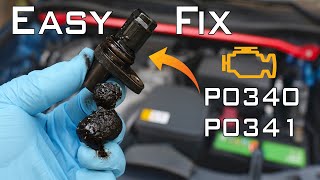
Pro Tip: Sometimes, the sensor tip can get covered in dirty oil or sludge, causing a bad reading. Before replacing the sensor, you can try removing it and cleaning the tip with brake cleaner. If the problem goes away, you've saved yourself the cost of a new part. If the code comes back, the sensor itself has likely failed.
🎬 See how dirty oil can trigger sensor codes and how to fix it.Cost of Replacing a Toyota Camry Camshaft Position Sensor
| Part/Service | Estimated Cost |
|---|---|
| New OEM Part | $57 - $116 |
| New Aftermarket Part | $20 - $50 |
| Shop Labor | $61 - $90 |
| Total Professional Replacement (Aftermarket) | $81 - $140 |
Frequently Asked Questions (FAQ)

How many camshaft position sensors does my 2005-2011 Camry have?
It depends on your engine. The 2.4L 4-cylinder engine has one camshaft position sensor. The 3.5L V6 engine has two camshaft position sensors, one for each cylinder bank (Bank 1 and Bank 2).
Where is the camshaft position sensor located? 🎬 See exactly where these sensors are located on your engine.
On the 2.4L 4-cylinder engine, the sensor is located on the side of the cylinder head, near the top of the engine. On the 3.5L V6, there is one sensor on the front valve cover and one on the rear, making the rear one more difficult to access.
Is this a difficult part to replace myself?
No, this is a very easy DIY job for most owners, especially on the 4-cylinder engine. It involves removing the engine cover, disconnecting a single electrical connector, and removing one 10mm bolt. The entire process can take as little as 15-30 minutes.
Are there any recalls for this part?
No. Searches of the National Highway Traffic Safety Administration (NHTSA) database show no specific recalls for the camshaft position sensor on the 2005-2011 Toyota Camry. Failures are typically due to the vehicle's age and mileage.
Should I replace the crankshaft position sensor at the same time?
It is not necessary. The camshaft and crankshaft sensors are separate components. While they work together, you only need to replace the part that has failed. A bad crankshaft sensor will typically trigger a different set of diagnostic codes.
Helpful Videos


Technical Specifications
OEM Part Numbers: 90919-05026 90919-A5007 90919-05013
The sensor is a Hall effect type sensor held in place by a single 10mm bolt. The 4-cylinder engine uses one sensor, while the V6 engine uses two.

The information in this article is provided for general reference and educational purposes only. Vehicle specifications, procedures, and part compatibility can vary by production date, trim level, and region. Always consult your vehicle's factory service manual and verify part numbers before purchasing or performing repairs. Safety-critical components such as airbags, seat belts, and braking systems should be installed by a qualified professional.
- Toyota Camry: