

Honda Accord Engine Coolant Thermostat Guide (2004-2017)
Everything Accord owners need to know about replacing a failing engine coolant thermostat.
- A P0128 check engine code on your Accord almost always means the thermostat is stuck open and needs replacement.
- While many aftermarket brands exist, OEM Honda thermostats are widely considered the most reliable choice for longevity and precise temperature control.
- If your engine is overheating, stop driving immediately to prevent catastrophic damage. This could be a sign of a thermostat stuck closed.
- For a daily driver, avoid 'racing' or low-temperature thermostats as they can harm fuel efficiency and are unnecessary.
Is Your Honda Accord's Thermostat Failing?

A bad thermostat can cause problems ranging from annoying to engine-threatening. The most common failure is the thermostat getting stuck open or closed. For the 2004-2017 Honda Accord, a thermostat stuck open is a frequent issue, often triggering the check engine light with a P0128 code. This code means the engine isn't warming up as fast as the computer expects it to.
Symptoms of a Bad Thermostat

- Check Engine Light: A P0128 code is a tell-tale sign of a thermostat that's likely stuck open.
- Slow to Warm Up: If your temperature gauge takes a very long time to reach the middle or never gets there, the thermostat is probably stuck open.
- Poor Heater Performance: A car that's not reaching full operating temperature can't provide hot air to the cabin, leaving you cold.
- Engine Overheating: This is the most serious symptom. If the thermostat sticks closed, coolant can't get to the radiator to cool down, causing the engine temperature to rise into the red zone. Pull over immediately if this happens.
- Temperature Fluctuations: A gauge that swings from cool to hot erratically can indicate a faulty thermostat.
Can I Drive with a Bad Thermostat?
If it's stuck open (causing a P0128 code and slow warm-up), you can drive short-term, but you should get it fixed. Your fuel economy will suffer and your engine isn't running efficiently. If it's stuck closed (causing overheating), do not drive the car. You risk severe engine damage like a blown head gasket.
Choosing the Right Aftermarket Thermostat for Your Accord

For Honda Accords, many mechanics and owners strongly recommend using an OEM (Original Equipment Manufacturer) thermostat. Honda OEM thermostats, often made by Nippon Thermostat (NTC), are known for their precise temperature control and reliability. However, quality aftermarket parts can be a good alternative if chosen carefully.
Aftermarket Brand Tiers
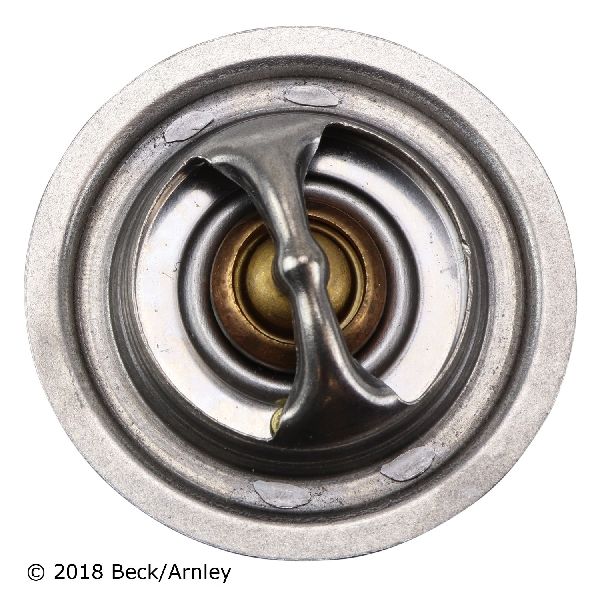
- OEM-Quality & Recommended: Gates and Beck Arnley are often considered reliable choices. Gates is a well-respected name in cooling systems, and Beck Arnley often sources parts from the original OEM suppliers.
- Value-Oriented: Motorad is a widely available brand, but reviews are mixed. Some users report good experiences, while others have seen premature failures. Their "Fail-Safe" thermostats are designed to lock open if they fail, which can prevent overheating but will require a replacement.
- Performance-Oriented: Mishimoto offers "racing" thermostats that open at a lower temperature (e.g., 154°F). These are intended for highly modified or track-driven cars. For a daily driven Accord, a low-temp thermostat is not recommended as it can prevent the engine from reaching its optimal operating temperature, potentially hurting fuel economy and heater performance without providing any real benefit.
Pro Tip: Check the Temperature Rating
Always match the new thermostat's temperature rating to your Accord's original specifications. For most 2004-2017 Accords, this is typically 170°F (77-78°C). Using the wrong temperature can lead to performance issues or check engine lights.
Cost of Replacing a Honda Accord Thermostat
| Part Type | Estimated Cost |
|---|---|
| New Aftermarket Thermostat | $19 - $88 |
| New OEM Honda Thermostat | $35 - $70 |
| Shop Labor | $100 - $200 |
| Total Professional Replacement | $120 - $270 |
Frequently Asked Questions

Is replacing the thermostat on a Honda Accord a DIY job?
Yes, for most home mechanics with basic tools, this is a feasible DIY job. The thermostat on both 4-cylinder and V6 models from 2004-2017 is relatively accessible. The process involves draining some coolant, removing the thermostat housing (usually held by 2 or 3 bolts), swapping the thermostat and gasket, and then refilling and bleeding the air from the cooling system. The difficulty is generally considered low to moderate, taking about 1-2 hours.
Do I need to replace the thermostat housing too?
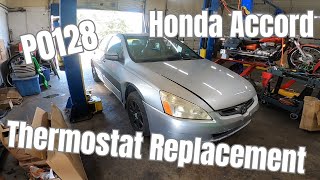
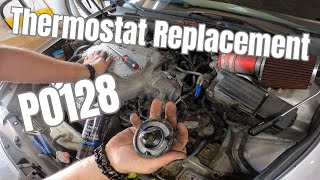
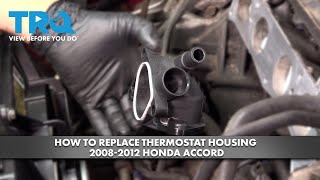
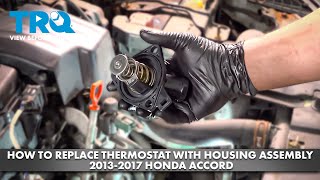
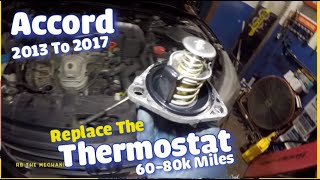
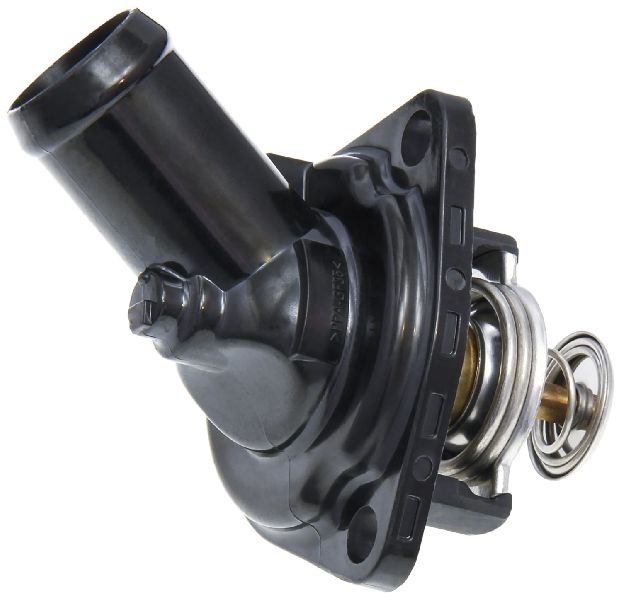
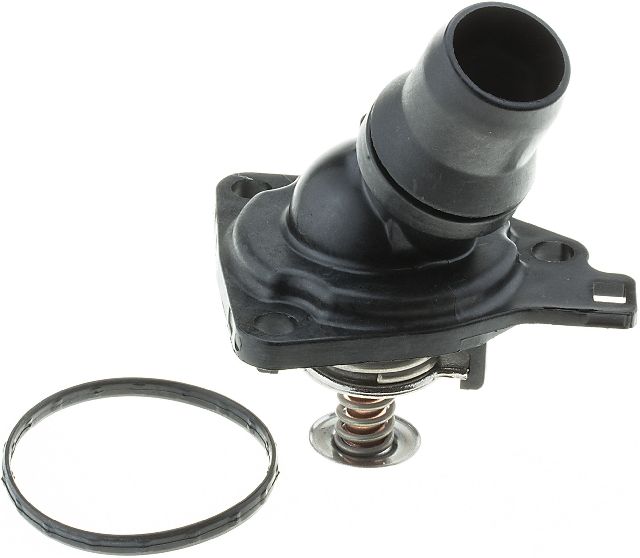
For many 2004-2012 Honda Accords with the 4-cylinder engine, the thermostat is integrated into the plastic housing and they are replaced as a single unit. 🎬 See how to replace the thermostat housing on 2008-2012 models. For V6 models and the 2013-2017 generation, the thermostat is often a separate part. 🎬 Watch a step-by-step thermostat replacement for Honda V6 engines. Always verify the specific part for your vehicle's engine and year.
Are there any recalls for the 2004-2017 Accord thermostat?
Searches of the NHTSA database did not reveal any specific recalls for the engine coolant thermostat on 2004-2017 Honda Accord models. However, some General Motors vehicles had a Technical Service Bulletin (TSB) related to thermostats causing excessive radiator cycling, but this was not specific to Honda.
What is the little pin or 'jiggle valve' on the thermostat?
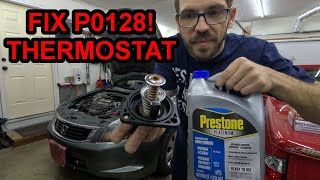
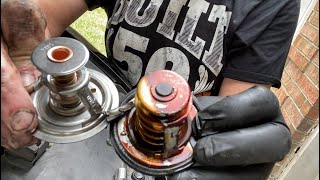
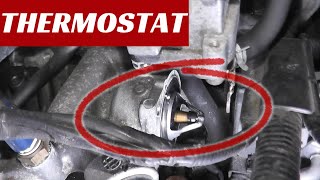
That small pin or valve is an air bleed. It allows trapped air in the cooling system to pass through the thermostat, which helps when you are refilling and bleeding the system after the repair. When installing the new thermostat, this jiggle valve should almost always be positioned at the top (12 o'clock position) to be most effective.
Helpful Videos
Technical Specifications
OEM Part Numbers: 19301-PAA-306 19301-P08-316 19301-RAA-A01 19301-RAA-A02 19301-PZA-305
Standard opening temperature is typically 170°F (78°C) for most 4-cylinder and V6 models in this range. Many 4-cylinder models use an integrated thermostat and housing assembly.
We Have This Part in Stock


The information in this article is provided for general reference and educational purposes only. Vehicle specifications, procedures, and part compatibility can vary by production date, trim level, and region. Always consult your vehicle's factory service manual and verify part numbers before purchasing or performing repairs. Safety-critical components such as airbags, seat belts, and braking systems should be installed by a qualified professional.
- Honda Accord: