

A Guide to Transmission Control Solenoids for the 2004-2011 Honda Odyssey
If your Odyssey is suffering from harsh shifts or a flashing 'D' light, a failing transmission solenoid could be the culprit.
- Before buying parts, check transmission fluid condition. Dark, burnt, or metallic fluid indicates a larger problem a new solenoid won't fix.
- Identify the specific failed solenoid using the diagnostic trouble code (DTC) to avoid replacing unnecessary parts.
- For this generation of Odyssey, a solenoid failure can be a symptom of a larger transmission issue, not always the root cause.
- Some solenoids are easy to access, while others require removing the starter motor, significantly changing the repair difficulty and cost.
Understanding the Solenoids in Your Odyssey

It's important to know that your Odyssey doesn't have just one 'transmission control solenoid.' It has a whole set, and they are often the cause of common transmission complaints. These parts control everything from which gear you're in to how the torque converter locks up at highway speeds. Because the 2004-2011 Odyssey transmission can be sensitive, diagnosing the correct solenoid is key. A failure in one solenoid can sometimes be a symptom of a larger transmission problem, especially in the early years of this generation which were known for transmission issues.
Symptoms of a Failing Transmission Solenoid

A bad solenoid makes itself known through poor driving performance. You should look out for several key warning signs:
- Harsh or Delayed Shifting: The most common symptom is a noticeable jerk, clunk, or delay when the transmission shifts gears.
- Flashing 'D' Light: The 'D' or Drive indicator on your dashboard may start flashing, which is the transmission's way of signaling a fault.
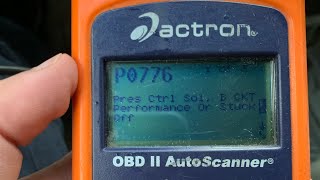
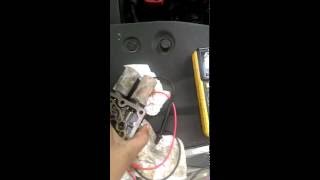
- Check Engine Light: A faulty solenoid will often trigger the Check Engine Light. Common trouble codes include P0741 (Torque Converter Clutch), P0776 (Pressure Control Solenoid 'B' Stuck Off), and various shift solenoid codes (P0750-P0760). 🎬 See this walkthrough for replacing shift solenoids A and B.
- Stuck in Gear (Limp Mode): The transmission may lock itself into a single gear (usually 2nd or 3rd) to prevent further damage. This is a protective 'limp mode'.
- Shuddering or Vibration: You might feel a vibration or 'judder' from the transmission, especially at steady speeds between 20-45 mph.
Choosing the Right Aftermarket Part: OEM vs. Aftermarket

When replacing a transmission solenoid on a Honda, there is a debate between using original equipment (OEM) parts or aftermarket parts. Many mechanics and long-time Honda owners prefer OEM for transmission components due to their proven reliability. However, OEM solenoids can be very expensive.
Aftermarket brands like Standard Ignition (SMP) and ATP offer a more affordable solution. Standard is often considered a higher-tier aftermarket brand that engineers its parts to match original specifications. ATP provides exact-fit replacement components that are a cost-effective alternative. The best choice depends on your budget and how you use your vehicle. If you opt for an aftermarket part, it is critical to first confirm that your transmission fluid is clean and free of metal debris. Installing a new solenoid in a failing transmission will not fix the root problem.
Replacement Cost

The cost to replace a transmission solenoid varies widely based on which solenoid has failed and who does the work. Some solenoids are easily accessible on top of the transmission, while others require removing the starter motor for access.
| Part/Service | Estimated Cost |
|---|---|
| New Aftermarket Solenoid(s) | $72 - $847 |
| New OEM Solenoid(s) | $250 - $1200+ |
| Shop Labor | $150 - $500+ |
Frequently Asked Questions (FAQ)
Can I replace just one solenoid, or should I replace them all?
It is most cost-effective to diagnose and replace only the failed solenoid. However, solenoids are often sold in packs or pairs (e.g., shift solenoid A & B). If one has failed due to age and electrical wear, its counterpart may not be far behind. If access is difficult, it can be wise to replace related solenoids at the same time to save on future labor costs.
Is a software update needed after replacement?
For some transmission issues, particularly the 'judder' symptom on 2009-2010 models, Honda issued a software update for the Powertrain Control Module (PCM). While not always required for a simple solenoid replacement, it's worth checking with a dealer if your vehicle has the latest transmission software, as it can improve shift quality.
How many transmission solenoids does my 2004-2011 Odyssey have?
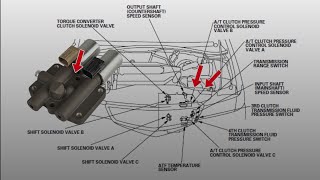
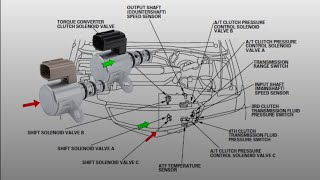
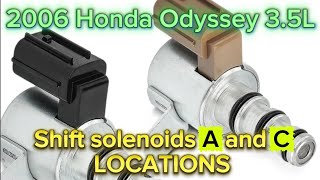
Your Odyssey's 5-speed automatic transmission has multiple solenoids. This includes a dual linear shift solenoid assembly, 🎬 Watch: How to locate the dual linear clutch pressure solenoids. individual shift solenoids (A, B, C), clutch pressure control solenoids, and a torque converter clutch solenoid. The exact number and configuration can vary slightly by year.
What is the most common solenoid to fail on this Odyssey?
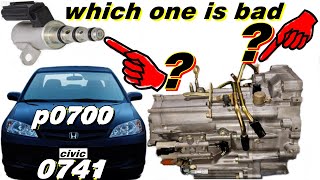
The torque converter clutch (TCC) solenoid, which can trigger code P0741, is a very common point of failure. 🎬 Watch: Diagnosing P0741 and torque converter clutch solenoid issues. However, this code often appears because the solenoid's filter screen gets clogged with debris from a worn-out torque converter or transmission, not because the solenoid itself is electrically bad. The shift and pressure control solenoids are also common failure points.
Helpful Videos
Technical Specifications
OEM Part Numbers: 28250-P6H-024 28250-P7W-003 28500-P6H-013 28400-P6H-013 28600-RKE-004 28610-RKE-004
The 2004-2011 Honda Odyssey uses a 5-speed automatic transmission (Code: BYFA, BKYA). It utilizes multiple solenoids, including dual-linear shift solenoids, single shift solenoids, and pressure control solenoids. These are typically 12V, two-wire components controlled by the Powertrain Control Module (PCM).
We Have This Part in Stock


The information in this article is provided for general reference and educational purposes only. Vehicle specifications, procedures, and part compatibility can vary by production date, trim level, and region. Always consult your vehicle's factory service manual and verify part numbers before purchasing or performing repairs. Safety-critical components such as airbags, seat belts, and braking systems should be installed by a qualified professional.
- Honda Odyssey: