

Engine Intake Manifold Temperature Sensor for the 1998-2002 Lincoln Continental
A guide to understanding, diagnosing, and replacing the Intake Air Temperature (IAT) sensor on your ninth-generation Lincoln Continental.
- The requested vehicle (2004-2008 Lincoln Continental) does not exist; this guide is for the 1998-2002 model years.
- A bad IAT sensor commonly causes a Check Engine Light with codes P0112 or P0113, poor fuel economy, and rough running.
- Replacement is simple, affordable, and easily done by a DIYer with basic tools in under 15 minutes.
- Quality aftermarket brands like Standard Motor Products, Delphi, or SKP offer a reliable and cost-effective alternative to OEM parts for this sensor.
Symptoms of a Failing Intake Air Temperature Sensor
A bad IAT sensor can cause a range of issues, from minor annoyances to more serious performance problems. Since the sensor helps control the fuel mixture, a bad reading can confuse the engine's computer. You might notice one or more of the following signs.
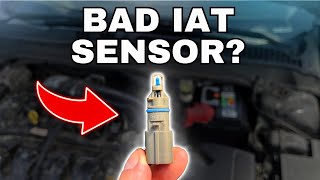
🎬 Watch a video overview of common IAT sensor failure symptoms.Check Engine Light
This is often the first sign of a problem. The vehicle's computer is very good at monitoring its sensors. If it receives a signal from the IAT sensor that is too high, too low, or nonsensical, it will trigger a Check Engine Light. Common trouble codes associated with a failing IAT sensor include P0112 (Circuit Low Input) and P0113 (Circuit High Input).
Poor Engine Performance
If the sensor sends incorrect data, the engine's computer may create a fuel mixture that is too rich (too much fuel) or too lean (not enough fuel). This can lead to several performance issues, including a rough idle, hesitation when you press the gas pedal, and a general lack of power.
Reduced Fuel Economy
An incorrect fuel mixture almost always leads to wasted fuel. If the sensor falsely reports that the air is cold, the computer will inject more fuel than necessary, causing your gas mileage to drop.
Hard Starting
Getting the air-fuel mixture just right is critical for starting the engine, especially when it's cold. A bad IAT sensor can make it difficult for the engine to start because the initial fuel delivery is incorrect.
Choosing an Aftermarket Replacement
For the 1998-2002 Lincoln Continental, the IAT sensor is a relatively simple and affordable part. Both OEM (Motorcraft) and aftermarket options are widely available. Given the age of the vehicle and the straightforward function of the sensor, a quality aftermarket part from a reputable brand is a perfectly acceptable and cost-effective choice. There are no significant known issues that would require sticking strictly to the OEM part.
Aftermarket Brand Tiers
- Premium Aftermarket (e.g., Standard Motor Products, Delphi, Bosch): These brands have a strong reputation for quality and often manufacture parts that meet or exceed OEM specifications. They are a reliable choice for this component.
- Standard Aftermarket (e.g., Carquest, SKP, A-Premium): These brands offer a good balance of quality and price. They are a popular choice for common repairs and are generally dependable.
- Economy/Value Brands: While the lowest price can be tempting, quality can be inconsistent. For a critical sensor like the IAT, it's usually worth spending a few extra dollars for a part from a more established brand to avoid premature failure and performance issues.
Pro Tip: The IAT sensor for the 1998-2002 Continental is sometimes integrated with or located near the Mass Airflow (MAF) sensor. Before ordering, visually inspect your engine's air intake tube to confirm the location and appearance of your sensor to ensure you purchase the correct part.
Frequently Asked Questions
Is the Intake Manifold Temperature Sensor the same as the IAT sensor?
Yes, the terms are used interchangeably. It is most commonly referred to as the Intake Air Temperature (IAT) sensor. It may also be called an Air Charge Temperature Sensor.
Where is the IAT sensor located on a 1998-2002 Lincoln Continental?
The IAT sensor is typically located in the air intake duct, between the air filter box and the engine's throttle body. It is often a small, two-wire plastic sensor that screws or pushes into the intake tubing.
Can I clean my IAT sensor instead of replacing it?
Sometimes, the sensor can become coated with oil or dirt, which can affect its readings. You can try cleaning it carefully with a dedicated MAF or electronics cleaner. If cleaning doesn't resolve the symptoms or the Check Engine Light returns, the sensor has likely failed internally and needs to be replaced.
🎬 See more symptoms and typical replacement costs for this sensor.Are there any recalls for the IAT sensor on this vehicle?
No, there are no specific recalls or widespread Technical Service Bulletins (TSBs) from the NHTSA related to the Intake Air Temperature sensor for the 1998-2002 Lincoln Continental.
Helpful Videos
Technical Specifications
OEM Part Numbers: F57Z12A697A F57Z12A697AA F57F12A697AA F57F12A697AB
2-prong, blade-type male terminal

The information in this article is provided for general reference and educational purposes only. Vehicle specifications, procedures, and part compatibility can vary by production date, trim level, and region. Always consult your vehicle's factory service manual and verify part numbers before purchasing or performing repairs. Safety-critical components such as airbags, seat belts, and braking systems should be installed by a qualified professional.
- Lincoln Continental: