

Nissan Murano Transmission Speed Sensor Guide for 2003-2016 Models
Solve erratic shifting and incorrect speedometer readings in your Murano by understanding its transmission speed sensors.
- A faulty transmission speed sensor can cause symptoms that mimic a major CVT failure; always diagnose with an OBD-II scanner first.
- The Murano has two transmission speed sensors (input and output) and four ABS wheel speed sensors; ensure you are replacing the correct part.
- Aftermarket sensors offer significant cost savings and are a practical choice for a DIY repair on an older vehicle.
- Do not continue driving with a bad speed sensor, as it can lead to poor performance, bad fuel economy, and added stress on the transmission.
Understanding Your Murano's Speed Sensors

When discussing speed sensors on a 2003-2016 Nissan Murano, it's important to know there are two different types. This guide focuses on the Transmission Speed Sensors, which are directly related to how your CVT automatic transmission behaves.
- Transmission Speed Sensors (VSS): Your Murano has an Input and an Output Vehicle Speed Sensor (VSS). They tell the car's computer how fast the transmission's internal parts are moving, which is essential for controlling the CVT and displaying the correct speed. A failure here often causes shifting problems and a Check Engine Light.
- Wheel Speed Sensors (ABS Sensors): Each wheel has its own sensor that reports wheel speed to the Anti-lock Brake System (ABS) and Traction Control System (TCS). A failure here will typically turn on the ABS and TCS warning lights.
This article deals with the transmission speed sensors, as they are a common cause of performance issues that can be mistaken for major transmission failure.
Symptoms of a Failing Transmission Speed Sensor

A bad speed sensor sends incorrect information to your Murano's computer, which can cause a variety of problems. Many of these symptoms can feel like the entire CVT transmission is failing, but often it's just this small, inexpensive sensor.
- Erratic Shifting: The most common symptom is poor transmission performance. This can feel like harsh shifting, delayed gear changes, or the vehicle hesitating and then lurching forward from a stop.
- Inaccurate Speedometer: The speedometer may behave erratically, jumping around, or not working at all.
- Check Engine Light: A failing speed sensor will almost always trigger the Check Engine Light. Common codes include P0720 (Output Speed Sensor Circuit) 🎬 Watch this guide on fixing the P0720 output speed sensor code. and P0725 (Engine Speed Input Circuit).
- Cruise Control Not Working: The cruise control system relies on accurate speed data, so it will often stop working when a sensor fails.
Don't Mistake a Bad Sensor for a Bad Transmission
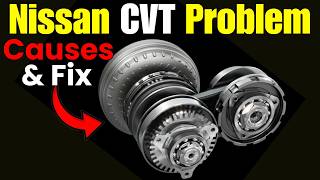
The early generation Nissan Murano CVTs are known to have issues. However, the symptoms of a failing speed sensor—like hesitation and harsh engagement—are very similar to more serious transmission problems. Because a sensor is much cheaper to replace than a transmission, it's critical to properly diagnose the issue first, 🎬 See this video explaining common CVT symptoms and how to fix them. usually by reading the specific trouble codes with an OBD-II scanner.
Choosing the Right Aftermarket Speed Sensor

When your Murano needs a new speed sensor, you have a choice between Original Equipment (OEM) from a Nissan dealer and aftermarket parts.
- OEM: These are the exact same parts your vehicle was built with. They offer the highest likelihood of compatibility and long-term reliability. However, they are also the most expensive option, often costing several times more than aftermarket versions.
- Aftermarket (Replacement Brand): Aftermarket sensors are a cost-effective solution. For a vehicle that is several years old, a budget-friendly part that gets the car running properly is often the most practical choice. While some mechanics prefer OEM for critical electronics, a quality aftermarket sensor can provide good performance and value. Given the significant cost savings, an aftermarket sensor is a reasonable choice, especially if the replacement is easy to access for a DIY repair.
Pro Tip: Identify the Correct Sensor
Your Murano has both an input and an output transmission speed sensor, and they are different parts. Before ordering, use an OBD-II scanner to identify which sensor has failed. Replacing the wrong one will not fix the problem.
Cost Comparison for Nissan Murano Speed Sensor Replacement

| Part Type | Estimated Cost |
|---|---|
| New Aftermarket | $25.44 |
| New OEM | $180 - $290 |
| Shop Labor | $95 - $150 |
| Total Aftermarket (DIY) | $25.44 |
| Total Aftermarket (Installed) | $120 - $175 |
| Total OEM (Installed) | $275 - $440 |
Frequently Asked Questions

How many speed sensors does my Nissan Murano have?
Your Murano has multiple speed sensors. There is one ABS wheel speed sensor at each of the four wheels, plus an input and an output speed sensor on the transmission itself. This guide focuses on the two transmission sensors.
Is replacing a transmission speed sensor a DIY job?
For many 2003-2016 Murano models, the two transmission speed sensors are located on the outside of the transmission case and are accessible from under the vehicle. They are typically held in by a single bolt and have a simple electrical connector, making it a feasible DIY job for someone with basic tools. However, access can be tight. A video tutorial for your specific year can be very helpful.
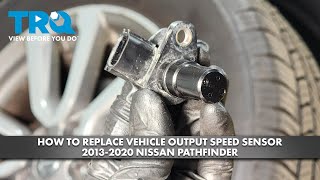
🎬 Watch a step-by-step walkthrough for replacing the input speed sensor.Are there any recalls for the Murano speed sensor?
No, there are no specific recalls for the transmission speed sensors on the 2003-2016 Nissan Murano. There was a recall for the 2003 model year related to the gear selector linkage, but it is a separate issue.
What happens if I don't replace a bad speed sensor?
Continuing to drive with a faulty speed sensor is not recommended. It can cause poor fuel economy, unpredictable shifting, and put extra stress on your CVT transmission. Eventually, the vehicle may go into a "limp mode" with limited power, or the speedometer may fail completely.
Helpful Videos


Technical Specifications
OEM Part Numbers: 31935-8E006 31935-8E007 31935-1XF00
Typically includes one sensor with an integrated harness and connector. Held in place by a single bolt. Distinctions exist between the input (primary) and output (secondary) sensor.

The information in this article is provided for general reference and educational purposes only. Vehicle specifications, procedures, and part compatibility can vary by production date, trim level, and region. Always consult your vehicle's factory service manual and verify part numbers before purchasing or performing repairs. Safety-critical components such as airbags, seat belts, and braking systems should be installed by a qualified professional.
- Nissan Murano: