

Honda Accord Vehicle Speed Sensor (VSS) Guide: 2003-2015
If your speedometer is failing or your transmission is shifting erratically, a bad speed sensor is the likely cause.
- A bad speed sensor is the most common cause of a dead speedometer and harsh shifting in 2003-2015 Accords.
- The repair is simple and involves replacing a sensor held by one 10mm bolt, making it a great DIY job.
- Your Accord has two transmission speed sensors; the 'output' sensor (VSS) controls the speedometer.
- Driving with a bad sensor is not recommended as it can affect transmission health and safe operation.
Is Your Accord's Speedometer or Shifting Acting Up?

A faulty vehicle speed sensor (VSS) is a common issue on the 2003-2015 Honda Accord. When this sensor fails, it sends incorrect or no information to the car's computer, leading to a number of obvious problems. 🎬 Watch: 5 common symptoms of a bad speed sensor The most frequent complaints are a speedometer that jumps around or stops working completely, and an automatic transmission that shifts harshly, late, or at the wrong times. Because this part is essential for proper transmission and dashboard function, you should replace it as soon as symptoms appear to avoid further issues.
OEM vs. Aftermarket Speed Sensors for Your Accord

When replacing a speed sensor, you have two main choices: a genuine Honda (OEM) part or an aftermarket part. For electronic components like sensors, many mechanics recommend using OEM parts to guarantee perfect fit and long-term reliability. However, OEM sensors for the Accord can be significantly more expensive than aftermarket options.
Aftermarket sensors are a cost-effective alternative. For a simple, easy-to-access part like the speed sensor, trying an aftermarket version is a reasonable choice, especially for a DIY repair. While some low-quality aftermarket electronics can fail prematurely, many reputable brands offer reliable parts that perform well. If you choose an aftermarket sensor, select one from a known brand with a good warranty.
Known Issues & Recalls
Searches of the National Highway Traffic Safety Administration (NHTSA) database and technical service bulletins (TSBs) did not find any widespread recalls or specific service campaigns for vehicle speed sensor failure on the 2003-2015 Honda Accord. However, problems with these sensors are a well-documented common repair need based on owner forums and repair data.
Cost to Replace a Honda Accord Speed Sensor
| Part Type | Estimated Cost |
|---|---|
| New OEM (Honda) | $60 - $200 |
| New Aftermarket | $25.97 |
| Shop Labor | $80 - $120 |
| Total Professional Repair (Aftermarket) | $106 - $146 |
| Total Professional Repair (OEM) | $140 - $320 |
Frequently Asked Questions (FAQ)

Where is the speed sensor located on my Accord?
The location of the output speed sensor (VSS) varies by generation:
- 2003-2007 (7th Gen): The sensor is on the back of the transmission, accessible from the top of the engine bay on the driver's side. Removing the air filter box provides better access. 🎬 See this step-by-step 2003-2007 Accord sensor replacement guide
- 2008-2012 (8th Gen): The sensor is typically on the transmission housing, often identifiable by a blue electrical connector. It can be reached from the top of the engine bay, sometimes requiring removal of the battery or air intake components for clearance.
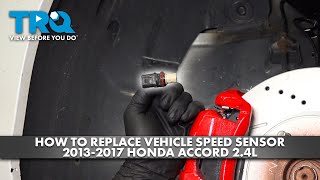
- 2013-2015 (9th Gen): The sensor is on the front of the transmission. You can access it by removing the driver's side front wheel and the plastic inner fender liner. 🎬 Watch: How to replace the sensor on 2013-2015 models
How many speed sensors does my Accord have?
Your automatic transmission has two main speed sensors: an input (mainshaft) speed sensor and an output (countershaft) speed sensor. The output sensor is the one commonly called the Vehicle Speed Sensor (VSS) and is responsible for the speedometer reading. The input sensor measures the transmission's internal speed for shifting. While both can cause shifting problems, a bad output sensor is what makes the speedometer fail.
Can I replace the speed sensor myself?
Yes, this is a very DIY-friendly repair for most home mechanics. The sensor is held in by a single 10mm bolt and an electrical connector. The main challenge is simply accessing it. Make sure to apply a little fresh transmission fluid to the new sensor's O-ring before installation to ensure a good seal.
What happens if I don't replace a bad speed sensor?
Driving with a bad speed sensor is not recommended. Your transmission will continue to shift poorly, which can cause extra wear and tear. You will not have a working speedometer or cruise control, and your fuel economy may decrease. In some cases, the transmission may enter a "limp mode" with limited power and speed.
Helpful Videos
Technical Specifications
OEM Part Numbers: 28820-RPC-013 28810-RJ2-003 28820-PWR-013
This guide primarily covers the Automatic Transmission Output Shaft Speed Sensor, also known as the Vehicle Speed Sensor (VSS). Automatic transmission models also use an Input Shaft Speed Sensor, which can cause similar shifting issues but does not control the speedometer.

The information in this article is provided for general reference and educational purposes only. Vehicle specifications, procedures, and part compatibility can vary by production date, trim level, and region. Always consult your vehicle's factory service manual and verify part numbers before purchasing or performing repairs. Safety-critical components such as airbags, seat belts, and braking systems should be installed by a qualified professional.
- Honda Accord: