

Ignition Knock Sensor Guide for the 2003-2007 Toyota Camry
Understanding knock sensor failure and choosing the right replacement for your Camry's specific engine.
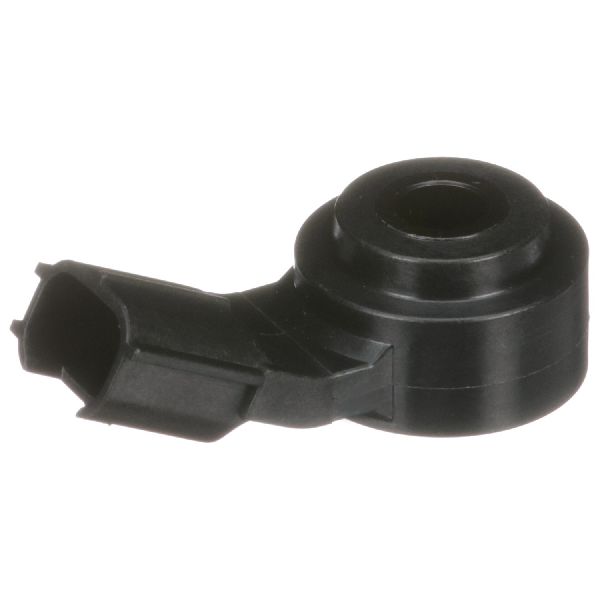
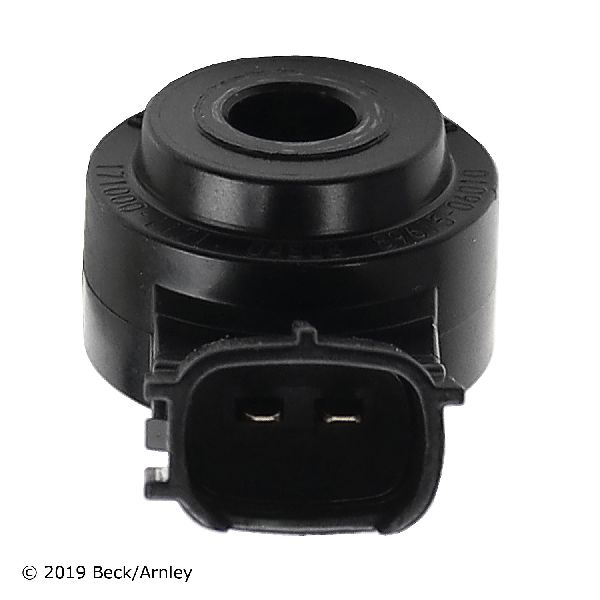
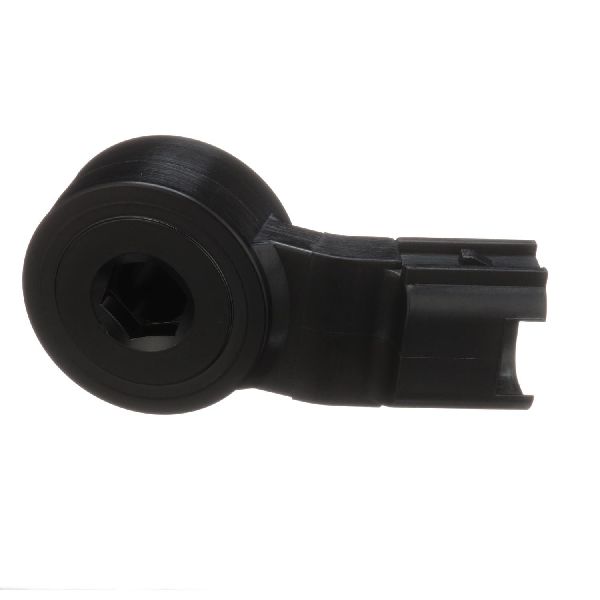
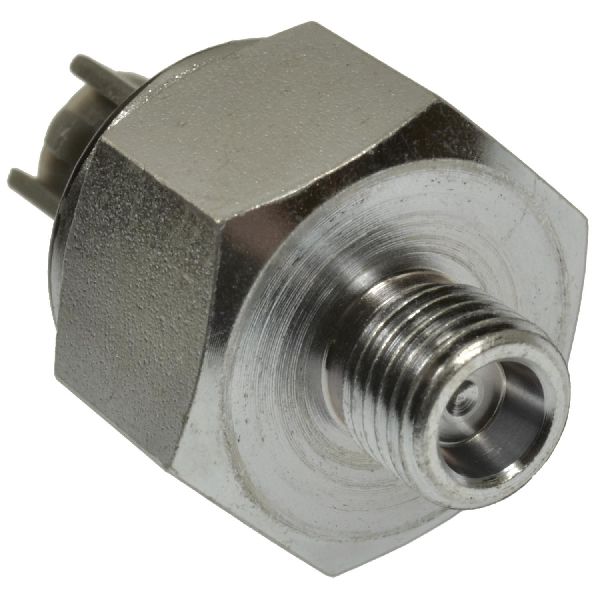
- First, identify if your Camry has the 4-cylinder (1 sensor) or V6 (2 sensors) engine, as the job is completely different.
- On V6 models, it is critical to replace both sensors and the wiring harness at the same time due to the extreme difficulty of accessing them.
- A bad knock sensor will likely cause your Camry to stay out of overdrive, resulting in very high RPMs at highway speeds.
- Due to the high labor cost, choose a high-quality aftermarket brand like NGK/NTK or Denso and avoid cheap, no-name parts.
Is Your Camry a 4-Cylinder or a V6? It Matters.

Before you buy a knock sensor for your 2003-2007 Toyota Camry, the most important thing you need to know is which engine you have. The replacement job is vastly different between the two.
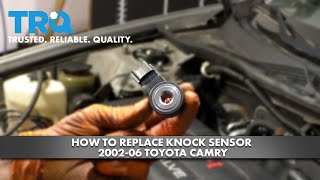
- 2.4L 4-Cylinder (2AZ-FE Engine): This engine has one knock sensor. It is located on the back of the engine block, underneath the plastic intake manifold. While the manifold must be removed to access it, this is a much simpler job than on the V6. 🎬 Watch: Step-by-step 4-cylinder knock sensor replacement guide
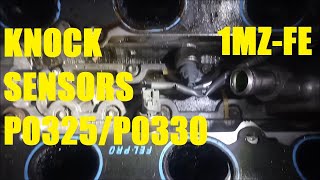
- 3.0L or 3.3L V6 (1MZ-FE or 3MZ-FE Engine): This engine has two knock sensors. They are located deep in the 'V' of the engine, underneath the lower intake manifold. This is a difficult, time-consuming job that requires removing the throttle body, upper plenum, and lower intake manifold. Because of the high labor cost, it is strongly recommended to replace both sensors and the wiring harness at the same time.
Symptoms of a Bad Knock Sensor


The most common sign of a knock sensor problem is a Check Engine Light on your dashboard. Your Camry's computer is very good at detecting a fault in the sensor or its circuit. Other common symptoms include:
- Limp Mode: The computer may lock out the overdrive gear in the transmission to protect the engine. This will cause very high RPMs (3000+) when driving at highway speeds (50+ mph).
- Error Codes: A code scan will typically show P0325 (Knock Sensor 1 Circuit Malfunction) or P0330 (Knock Sensor 2 Circuit Malfunction - V6 only).
- Poor Performance: You might notice reduced acceleration and worse gas mileage.
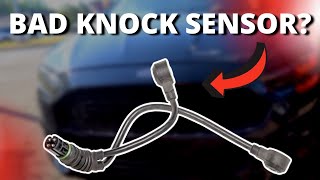
- Audible Knocking: In some cases, you may hear a pinging or knocking sound from the engine, especially under load. 🎬 See this video for a breakdown of bad knock sensor symptoms
A Common Point of Failure: The Wiring
Often, the sensor itself is fine, but the wiring has failed. On V6 models, the harness in the hot engine valley becomes brittle and cracks over time. On 4-cylinder models, rodents have been known to chew through the wires leading to the sensor. Always inspect the wiring and connector before condemning the sensor. If replacing a V6 sensor, it is critical to replace the harness as well.
🎬 Watch: Detailed walkthrough for V6 knock sensor and harness replacementChoosing the Right Aftermarket Knock Sensor

Because replacing the knock sensor(s) on a Camry can be labor-intensive, especially on the V6, part quality is extremely important. You do not want to do this job twice. Here’s a breakdown of brand quality based on owner and mechanic feedback.
Tier 1: OEM Quality
- NGK / NTK: Widely regarded as a top-tier aftermarket brand that is also an Original Equipment (OE) supplier for many car manufacturers. Their sensors are known for reliability and are often considered a safe bet when not buying the genuine Toyota part.
- Denso: Denso is the original equipment manufacturer for many Toyota parts. If you find a Denso-branded knock sensor, it is likely the exact same part that came in the Toyota box, without the dealership markup.
Tier 2: Reputable Aftermarket
- Standard Motor Products (SMP): A long-standing brand with a generally good reputation. They offer a reliable alternative to OEM parts.
- Delphi: Delphi is another major OE supplier, though reviews can be mixed. Some users report good results, while others have experienced issues. It is generally considered a decent mid-grade option.
- Beck Arnley: This brand is a re-boxer, meaning they source parts from various manufacturers, including sometimes the original OE supplier. You might get a Denso part in a Beck Arnley box, or you might get a part from a different source. Quality can be inconsistent.
Tier 3: Use With Caution
- No-Name / Ultra-Low-Price Brands: It is strongly advised to avoid the cheapest sensors found on sites like eBay or Amazon. Many owners report these parts failing immediately or soon after installation, forcing them to repeat the entire repair. Given the labor involved, the risk is not worth the small upfront savings.
Cost of Replacing a Knock Sensor on a 2003-2007 Toyota Camry
| Part / Service | 4-Cylinder (1 Sensor) | V6 (2 Sensors + Harness) |
|---|---|---|
| New Aftermarket Sensor(s) | $38 - $120 | $80 - $250 (for two) |
| New OEM Sensor(s) | ~$140 - $200 | ~$280 - $400 (for two) |
| V6 Wire Harness | N/A | ~$40 - $60 |
| Estimated Shop Labor | $250 - $400 | $500 - $800+ |
Pro Tip: For V6 models, always get a quote that includes replacing both sensors and the wire harness. The parts are a small fraction of the total cost; the majority is labor. Doing it all at once saves you from having to pay for the same difficult job again in the future.
Frequently Asked Questions
How many knock sensors does my 2005 Camry have?
If you have the 2.4L 4-cylinder engine, you have one knock sensor. If you have the 3.0L or 3.3L V6 engine, you have two knock sensors.
Do I really need to replace the wire harness on my V6?
Yes, it is highly recommended. The harness sits in a very hot part of the engine and the plastic and wiring become brittle and fail. It is a very common failure point, and since the labor to access it is the same as replacing the sensors, it's cheap insurance against having to do the job again.
Can I just ignore a knock sensor code?
It is not recommended. A failed knock sensor circuit will cause your car to fail an emissions test. More importantly, it often puts the car in a 'limp mode' that prevents the transmission from shifting into overdrive, leading to terrible fuel economy and high engine wear at speed. It also means the engine's primary defense against harmful detonation is offline.
Is the knock sensor replacement a DIY job?
For the 4-cylinder engine, it is a manageable DIY for someone with moderate mechanical experience who is comfortable removing an intake manifold. For the V6 engine, it is a very advanced DIY job due to the sheer number of components that must be removed to gain access. If you are not a very experienced home mechanic, the V6 job is best left to a professional.
Helpful Videos
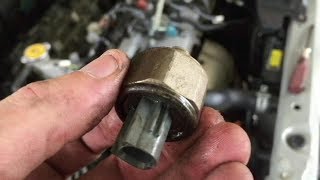
Technical Specifications
OEM Part Numbers: 89615-12090 89615-12050 89615-32010
Varies by engine. The 2.4L 4-cylinder engine uses one sensor. The 3.0L/3.3L V6 engine uses two sensors and a separate wire harness (Part # 82219-07010 or similar).
We Have This Part in Stock


The information in this article is provided for general reference and educational purposes only. Vehicle specifications, procedures, and part compatibility can vary by production date, trim level, and region. Always consult your vehicle's factory service manual and verify part numbers before purchasing or performing repairs. Safety-critical components such as airbags, seat belts, and braking systems should be installed by a qualified professional.
- Toyota Camry: