

Honda Civic Crankshaft Position Sensor Guide (2002-2015)
Is your Civic stalling or refusing to start? The crankshaft position sensor might be the culprit.
- A failing crankshaft sensor can cause a no-start, stalling, or rough idle.
- For reliability, use an OEM or high-quality aftermarket sensor from brands like Denso or Hitachi.
- On 2002-2005 Civics, the sensor is behind the timing cover, making replacement much more labor-intensive.
- A "crank pattern relearn" procedure is necessary after replacement to ensure proper engine function.
Is Your Civic Stalling or Not Starting?

A failing crankshaft position sensor is a common problem that can cause major issues for Honda Civic owners. When this small but critical sensor starts to go bad, it can leave you stranded. The symptoms often begin with minor issues like a rough idle or occasional hesitation, but can quickly escalate to your car not starting at all. Recognizing the signs early can save you from needing a tow and a more expensive repair.
Symptoms of a Failing Crankshaft Position Sensor

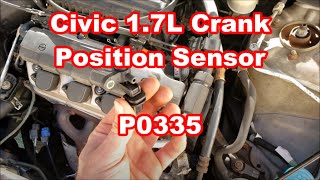
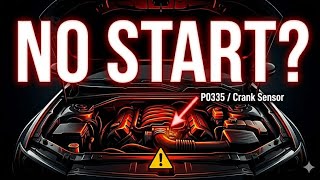
A bad CKP sensor can mimic other engine problems, but it has a few distinct warning signs. The most common are a Check Engine Light with codes P0335, P0336, or P0339, an engine that cranks but won't start, and sudden stalling while driving.
🎬 See this guide to diagnosing P0335 through P0339 codes.Generation-Specific Issues
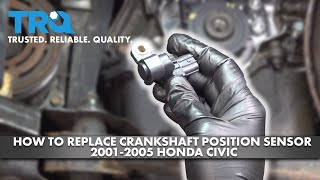
For 7th generation Civics (2002-2005), the sensor is often located behind the timing belt cover. 🎬 Watch: Step-by-step replacement guide for 2001-2005 Civic models. This makes replacement much more difficult and expensive, as the timing belt and associated components must be removed to access it. For 8th (2006-2011) and 9th (2012-2015) generation models, the sensor is typically on the lower part of the engine block near the crankshaft pulley, making it easier to access.
Choosing the Right Aftermarket Sensor

Honda engines, particularly the D17 (2001-2005), are known to be very sensitive to the quality of electronic sensors. While budget-friendly aftermarket sensors are available, many owners and mechanics report that these parts can fail prematurely or cause persistent, hard-to-diagnose issues like intermittent stalling or check engine lights. Using a low-quality part can result in having to do the repair all over again.
Pro Tip: Stick with OEM Suppliers
For a critical sensor like the CKP, it is strongly recommended to use an OEM-supplier brand like Denso or Hitachi. These parts are often identical to the genuine Honda part but are sold without the dealership markup. Reputable aftermarket brands like NGK/NTK, Delphi, and Beck Arnley are also considered reliable choices.
Cost of Replacing a Honda Civic Crankshaft Sensor

| Part/Service | Estimated Cost |
|---|---|
| New Aftermarket Part | $23.84 - $33.35 |
| New OEM Part | $86 - $234 |
| Shop Labor | $128 - $188+ |
| Total Professional Replacement | $152 - $422+ |
Note: Labor costs can be significantly higher for 2002-2005 models where the sensor is behind the timing belt cover.
Frequently Asked Questions
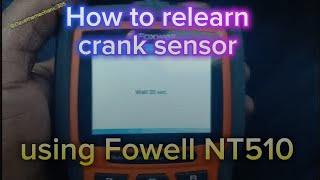
 🎬 Watch: How to perform a crank relearn with a scanner. performing a crank pattern relearn procedure." loading="lazy" style="max-width:100%;height:auto;border-radius:6px;display:block;box-shadow:0 2px 8px rgba(0,0,0,0.1);" />
Do I need a "crank relearn" after replacing the sensor?
Yes, after replacing the crankshaft sensor, your Civic's computer needs to learn the signal pattern of the new part. This is called a "crank pattern relearn" procedure. While some models have a manual process, it is often best to have a shop perform the relearn with a diagnostic scan tool to prevent rough running or a check engine light after the replacement.
Where is the crankshaft sensor located on my Civic?
The location varies by generation. On many 8th (2006-2011) and 9th (2012-2015) generation Civics, it's on the lower part of the engine block, near the crankshaft pulley. For 7th generation models (2002-2005), it is usually located behind the timing belt cover, making it much harder to access. Always confirm the location for your specific engine before starting work.
Are there any recalls for the Civic crankshaft sensor?
No, there are no specific recalls from Honda or the NHTSA for the crankshaft position sensor itself on 2002-2015 Civics. However, a Technical Service Bulletin (TSB) exists for some 2012 models where misfire codes could be caused by the computer's crank pattern learn being incomplete. Another TSB from 2016 notes that corrosion in the sensor connector can cause codes P0335 and P0339.
Can I use a cheap aftermarket sensor?
While it's tempting, it is not recommended. Honda ECUs are notoriously picky about electronic sensors. Forum discussions and mechanic experiences are filled with stories of cheap aftermarket sensors failing quickly or causing intermittent problems that are difficult to track down. It is best to spend more on a quality part from an OEM supplier like Denso or Hitachi to ensure reliability.
Helpful Videos

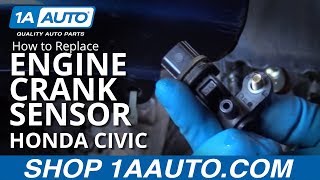
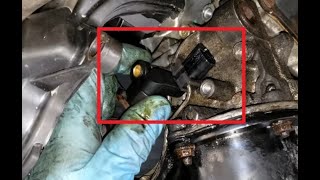

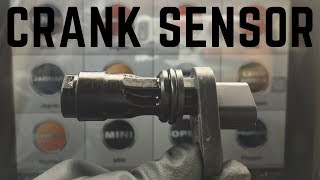
Technical Specifications
OEM Part Numbers: 37500-PLC-015
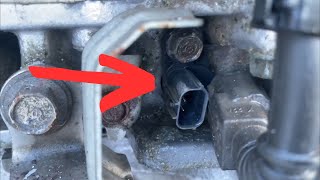
The sensor for the 2002-2015 Honda Civic is a three-wire Hall effect sensor. It reads teeth on the crankshaft pulley to determine engine speed and position. Different engines and model years may use physically different sensors, so it is crucial to verify the correct part number for your specific vehicle.

The information in this article is provided for general reference and educational purposes only. Vehicle specifications, procedures, and part compatibility can vary by production date, trim level, and region. Always consult your vehicle's factory service manual and verify part numbers before purchasing or performing repairs. Safety-critical components such as airbags, seat belts, and braking systems should be installed by a qualified professional.
- Honda Civic: