

Guide to the Camshaft Position Sensor for the 2002-2010 Nissan Maxima
Understanding the common camshaft sensor issues in the VQ35DE engine and how to choose the right replacement part.
- Camshaft sensor failure is a very common issue for 2002-2010 Nissan Maximas with the 3.5L engine.
- Symptoms include hard starting, stalling, a rough idle, and a Check Engine Light with codes P0340 or P0345.
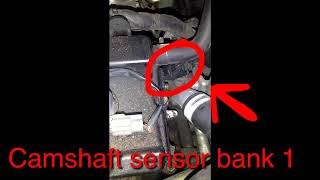
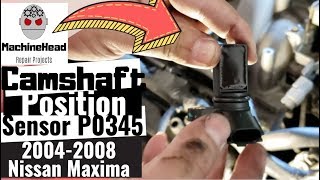
- Bank 1 (P0340) is the rear sensor near the firewall, and Bank 2 (P0345) is the front sensor near the radiator; they are often physically different parts.
- While OEM (Hitachi) sensors are highly recommended for reliability, if using an aftermarket part, ensure it has a good warranty.
Understanding Camshaft Sensor Failure in Your Maxima

If you own a 2002-2010 Nissan Maxima, you might eventually face issues with a camshaft position sensor. This is a well-documented, common point of failure for the 3.5L VQ35DE engine. The good news is that it's a relatively straightforward and affordable repair. This guide will walk you through the symptoms, part choices, and what to expect.
Recall Notice for 2002-2003 Models
Nissan issued a voluntary recall (NHTSA Campaign ID: 03V455000) for some 2002-2003 Maxima models due to faulty crank and camshaft position sensors that could cause the engine to stall. While the recall period may be over, it highlights a known manufacturing defect with the original sensors. If you have an early model, it's worth checking with a Nissan dealer if your vehicle was part of this campaign.
Symptoms of a Failing Camshaft Position Sensor

A bad camshaft sensor will almost always trigger a Check Engine Light. Common trouble codes include P0340 (for Bank 1) and P0345 (for Bank 2). Beyond the light, you may experience one or more of the following issues:
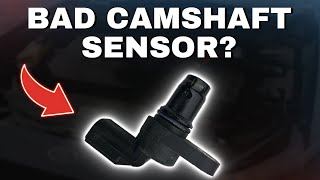
🎬 Watch: A visual guide to common camshaft sensor failure symptoms- Hard Starting: The engine cranks for a long time before it finally starts, or it may not start at all.
- Engine Stalling: The engine may shut off unexpectedly while driving, especially at low speeds. This is a serious safety concern.
- Rough Idle and Misfires: The engine may shake or vibrate at a stop, and you might feel jerking or hesitation while driving.
- Reduced Engine Power: Your Maxima may feel sluggish and have poor acceleration.
- Poor Fuel Economy: Incorrect timing can cause the engine to use more fuel than necessary.
Bank 1 vs. Bank 2: Which Sensor Is Which?

Your Maxima's V6 engine has two camshaft position sensors, one for each cylinder bank. It's crucial to replace the correct one.
- Bank 1 (P0340): This sensor is located on the cylinder bank closer to the firewall (the rear of the engine). It is typically a straight connector sensor. 🎬 See this walkthrough for replacing the Bank 1 rear sensor
- Bank 2 (P0345): This sensor is on the cylinder bank closer to the radiator (the front of the engine). It is often an angled connector sensor. 🎬 Watch: How to replace the Bank 2 front sensor (P0345)
Pro Tip: Many mechanics recommend replacing both sensors at the same time, especially on an older vehicle. If one has failed, the other, having been in service for the same amount of time, may not be far behind.
Choosing the Right Aftermarket Sensor

When it comes to engine sensors on Nissan vehicles, the quality debate between OEM and aftermarket is important. Many experienced owners and mechanics strongly recommend using OEM (Original Equipment Manufacturer) parts, which are made by Hitachi, or high-quality aftermarket brands like Denso or NTK. This is because cheaper, lower-quality sensors are known to fail prematurely, sometimes within a year, forcing you to do the job twice.
However, if you are working with a budget, a quality aftermarket "Replacement" brand part can be a viable option. Here's what to consider:
- Warranty: Look for a part that comes with at least a 12-month warranty. This provides some protection against premature failure.
- Construction: Compare the aftermarket part to photos of the original. It should have the correct shape (straight or angled) and connector type.
- Return Policy: Ensure the seller has a fair return policy in case the part is defective or doesn't fit.
| Part Type | Estimated Cost (per sensor) |
|---|---|
| New OEM (Nissan/Hitachi) | $80 - $120 |
| New Aftermarket (Premium - e.g., Denso, NTK) | $50 - $80 |
| New Aftermarket (Standard) | $27 - $40 |
| Shop Labor | $75 - $150 |
Frequently Asked Questions (FAQ)

Is it difficult to replace the camshaft position sensors myself?
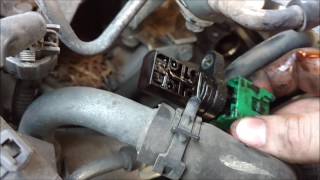
No, this is a very DIY-friendly job. Both sensors are located on the top of the engine and are held in by a single 10mm bolt. The Bank 2 (front) sensor is very easy to access. The Bank 1 (rear) sensor is a bit tighter to reach but still manageable with basic hand tools. The entire job for both sensors can typically be done in under an hour.
Are the Bank 1 and Bank 2 sensors different parts?
Yes, they are often different. For the 2002-2010 Maxima, the Bank 1 (rear) sensor is typically straight, while the Bank 2 (front) sensor has an angled body. Always verify the part number or match the physical shape to the one you are replacing.
Do I need to disconnect the battery before starting?
Yes, it is always recommended to disconnect the negative battery terminal before working on any electrical components in your vehicle. This prevents accidental shorts and protects the engine's computer.
My Check Engine Light is still on after replacement. What should I do?
After replacing the sensor, you need to clear the trouble codes from the computer. You can do this with an OBD-II scanner. If you don't have one, many auto parts stores offer this service for free. Disconnecting the battery for about 15 minutes may also clear the code. If the light returns with the same code, you may have a wiring issue or a defective replacement part.
Helpful Videos

Technical Specifications
OEM Part Numbers: 23731-6J90B 23731-AL61A 23731-7Y000
The VQ35DE engine uses two Hall-effect camshaft position sensors, one for each bank. Bank 1 (rear) is typically a straight sensor, while Bank 2 (front) is an angled sensor. Each is secured by a single 10mm bolt.

The information in this article is provided for general reference and educational purposes only. Vehicle specifications, procedures, and part compatibility can vary by production date, trim level, and region. Always consult your vehicle's factory service manual and verify part numbers before purchasing or performing repairs. Safety-critical components such as airbags, seat belts, and braking systems should be installed by a qualified professional.
- Nissan Maxima: