

Chevrolet Trailblazer Coolant Temperature Sensor Guide: 2002-2009
Fix your Trailblazer's erratic temperature gauge, poor fuel economy, or Check Engine Light by understanding its coolant sensor.
- The sensor location is different for 2002-2005 (harder, behind alternator) and 2006-2009 (easier, via wheel well) models.
- A P0128 trouble code is more often caused by a bad thermostat than the sensor itself; consider replacing both.
- An aftermarket sensor is a cost-effective and reliable repair for this common failure on an older vehicle.
- Driving with a bad sensor is not recommended as it can lead to poor fuel economy and potential engine overheating.
Is Your Trailblazer's Coolant Sensor Failing?

A bad coolant temperature sensor can cause a variety of issues, from annoying to serious. Because the sensor's reading affects so many of the engine's functions, a false signal can lead to poor performance, wasted fuel, and a Check Engine Light. Watch for these common signs of failure.
Choosing the Right Aftermarket Sensor

For a vehicle like the 2002-2009 Trailblazer, a new aftermarket coolant temperature sensor offers a reliable and cost-effective solution. The original equipment (OEM) brand is ACDelco, with Delphi also being a known OEM supplier. While some mechanics prefer to stick with OEM for critical sensors, many aftermarket brands produce quality parts that meet or exceed original specifications. Given the age of the vehicle, a standard replacement aftermarket sensor provides excellent value for resolving common symptoms like an incorrect gauge reading or certain check engine light codes. There is little practical difference in day-to-day performance between a quality aftermarket sensor and an OEM part for this specific component.
A Note on Code P0128
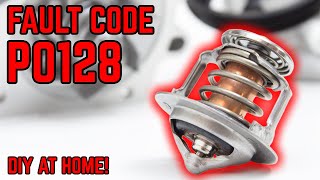
If your Trailblazer has a Check Engine Light with code P0128 (Coolant Temperature Below Thermostat Regulating Temperature), the problem is very often a faulty thermostat that is stuck open, not the sensor itself. This code means the engine isn't warming up as quickly as the computer expects. Many mechanics recommend replacing the thermostat and the ECT sensor at the same time, as they are both critical to the cooling system.
🎬 Watch: How to diagnose and fix a P0128 fault code.Installation Differences: Early vs. Late Models

Where you find the sensor depends on your Trailblazer's year. This significantly changes the difficulty of the replacement.
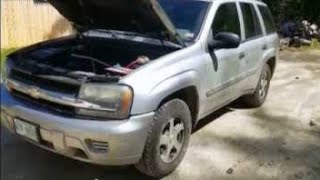
- 2002-2005 Models: The sensor is located on the driver's side of the 4.2L engine, tucked behind the alternator. Replacing it requires removing the serpentine belt and the alternator to gain access, making the job more time-consuming. 🎬 Watch: Step-by-step guide for replacing the sensor on early models.
- 2006-2009 Models: The sensor was moved to the passenger's side of the engine, near the firewall at the rear of the cylinder head. It is accessed by removing the front passenger wheel and a fender liner flap. This location is generally considered much easier to work with. 🎬 See this walkthrough for 2006-2009 sensor replacement through the wheel well.
Pro Tip: Before installing the new sensor, clean the threads in the engine block. Have the new sensor ready to screw in as soon as you remove the old one to minimize coolant loss. A small amount of coolant will leak out during the swap.
Cost to Replace a Trailblazer Coolant Temperature Sensor

| Part Type | Estimated Cost |
|---|---|
| New OEM (ACDelco) | $25 - $45 |
| New Aftermarket | $20.68 - $20.68 |
| Shop Labor | $100 - $300+ |
Note: Labor costs can vary significantly based on your location and which year Trailblazer you have. The higher cost reflects the more difficult 2002-2005 replacement which requires alternator removal.
Frequently Asked Questions
Can I drive with a bad coolant temperature sensor?
It is possible to drive for short distances, but it is not recommended. The engine may run poorly, get bad gas mileage, and you won't have an accurate reading of its temperature, which could lead to severe engine damage if it overheats.
Why is my replacement sensor a different size socket?
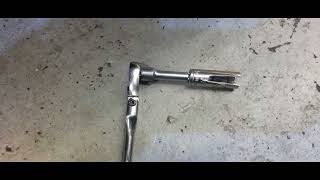
The sensor location and part changed for the 2006 model year. Early models (2002-2005) typically use an 18mm socket, while later models (2006-2009) use a 15mm socket. Always verify you have the correct part for your specific year.
Are there any recalls for the Trailblazer coolant sensor?
No, there are no specific NHTSA safety recalls for the engine coolant temperature sensor on the 2002-2009 Chevrolet Trailblazer. Failures are typically due to age and normal wear.
My temperature gauge is slow to warm up. Is it the sensor?
Not necessarily. GM issued a Technical Service Bulletin (TSB 20-NA-024) noting that these engines are energy efficient and may be slow to reach normal operating temperature in cold weather, especially at idle or during short trips. This can be a normal characteristic. Do not replace parts for this condition unless a specific trouble code like P0128 is present.
Helpful Videos
Technical Specifications
OEM Part Numbers: 12564512 213-928 12601050 213-4514
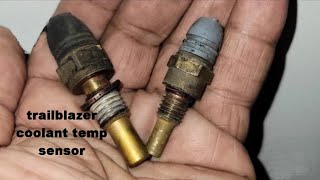
Two-pin thermistor sensor. Thread size is 3/8-18 NPT for 2002-2005 models and M12x1.5 for 2006-2009 models.

The information in this article is provided for general reference and educational purposes only. Vehicle specifications, procedures, and part compatibility can vary by production date, trim level, and region. Always consult your vehicle's factory service manual and verify part numbers before purchasing or performing repairs. Safety-critical components such as airbags, seat belts, and braking systems should be installed by a qualified professional.
- Chevrolet Trailblazer: