

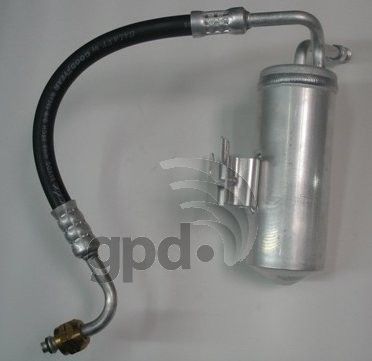
2000 Saturn LW1 A/C Accumulator with Hose Assembly Replacement Guide
Get your Saturn LW1's air conditioning blowing cold again by understanding this critical A/C part.
- This part must be installed by a professional with equipment to handle A/C refrigerant.
- Always replace the accumulator when performing any major A/C system repair, especially a compressor replacement.
- The most common A/C problems on the Saturn L-series are leaks, compressor failure, and electrical issues.
- The available aftermarket part is a budget-friendly option to restore A/C function on an older vehicle.
Is Your A/C Blowing Warm? Signs of a Failing Accumulator
When an A/C accumulator fails, it can cause problems for the whole system. Because this part is combined with the hoses on your 2000 Saturn LW1, a failure could be the hose itself or the accumulator. Here are the common signs to watch for:
- Poor or No Cooling: The most obvious symptom. If the accumulator is clogged, it can restrict refrigerant flow. If it's leaking, the system will lose refrigerant and won't be able to cool the air.
- Visible Refrigerant Leaks: You might see an oily residue on or around the accumulator body or its attached hoses. This is the A/C oil that circulates with the refrigerant and indicates a leak.
- A/C Compressor Won't Turn On: Your Saturn's A/C system has a low-pressure switch. If enough refrigerant leaks out, the pressure will drop and the system will prevent the compressor from turning on to protect it from damage.
Choosing the Right Aftermarket Part for Your Saturn
For a vehicle like the 2000 Saturn LW1, new original equipment manufacturer (OEM) parts are often no longer available. The aftermarket is the primary source for replacements. The available brand, Global Parts Distributors (GPD), is a widely known aftermarket supplier specializing in A/C components.
Aftermarket parts like this offer a cost-effective way to get your A/C running again. While some user reviews suggest aftermarket A/C parts can have a shorter lifespan than the original, they are often the only option. For a part like an accumulator, which should be replaced any time the A/C system is opened, an affordable aftermarket part is a practical choice.
Pro Tip: Replace More Than Just the Accumulator
It is standard industry practice to replace the A/C accumulator and O-ring seals any time the system is opened for a major repair, like replacing a compressor or condenser. The material inside the accumulator that absorbs moisture (desiccant) can only hold so much, and opening the system exposes it to the atmosphere. Failure to replace it can lead to the quick failure of a new compressor.
Installation: Why This is a Job for a Pro
Replacing the A/C accumulator is not a simple DIY job. The A/C system is highly pressurized and contains refrigerant, which is regulated by law. Special equipment is required to safely recover the old refrigerant, and to vacuum and recharge the system after the new part is installed. Attempting this without the right tools can damage the system and is unsafe. Always have A/C work performed by a certified mechanic.
Estimated Costs for Repair
The total cost will include the part, shop labor, and the cost to evacuate and recharge the refrigerant. Labor for A/C service is the largest part of the expense.
| Item | Estimated Cost |
|---|---|
| New Aftermarket Part | $25.30 |
| Shop Labor & A/C Service | $150 - $250 |
| Total Estimated Cost | $175 - $275 |
Note: Costs are estimates and will vary based on your location and the specific shop's labor rates. This does not include the cost of replacing other failed components.
Frequently Asked Questions (FAQ)
Can I replace the A/C accumulator myself?
It is not recommended for a DIYer without the proper training and tools. Federal law requires that the refrigerant be recovered by a certified technician with a special machine before the system is opened. After the part is installed, the system must be put into a deep vacuum to remove all air and moisture before being recharged with a precise amount of refrigerant and oil.
My mechanic said my compressor failed. Do I still need to replace the accumulator?
Yes, absolutely. It is a non-negotiable part of a proper A/C compressor replacement. When a compressor fails, it can send metal debris through the system. The accumulator will trap some of this, but it will be contaminated. Not replacing it will cause that debris to circulate and destroy your new compressor, voiding its warranty.
Is there a recall on the 2000 Saturn LW1 A/C system?
No, there are no specific recalls or technical service bulletins (TSBs) from the manufacturer for the A/C system or its components on the 2000 Saturn LW1.
What is the difference between an accumulator and a receiver-drier?
They perform the same function of removing moisture and debris. The difference is where they are located in the A/C system. Systems that use an orifice tube (like many GM vehicles of this era) use an accumulator on the low-pressure side, between the evaporator and the compressor. Systems with an expansion valve use a receiver-drier on the high-pressure side.
Technical Specifications
Includes integrated hose assembly. Contains desiccant to remove moisture from R134a refrigerant.
We Have This Part in Stock

The information in this article is provided for general reference and educational purposes only. Vehicle specifications, procedures, and part compatibility can vary by production date, trim level, and region. Always consult your vehicle's factory service manual and verify part numbers before purchasing or performing repairs. Safety-critical components such as airbags, seat belts, and braking systems should be installed by a qualified professional.
- Saturn LW1: