

Toyota Corolla Knock Sensor: A Comprehensive Guide (1999-2019)
Is a check engine light and poor performance plaguing your Corolla? It might be the knock sensor.
- A bad knock sensor will trigger a Check Engine Light (P0325) and cause poor acceleration and fuel economy.
- The sensor is located under the intake manifold, making replacement a labor-intensive job (2-3 hours).
- Due to the difficult replacement, using a high-quality OEM or premium aftermarket (Denso, NGK) sensor is highly recommended.
- Before replacing the sensor, check for TSBs related to your VIN, as a simple software update might be the real fix.
Is a Bad Knock Sensor a Big Deal?

Yes, it can be. When the knock sensor fails, the engine's computer (ECU) can no longer detect detonation. To protect the engine from potential damage, the computer will often switch to a 'safe' mode. This typically involves retarding the ignition timing, which leads to a noticeable drop in engine power, poor acceleration, and worse fuel economy. Ignoring a bad knock sensor means you're not getting the performance and efficiency your Corolla is designed for, and you might not be alerted to a real engine knock problem that could lead to expensive repairs.
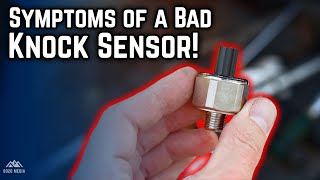
Symptoms of a Failing Knock Sensor in a Toyota Corolla

A bad knock sensor will almost always let you know something is wrong. Here are the most common signs:
- Check Engine Light: This is the most common symptom. The ECU will store a diagnostic trouble code (DTC), most often P0325 (Knock Sensor 1 Circuit Malfunction) or, on models with two sensors, P0330 (Knock Sensor 2 Circuit Malfunction).
- Poor Acceleration: Your car may feel sluggish and unresponsive, especially when you try to accelerate. This is due to the ECU putting the engine in a protective, low-power mode.
- Reduced Fuel Economy: When the engine timing is retarded to safe levels, combustion is less efficient, and you'll notice you're visiting the gas station more often. One owner reported a 20% drop in MPG.
- Engine Pinging or Knocking: While the sensor's job is to detect this, a failed sensor can't send the signal to correct it. If you hear a metallic pinging sound, especially during acceleration, it could be a sign the sensor has failed and the engine is experiencing detonation.
A Note on TSBs and Recalls
No direct recalls for the knock sensor itself on these models were found. However, Toyota has issued Technical Service Bulletins (TSBs) for some vehicles that may show knock sensor codes like P0325 or P0330. In some cases, the issue is not the sensor but a software anomaly in the Engine Control Module (ECM). The fix is to reprogram the ECM with an updated calibration, not replace the sensor. Before replacing the part, it's wise to check with a dealer if any TSBs apply to your VIN.
Choosing a New Aftermarket Knock Sensor

When it comes to replacing the knock sensor on a Corolla, the labor is often the most expensive part of the job. The sensor is frequently located under the intake manifold, requiring several hours to access. Because of this, many experienced mechanics and owners on forums recommend using a high-quality part to avoid doing the job twice.
- OEM (Original Equipment Manufacturer): This is the part you'd get from a Toyota dealership. It's the highest quality and most reliable option, but also the most expensive.
- Premium Aftermarket (e.g., Denso, NGK, Delphi): Brands like Denso are often the original manufacturer for Toyota parts, so a Denso-branded sensor can be identical to OEM but at a lower price. These are considered very reliable choices.
- Standard Aftermarket (e.g., Duralast, Replacement): These are the most affordable options. While many work perfectly fine, some online discussions report mixed results, with some aftermarket sensors failing prematurely or not being fully compatible with the vehicle's ECU. Given the difficult installation, saving a few dollars on the part might not be worth the risk of another replacement soon after.
Pro Tip: Before you condemn the sensor, inspect the wiring and connector. A corroded connector or a damaged wire can cause the exact same symptoms and fault codes as a failed sensor. Also, consider replacing the intake manifold gaskets when you do this job, as they must be removed for access and reusing old gaskets can cause vacuum leaks.
Cost to Replace a Toyota Corolla Knock Sensor
| Part/Service | Estimated Cost |
|---|---|
| New OEM Part | $120 - $260 |
| New Aftermarket Part | $20 - $100 |
| Shop Labor | $180 - $400+ |
| Total Professional Replacement | $300 - $565+ |
Frequently Asked Questions

Where is the knock sensor located on a 1999-2019 Toyota Corolla?
On most Corolla engines from this era, including the 1.8L, the knock sensor is located on the engine block, underneath the intake manifold. This makes it difficult to access, as the intake manifold and throttle body usually need to be removed.
Can I replace the knock sensor myself?
If you are an experienced DIY mechanic, yes. The replacement itself is just a single bolt and a connector. However, getting to it is the hard part, requiring the removal of the air intake, throttle body, and the entire intake manifold. This can take 2-3 hours. It is considered a moderately difficult job due to the access challenges.
What is the torque spec for the knock sensor bolt?
This is critical. The sensor is a sensitive microphone, and over- or under-tightening the bolt can damage it or cause it to read incorrectly. While specs can vary slightly, a common torque value is around 15 ft-lbs (for later models) to 29 ft-lbs (for earlier models). Always verify the correct specification for your specific year and model in a repair manual.
What does fault code P0325 mean?
P0325 stands for "Knock Sensor 1 Circuit Malfunction." It means the engine's computer has detected a problem with the signal from the knock sensor or its electrical circuit. This could be a faulty sensor, damaged wiring, a bad connection, or in some cases, an issue with the computer itself.
Helpful Videos
Technical Specifications
OEM Part Numbers: 89615-06010 89615-20090 89615-12050 89615-12040 89615-22030 89615-12030 89615-12120 89615-12020
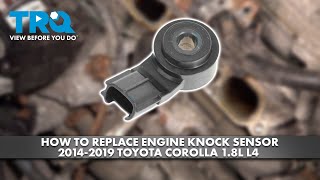
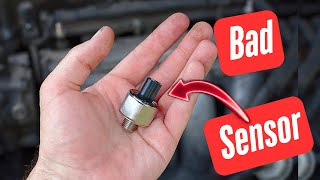
Typically a single-bolt mount piezoelectric sensor with a 2-pin oval connector. Location is on the engine block, under the intake manifold.

The information in this article is provided for general reference and educational purposes only. Vehicle specifications, procedures, and part compatibility can vary by production date, trim level, and region. Always consult your vehicle's factory service manual and verify part numbers before purchasing or performing repairs. Safety-critical components such as airbags, seat belts, and braking systems should be installed by a qualified professional.
- Toyota Corolla: