

Chevrolet Silverado 1500 (1999-2015) Coolant Temperature Sensor: A Complete Guide
Is your Silverado's temperature gauge acting strange or are the cooling fans always running? Your Coolant Temperature Sensor might be the problem.
- A bad sensor often causes the cooling fans to run constantly and the temp gauge to stop working.
- Symptoms are very similar to a failed thermostat; many owners replace both parts at the same time.
- The sensor is located on the driver's side cylinder head and is a simple DIY replacement with a 19mm deep socket.
- Using an OEM ACDelco sensor is often recommended for reliability over cheaper aftermarket options.
Is Your Silverado's Coolant Temp Sensor Failing?

A bad coolant temperature sensor can cause a surprising number of issues. Because the engine's computer relies on its signal for so many functions, a wrong reading can make your truck behave poorly. The most common sign of failure is the computer going into a "fail-safe" mode to protect the engine. This usually involves turning the cooling fans on high speed to prevent any chance of overheating.
A Note on the Thermostat
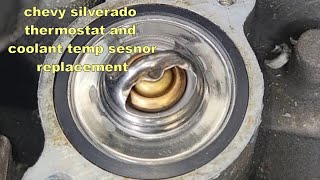
Many symptoms of a bad coolant sensor are identical to a failed thermostat, especially a thermostat that is stuck open. This can trigger a P0128 trouble code. On the Silverado, it's common for the thermostat to fail before the sensor. Many mechanics and owners recommend replacing both the thermostat and the sensor at the same time, since they are located near each other and are both critical to the cooling system.
🎬 See this walkthrough for replacing both the thermostat and sensor.Symptoms of a Bad Coolant Temperature Sensor

Watch for these common signs on your 1999-2015 Silverado:
- Cooling fans won't shut off: The fans may run at full speed, even when the engine is cold or after you've turned the truck off.
- Check Engine Light: Codes like P0117 (signal too low) or P0118 (signal too high) are common. 🎬 Watch: EricTheCarGuy explains how to diagnose a P0118 trouble code.
- Temperature gauge is dead or wrong: The gauge on your dash might not move from the lowest reading (160°F) or may give erratic readings.
- Poor fuel economy: If the sensor tells the computer the engine is always cold, the computer will send too much fuel.
- Black smoke from exhaust: This is a sign of too much fuel being burned, which can be caused by a bad sensor signal.
- Engine overheating: Less commonly, the sensor can fail to report that the engine is hot, meaning the fans won't turn on when needed.
Choosing the Right Aftermarket Sensor

When it comes to electronic sensors, quality matters. The original equipment (OEM) sensor for your Silverado is made by ACDelco. While many aftermarket brands are available, owner experiences vary.
- OEM (ACDelco): Generally considered the most reliable option for sensors. They are built to GM's exact specifications. While they cost more, they are less likely to fail prematurely.
- Aftermarket (Replacement Brand): Standard aftermarket sensors, like the Replacement brand, offer a significant cost saving. For a simple part like a coolant sensor, they can be a good value. However, some owners have reported aftermarket sensors failing within months. If you choose an aftermarket part, be careful during installation, as the connection pins can be fragile.
For a critical sensor that can affect your engine's performance and health, spending a little extra on an OEM ACDelco part is often a wise investment for long-term peace of mind.
Cost to Replace a Silverado 1500 Coolant Sensor
| Part Type | Part Cost | Labor Cost (Shop) |
|---|---|---|
| New Aftermarket | $18 - $40 | $100 - $250 |
| New OEM (ACDelco) | $40 - $60 | $100 - $250 |
Cost estimates are approximate and can vary by location and vehicle specifics.
Frequently Asked Questions

Where is the coolant temperature sensor located on a Silverado 1500?
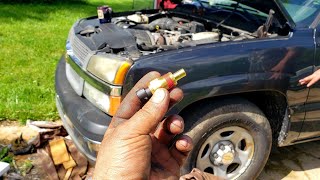
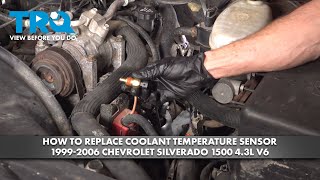
On most V8 (4.8L, 5.3L, 6.2L) and V6 (4.3L) engines from 1999-2015, the coolant temperature sensor is located on the front of the driver's side cylinder head. It is a small, brass-colored sensor with a plastic electrical connector on top.
Can I replace the sensor myself?
Yes, this is a good DIY job for a beginner. It requires basic tools like a 19mm deep socket and a ratchet. The main challenge is that some coolant will spill when you remove the old sensor. You can minimize this by working quickly or by partially draining the radiator first. Always work on a cool engine.
Do I need to drain the coolant to replace the sensor?
You don't have to drain the entire system. However, the sensor is below the coolant level, so fluid will leak out when it's removed. Many DIYers prepare the new sensor and quickly swap it with the old one to minimize coolant loss. Having a drain pan ready is essential.
Are there any recalls for this part?
No, there are no specific recalls for the coolant temperature sensor on the 1999-2015 Chevrolet Silverado 1500. There was a Technical Service Bulletin (TSB) for some 2014-2015 models related to radiator leaks from excessive thermostat cycling, but this did not involve the sensor itself.
Helpful Videos


Technical Specifications
OEM Part Numbers: 15326386 12674639
Location: Driver's side cylinder head. Socket Size: 19mm deep socket. Connector: 2-pin female.

The information in this article is provided for general reference and educational purposes only. Vehicle specifications, procedures, and part compatibility can vary by production date, trim level, and region. Always consult your vehicle's factory service manual and verify part numbers before purchasing or performing repairs. Safety-critical components such as airbags, seat belts, and braking systems should be installed by a qualified professional.
- Chevrolet Silverado 1500: