

Nissan Frontier Knock Sensor: A Comprehensive Guide (1998-2019)
Understand the common P0325 code and why this small sensor causes big problems with your truck's performance and fuel economy.
- The replacement is easy on 4-cylinder engines but extremely difficult and labor-intensive on V6 engines.
- For V6 models, always replace the short wiring sub-harness along with the knock sensor to prevent repeat repairs.
- Due to the high labor cost for V6s, using a high-quality OEM or OEM-equivalent (NTK, Hitachi) sensor is strongly advised over a basic aftermarket part.
- The most common trouble code is P0325, which points to a failure in the knock sensor circuit.
Is Your Frontier's Knock Sensor Failing?


A bad knock sensor is a very common issue on the Nissan Frontier, particularly on V6 models. The problem is so frequent because of the sensor's location and the high heat it endures. When it fails, your truck's computer defaults to a safe, low-power mode, which you will definitely feel in the driver's seat.
Engine-Specific Replacement Differences
How you approach this repair depends entirely on which engine your Frontier has. This is the most important factor to consider.
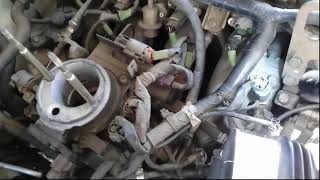
- 4-Cylinder (KA24DE): On 4-cylinder models, the knock sensor is located on the side of the engine block, just below the intake manifold. While it's in a tight spot, it is accessible without major disassembly. The repair is straightforward for a DIYer with moderate skills.
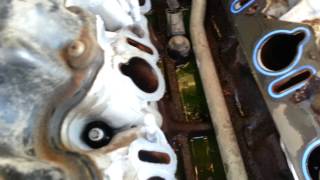
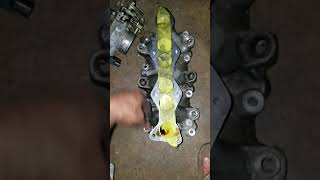
- V6 (VG33E & VQ40DE): On V6 models, the knock sensor is located in the absolute worst place: in the engine valley, underneath the entire lower intake manifold. Replacing it is a major job that requires removing the upper and lower intake plenums. This is a time-consuming and expensive repair if done by a shop.
V6 Owners: This is a Big Job
Because of the 4-6+ hours of labor required to access the V6 knock sensor, this is not a job you want to do twice. It is strongly recommended to use a high-quality OEM or OEM-equivalent sensor and to replace the short wiring sub-harness at the same time. The harness becomes brittle from heat and is a common failure point itself. Skipping the harness to save $40 could mean doing the entire 5-hour job all over again.
Choosing the Right Aftermarket Part
When shopping for a new aftermarket knock sensor, quality is critical, especially for V6 models. While many basic aftermarket sensors are available and very affordable, they can be a gamble.
- Basic Aftermarket Sensors: These are the most budget-friendly options. For a 4-cylinder engine where the sensor is easier to access, a basic replacement can be a cost-effective solution. However, for a V6, the risk of a cheap sensor failing prematurely outweighs the initial savings due to the high labor cost of replacement.
- OEM-Equivalent Brands: Brands like NTK (a division of NGK) or Hitachi are often the original equipment manufacturers for Nissan. Choosing a sensor from one of these brands often gives you the same quality as the dealer part without the high price. This is the recommended path for V6 owners.
- The Sub-Harness: For V6 models, the sub-harness is a must-replace item. Aftermarket harnesses with upgraded wire insulation are available and are a smart investment.
The "Relocation" Hack
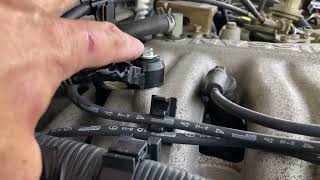
Many Frontier owners with V6 engines, faced with a huge repair bill, opt to relocate the new knock sensor to a more accessible spot on top of the engine, often on an intake manifold bolt. They cut the old sensor's wires and splice the new sensor in. While many report that this clears the check engine light, it is not the correct way to repair the vehicle. The sensor is no longer in the location engineered to detect knock effectively, potentially leaving your engine unprotected. This is a workaround, not a proper fix.
🎬 See how the relocation hack is performed without a full teardown.Cost of Replacing a Nissan Frontier Knock Sensor

| Part/Service | Estimated Cost |
|---|---|
| New Aftermarket Knock Sensor | $21 - $45 |
| New Aftermarket Sub-Harness (V6) | $30 - $70 |
| New OEM Knock Sensor | $220 - $340 |
| Shop Labor (4-Cylinder) | $100 - $200 |
| Shop Labor (V6) | $450 - $900+ |
Frequently Asked Questions

What are the main symptoms of a bad knock sensor?
The most common symptoms are a Check Engine Light with code P0325 or P0328, sluggish acceleration, poor engine power (especially uphill), and a noticeable drop in fuel economy. In some cases, the truck may idle roughly or stall.
What is a P0325 code?
P0325 is the diagnostic trouble code for "Knock Sensor 1 Circuit Malfunction (Bank 1)". This means the engine's computer has detected a problem with the knock sensor's signal or the circuit itself. 🎬 Watch this video to understand the P0325 code and circuit issues. This is most commonly caused by a failed sensor or a bad wiring harness.
Can I replace the knock sensor myself?
For 4-cylinder owners: Yes, if you have some mechanical experience. It's in a tight spot but manageable. For V6 owners: This is a very advanced DIY repair. It involves removing the entire intake manifold system. It is not recommended for beginners. 🎬 Watch this step-by-step walkthrough of the V6 knock sensor replacement. Watch several tutorial videos to understand the scope of the job before starting.
Do I have to replace the wiring harness on my V6?
It is highly recommended. The sub-harness sits in the hot engine valley and the plastic and wires become extremely brittle over time, making it a common point of failure. Since the labor to get to it is so intensive, replacing the inexpensive harness at the same time is the smart choice to avoid a repeat repair.
Are there any recalls for the Nissan Frontier knock sensor?
No, there are no specific recalls for the knock sensor on the 1998-2019 Nissan Frontier. The issue is well-documented by owners but has been handled through standard repairs and Technical Service Bulletins (TSBs) rather than a recall.
Helpful Videos
Technical Specifications
OEM Part Numbers: 22060-7B000 B2060-7B000 22060-30P00A 24079-2Y000 (Sub-Harness) 24079-9BA0A (Sub-Harness)
The knock sensor is a piezoelectric microphone tuned to detect specific frequencies of engine detonation. On V6 models (VG33E, VQ40DE), it is located in the engine valley under the intake manifold. On 4-cylinder models (KA24DE), it is on the side of the engine block. A common failure mode is a cracked plastic housing, allowing moisture to damage the internal components.

The information in this article is provided for general reference and educational purposes only. Vehicle specifications, procedures, and part compatibility can vary by production date, trim level, and region. Always consult your vehicle's factory service manual and verify part numbers before purchasing or performing repairs. Safety-critical components such as airbags, seat belts, and braking systems should be installed by a qualified professional.
- Nissan Frontier: